 Whalesbook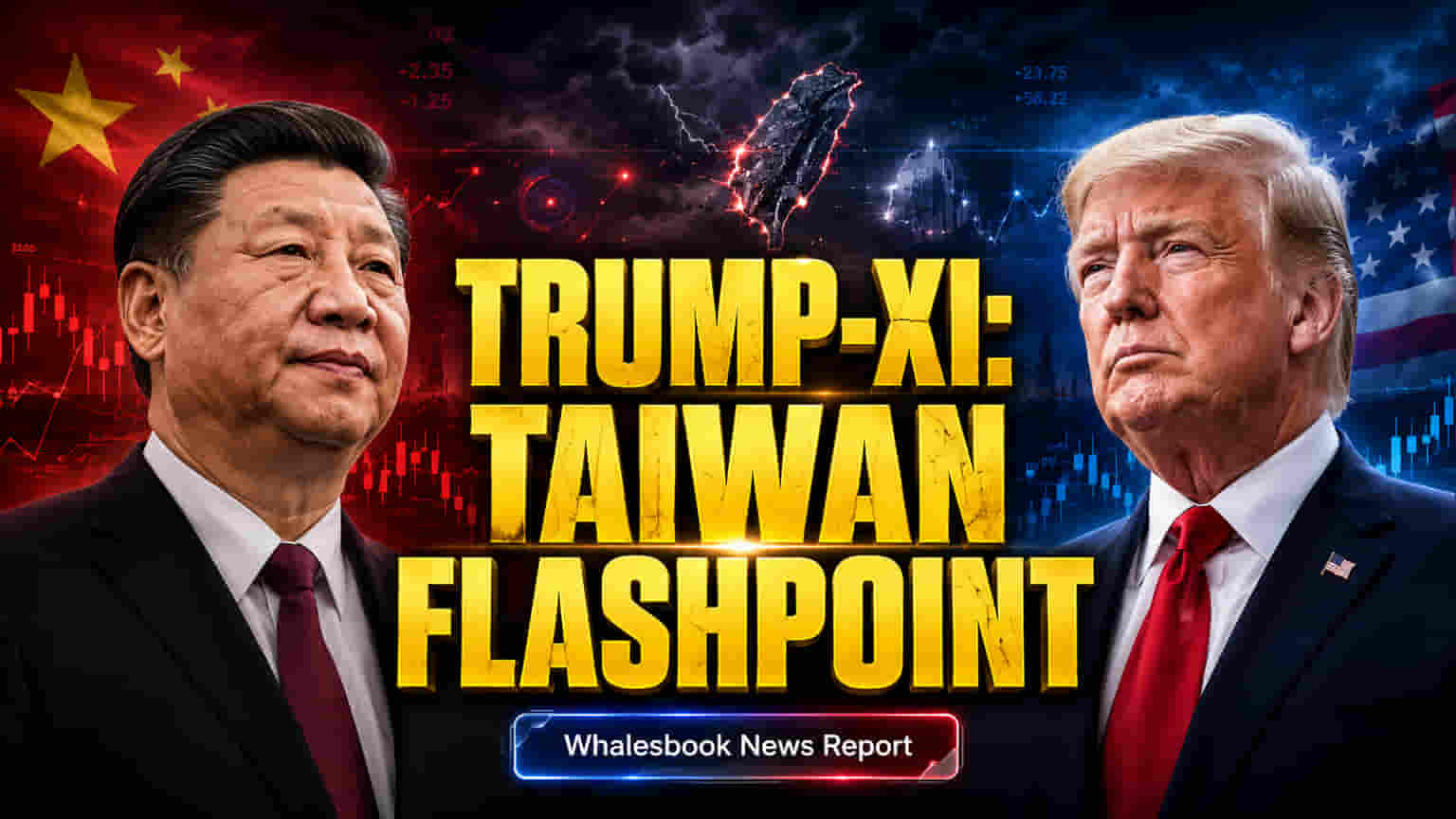


US-China Summit: Talks Conclude Without Major Breakthroughs
Recent high-level talks between the United States and China highlighted ongoing geopolitical tensions, casting a shadow of uncertainty over global trade and key industries. President Xi Jinping invoked the Thucydides Trap and issued direct warnings concerning Taiwan, setting a serious tone. While "fantastic trade deals" were mentioned, concrete breakthroughs remain elusive, especially regarding tariffs and critical mineral supply chains, influencing investor sentiment and sector performance.
Market Valuations Remain High
The S&P 500's Price-to-Earnings (P/E) ratio was approximately 26.736 as of May 15, 2026, significantly above its historical median of 18.007. One analysis indicates this P/E ratio is 76.0% higher than the modern-era average, suggesting the market may be overvalued. This high valuation, combined with geopolitical uncertainties, points to potential volatility and increased sensitivity to negative news concerning global trade or supply chains. The forward P/E ratio also showed a downward trend, standing at 23.60 as of February 2026, down from 28.39 a year prior.
Key Sector Impacts
Rare Earths and Supply Chain Volatility: China's dominance in rare earth supply chains—controlling about 70% of global mining and 90% of processing and refining as of 2025—remains a key strategic advantage. While China has indicated it will address concerns over critical mineral shortages, export controls are tightening. This uncertainty impacts high-technology supply chains for semiconductors, aerospace, and artificial intelligence. Western nations are actively building independent supply chains, with companies like MP Materials leading efforts in the U.S. The prospect of export restrictions poses significant disruption risk for reliant industries.
Defense Spending and Geopolitical Posturing: The Indo-Pacific region is a focus for increased defense spending. The U.S. is allocating $11.7 billion to the Pacific Deterrence Initiative to counter China's military growth. This investment, part of a $1.45 trillion FY2027 defense budget request, aims to bolster forward defenses and limit China's military reach. Allied nations, including Japan and Taiwan, are also increasing defense budgets, with Taiwan targeting 5% of its GDP by 2030. This heightened military readiness and investment suggest continued strong performance for aerospace and defense ETFs, such as the iShares U.S. Aerospace & Defense ETF (ITA) and Global X Defense Tech ETF (SHLD).
Trade Tensions and Market Impact: New tariffs and potential export controls stemming from the U.S.-China trade dispute are reshaping global trade patterns. U.S. imports and exports with China saw a significant drop by the end of 2025. While complete decoupling is unlikely, the trend leans towards selective disentanglement, with bilateral trade projected to decline substantially by 2030. The semiconductor supply chain, heavily concentrated in Taiwan (producing over 90% of the world's advanced chips), is a key point of conflict. Disruptions could cause economic damage estimated at $2 to $3 trillion annually. Historically, trade war escalations have led to sharp market declines; for instance, the Shanghai Composite Index plunged significantly in June 2018 after China imposed retaliatory tariffs.
Taiwan Strait Risk: The geopolitical situation around Taiwan presents a significant global economic risk. A conflict or blockade in the Taiwan Strait could trigger economic shocks as high as $10 trillion, profoundly impacting global GDP, supply chains, and energy markets. Taiwan's role in semiconductor manufacturing—producing over 90 percent of the world's advanced chips—makes it central to the global technology ecosystem. Even a blockade without actual fighting could disrupt over two trillion dollars in economic activity.
Key Risks for Investors
Persistent Tariffs and Trade Friction: Despite a recent "truce," the underlying trade dispute between the U.S. and China persists. Tariffs remain in place, with potential for further escalation, especially concerning critical technologies and rare earth materials. A February 2026 U.S. Supreme Court decision to strike down some tariffs under the International Emergency Economic Powers Act may lead to new trade policy approaches, but the core conflict over trade practices and intellectual property is unresolved. This ongoing friction creates an unpredictable environment, potentially hindering long-term growth and worsening supply chain vulnerabilities. The strategy of "selective decoupling" to address chokepoints in sectors like rare earths indicates a long-term trade recalibration, not a quick fix.
Taiwanese Instability and Semiconductor Dependency: The concentration of advanced semiconductor manufacturing in Taiwan poses a widespread market risk. While there's an estimated 65% probability the current situation will persist over the next 12 months, the long-term risk of military takeover or conflict is significant, with a 10% chance of military annexation over five years. Any disruption to Taiwan's chip production—through conflict, blockade, or geopolitical pressure—could cripple global technology supply chains, causing trillions of dollars in economic damage. This dependency makes Taiwan a critical vulnerability for the global economy; analysts estimate a blockade could result in a 5% shock to global GDP growth.
Rare Earth Weaponization: China's control over rare earth processing and its readiness to use this as a geopolitical tool present a continuous threat. While Western nations are investing heavily to build alternative supply chains, China's structural dominance is unlikely to be overcome soon. Recent export controls on rare earths have already caused price swings and supply chain disruptions, affecting industries from defense to electric vehicles. This leverage allows Beijing to influence global supply and pricing, using strategic resources as a negotiation tool.
Outlook: Strategic Competition Continues
Recent summits suggest a tenuous truce rather than a resolution of fundamental U.S.-China economic and geopolitical disputes. The ongoing trade war, combined with strategic competition over technology and critical resources, is likely to embed higher risk premiums into markets due to geopolitical tensions. While specific trade deals might offer temporary relief, the focus on selective decoupling, domestic reindustrialization, and supply chain security signals a prolonged period of strategic competition. Analyst expectations for the S&P 500 suggest potential pressure for consolidation or correction, urging investors to pay close attention to stock prices. The defense sector, however, is poised to benefit from sustained elevated spending driven by geopolitical tensions and increased allied contributions to regional security. The long-term outlook involves navigating complex supply chains, managing geopolitical flashpoints like Taiwan, and adapting to a recalibrated global economic order where efficiency may yield to strategic security.