

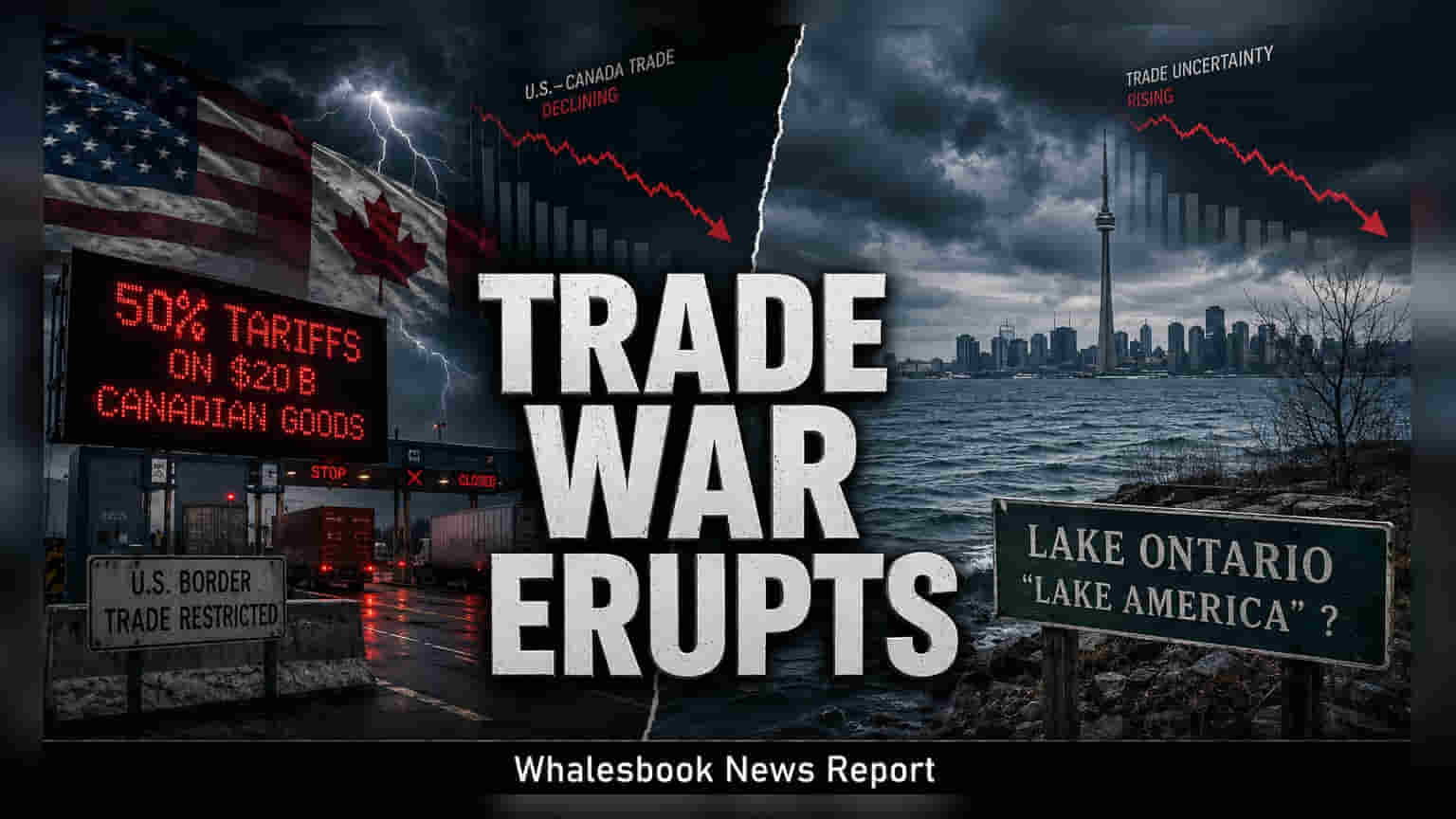
President Donald Trump has proposed renaming Lake Ontario to "Lake America" following the imposition of 50% tariffs on $20 billion of Canadian imports. With Canada planning retaliatory actions for September 8, 2026, the intensifying trade dispute threatens integrated supply chains. Investors are monitoring the situation for potential global market volatility and impacts on cross-border sectors like automotive and steel.
President Donald Trump has announced that the U.S. government is giving serious consideration to renaming Lake Ontario to "Lake America." This rhetorical move follows the collapse of recent trade negotiations and the subsequent imposition of 50% tariffs on approximately $20 billion worth of Canadian goods. The proposal, made via a social media post, highlights the escalating diplomatic and economic friction between the two North American neighbors, which are among the world's largest trading partners.
Impact on Integrated Supply Chains
For investors, the primary concern lies in the deeply integrated nature of the U.S.-Canadian economy. Industries such as automotive manufacturing, steel production, energy, and agriculture rely heavily on cross-border supply chains. When tariffs are imposed at such significant levels, the immediate result is often a sharp increase in the cost of raw materials and intermediate goods. This inflationary pressure can squeeze profit margins for companies operating in these sectors. While the renaming of a lake is a symbolic gesture, the underlying trade policy represents a substantial shift that could disrupt manufacturing schedules and inventory management for major corporations.
Sector and Market Risks
The automotive and steel sectors are particularly sensitive to these developments. Given the interconnected nature of auto manufacturing, where parts frequently cross the border multiple times before a final vehicle is assembled, trade barriers can lead to production delays and increased costs. Furthermore, the volatility in commodity prices—such as steel and energy—may ripple through global markets. Investors often view such disputes as a source of uncertainty, which can contribute to broader market fluctuations. Even for investors in India, global trade tensions are significant because they influence investor sentiment, commodity pricing trends, and the flow of global capital.
The Road Ahead
The situation is expected to remain fluid as both nations navigate this impasse. Canada has already indicated that it is preparing retaliatory measures, which are currently scheduled to take effect on September 8, 2026. The shift from matching U.S. tariffs to more targeted, strategic responses suggests that the conflict could be protracted. Market participants will likely track how these retaliatory measures are structured and whether they focus on specific U.S. industries. The key monitorable for investors in the coming weeks will be the impact on corporate earnings forecasts, any potential for supply chain bottlenecks, and official statements from both governments regarding potential de-escalation or further tariff escalations.