

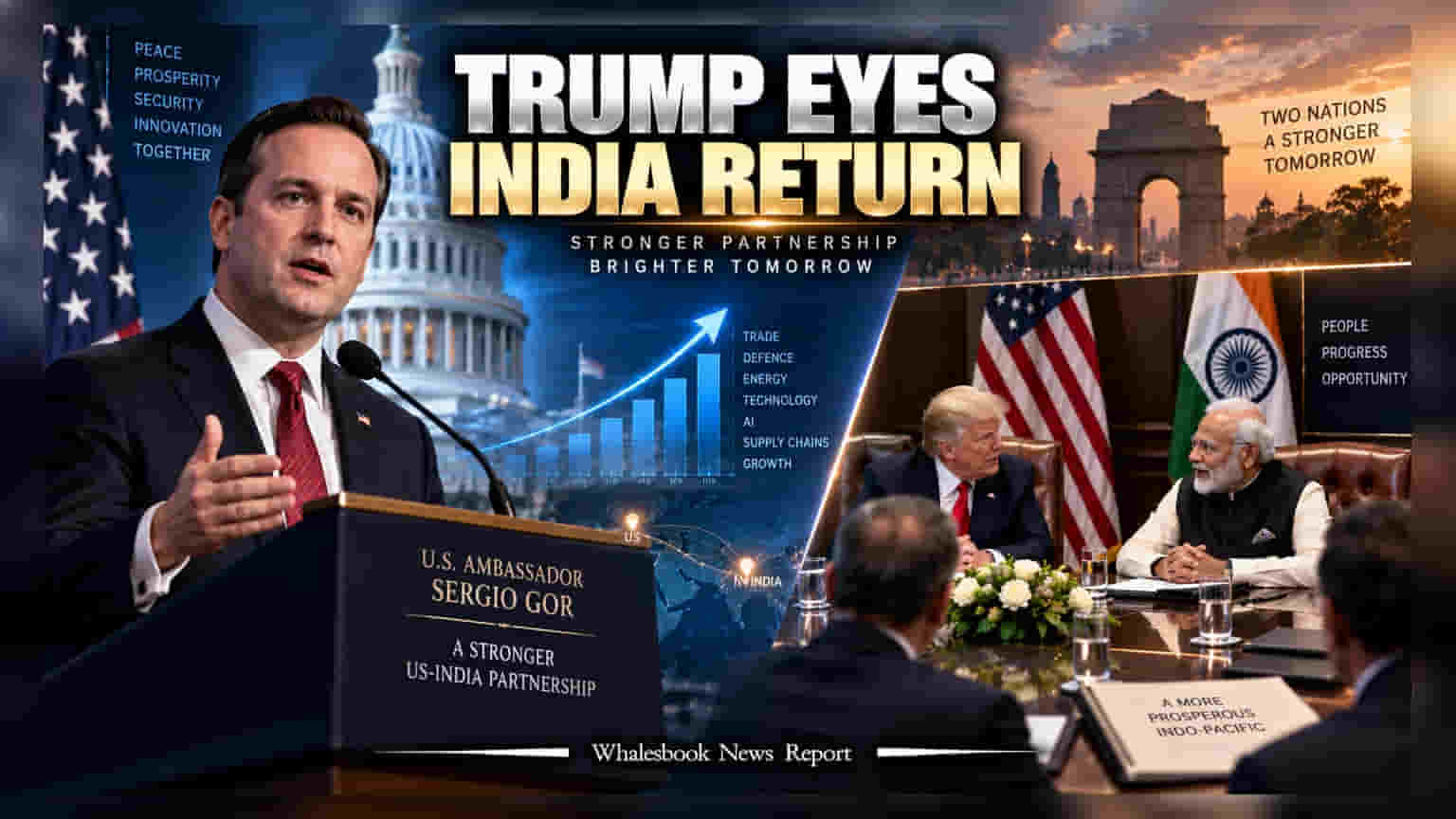
US Ambassador to India Sergio Gor has indicated a possible visit by President Donald Trump to India in 2027, highlighting the continued strength of the bilateral partnership. The potential visit signals a focus on deeper cooperation in defense, technology, and energy. For investors, this diplomatic stability suggests policy consistency, though trade negotiations remain a critical area to monitor for future progress.
US Ambassador to India Sergio Gor has publicly signaled the possibility of a visit by President Donald Trump to India in 2027. In recent comments, the ambassador emphasized that the relationship between the two nations is defined by high-frequency official exchanges and a strong personal rapport between President Trump and Prime Minister Narendra Modi.
While an official travel itinerary has not been finalized, the envoy’s remarks suggest that the United States views India as a stable and reliable partner in the Indo-Pacific region. For the Indian market, this diplomatic warmth serves as a signal of strategic alignment, potentially supporting long-term investor confidence in sectors where the two countries are actively collaborating.
Strategic Cooperation and Economic Focus
The U.S.-India partnership has increasingly shifted toward concrete cooperation in critical areas. Current diplomatic efforts are centered on building resilience in supply chains, advancing artificial intelligence, and strengthening ties in the defense and energy sectors. By highlighting the consistency in leadership, the U.S. administration aims to provide a predictable environment for businesses looking to expand or diversify operations.
Beyond bilateral visits, the upcoming G20 summit scheduled for December 2026 in Florida is expected to be a major forum for continued engagement. Market observers are closely monitoring these high-level discussions, as they often set the tone for policy execution in technology transfers and defense manufacturing, both of which are high-priority areas for major Indian conglomerates.
Trade Negotiations and Investor Monitorables
While the diplomatic outlook remains positive, investors are also tracking the progress of ongoing bilateral trade discussions. Efforts to reach a trade agreement have historically faced challenges, including complexities related to tariffs and procedural hurdles that have, at times, slowed the pace of integration.
For investors, the key monitorable remains how these diplomatic dialogues translate into actual trade policy. While strong personal ties between heads of state act as a supporting factor for stability, the resolution of long-standing trade issues—such as market access and tariff adjustments—will be the practical indicators of how effectively this partnership can drive economic growth. The focus remains on whether these high-level summits will lead to formal agreements that reduce barriers to trade and investment between the two nations.