

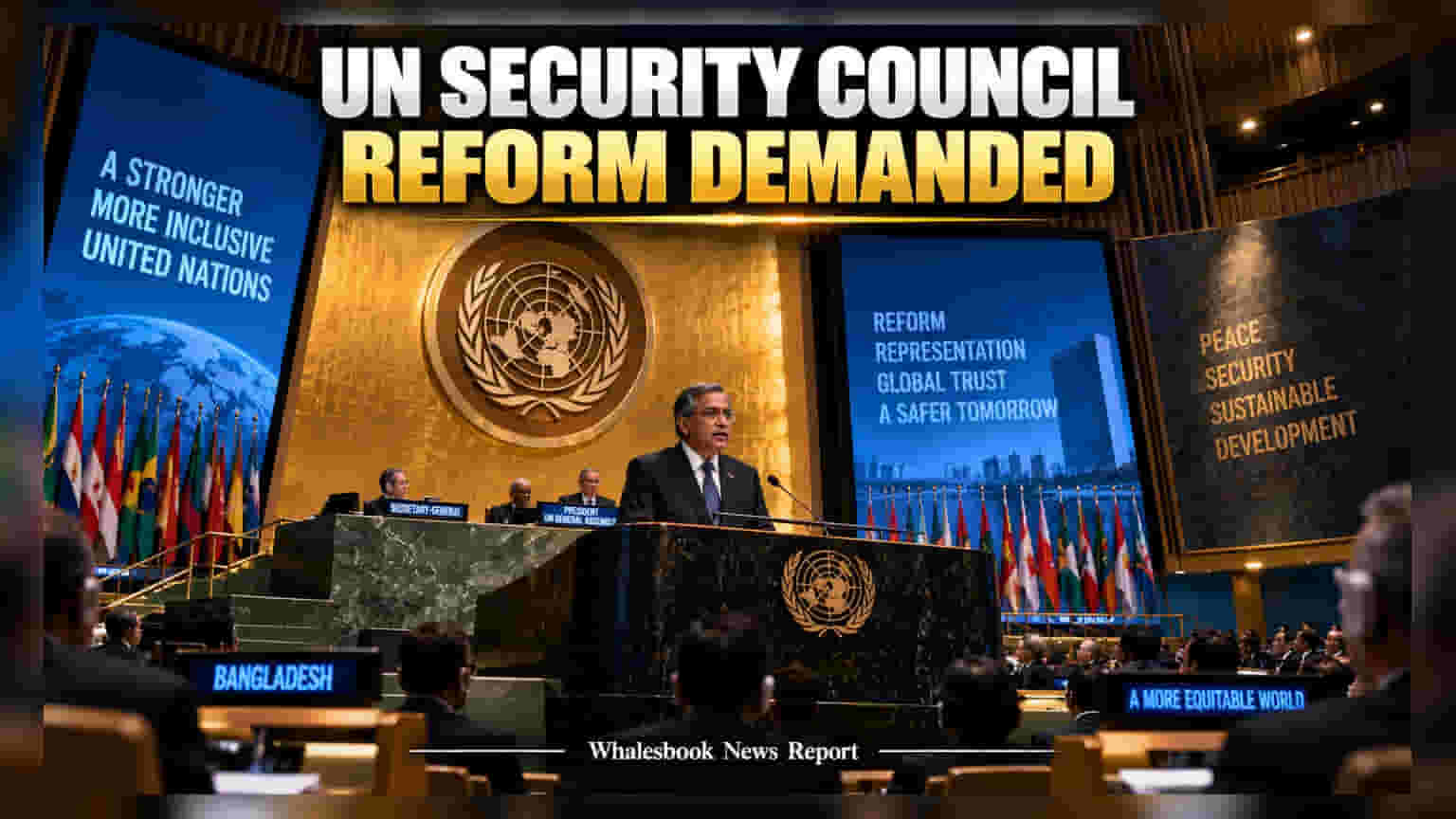
Bangladesh Foreign Minister Khalilur Rahman has officially begun his tenure as the 81st UN General Assembly President, demanding an urgent structural overhaul of the Security Council. He argues that the institution, still rooted in a 1945 framework, must evolve to address modern global challenges and bridge a growing trust deficit.
Khalilur Rahman, who also serves as the Foreign Minister of Bangladesh, has assumed the presidency of the 81st session of the United Nations General Assembly. His tenure has started with a direct appeal for a structural overhaul of the UN Security Council (UNSC). Rahman has made it clear that his central priority is to modernize an institution that many critics argue has become disconnected from 21st-century geopolitical realities.
Rahman maintains that the current bureaucratic framework, established in the aftermath of World War II, is no longer sufficient to handle contemporary global crises. He has explicitly highlighted a significant trust deficit within the United Nations, noting that the organization must transcend its 1945 foundations to regain its legitimacy and remain relevant on the world stage.
To address these concerns, the new president has pledged active support for the UN80 initiative. This project, led by Secretary-General António Guterres, aims to simplify the broader United Nations system and increase its operational coherence. Rahman stated that he takes this reform process seriously, warning that any changes must be substantive rather than merely cosmetic to effectively restore international confidence.
The task ahead, however, is complex. The reform of the Security Council has been a long-standing challenge in international diplomacy. The UN system is characterized by institutional inertia, meaning the process of change is often slow. Any meaningful reform faces resistance from entrenched geopolitical interests, particularly among permanent members of the Security Council who hold veto power.
Furthermore, the UNGA President’s role is primarily to build consensus rather than to dictate policy. His ability to drive structural change remains limited by the collective will of the 193 member states. The current environment, marked by deep divisions and global conflicts, complicates the task of identifying common ground. Investors and global observers will likely monitor how Rahman manages to navigate these diplomatic barriers while balancing his role as Bangladesh’s Foreign Minister. The theme for his presidency, "Restoring trust, managing transformation," highlights the difficult path he must tread to turn these calls for reform into actionable policy.