

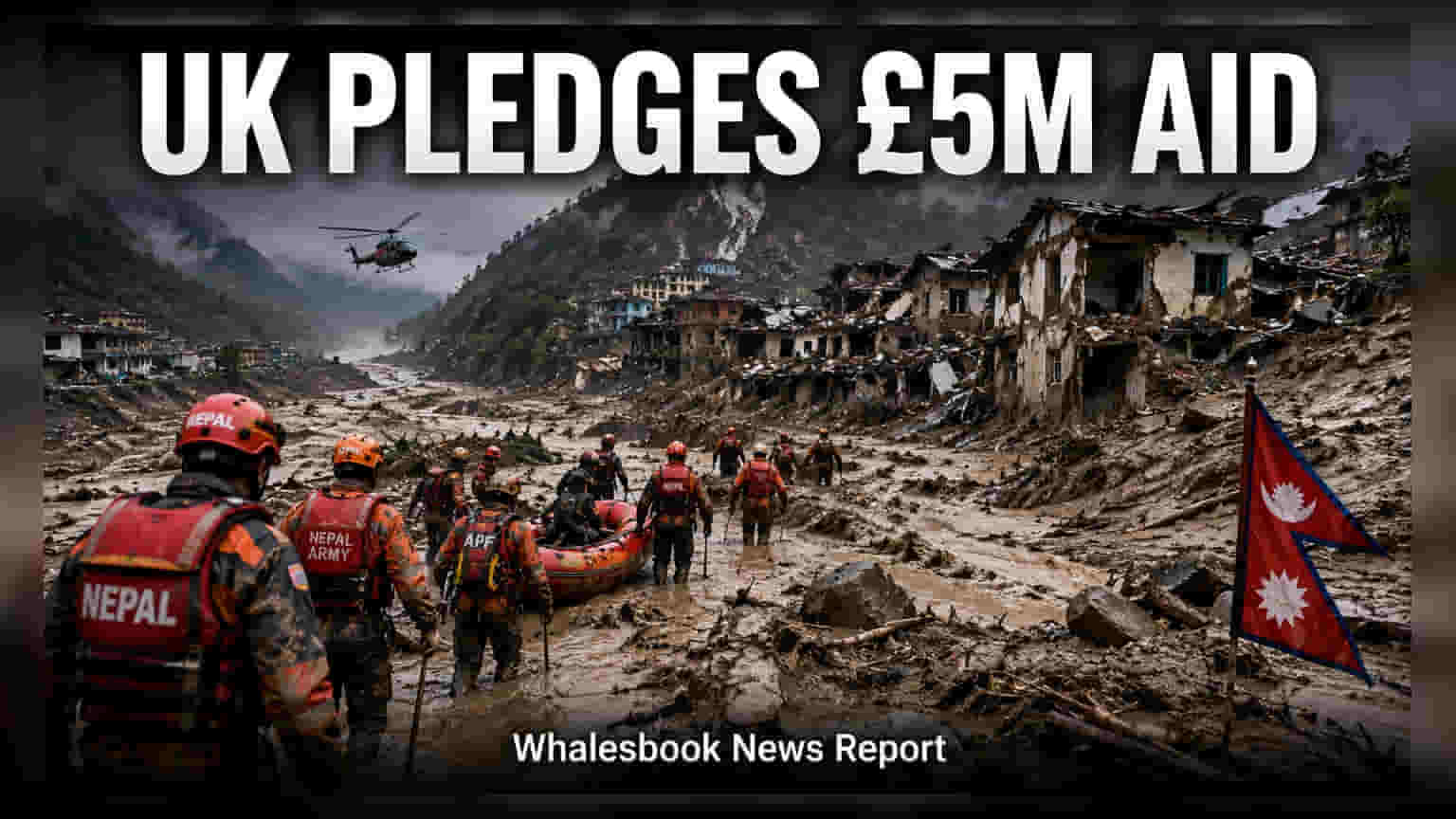
The UK government has committed £5 million in emergency relief to Nepal following a catastrophic glacial collapse that triggered deadly flash floods. Rescue teams are searching for over 1,500 missing individuals, including 33 British nationals, as authorities grapple with severe infrastructure damage and inaccessible terrain.
The United Kingdom has pledged £5 million in humanitarian aid to support Nepal following a series of devastating flash floods and landslides. Prime Minister Andy Burnham announced the assistance package to facilitate emergency rescue operations and provide essential supplies, such as clean water, food, and medical aid, to the regions impacted by the disaster.
The crisis, which occurred near the Nepal-Tibet border, has been attributed by authorities to a significant glacial collapse. This event triggered massive mudslides that buried entire villages and destroyed critical local infrastructure. Reports indicate the death toll has surpassed 270, with more than 1,500 people currently listed as missing. Among those unaccounted for are approximately 33 British citizens.
The British Foreign, Commonwealth and Development Office (FCDO) has mobilized consular staff to assist in the region. The government is currently awaiting formal approval from Nepalese authorities to deploy emergency responders to the site. Foreign Secretary Ed Miliband is actively coordinating with international partners, including the World Bank and the International Federation of Red Cross and Red Crescent Societies (IFRC), to ensure that relief funds are directed to the most affected areas.
Rescue operations are facing severe operational challenges. Local agencies have reported that the terrain has become highly unstable, with thick mud deposits rendering many areas inaccessible to heavy machinery. Furthermore, the destruction of local communication networks has complicated the coordination of search and rescue teams. Geologists and emergency planners have noted that the potential for further landslides remains a significant risk, which could delay the recovery process.
The international community is mobilizing to support the stabilization of the region, with additional aid and resources coming from neighboring countries like India and China. While the current priority remains search, rescue, and the provision of emergency medical services, the extent of the damage suggests that these border communities will require an extensive long-term recovery effort to rebuild destroyed homes and restore essential infrastructure. Observers note that the effectiveness of the relief will depend on how quickly teams can clear paths to the isolated, mud-covered villages.