

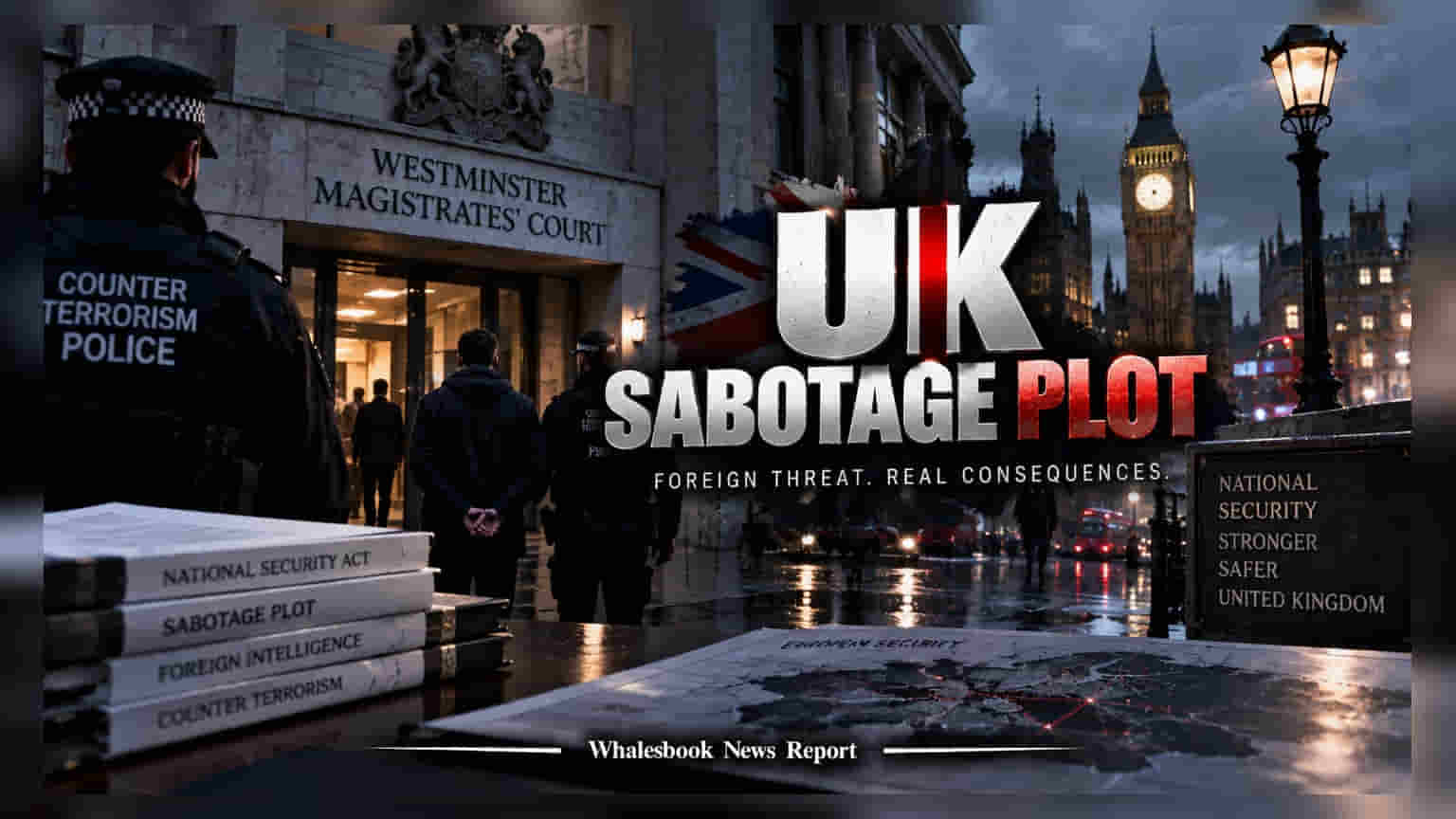
A 31-year-old British national, Joshua Cammidge, has been charged under the UK’s National Security Act for allegedly assisting Russian military intelligence in a sabotage operation. The case highlights ongoing geopolitical tensions in Europe. This is a criminal legal matter and carries no direct financial or stock market impact for Indian investors.
British authorities have formally charged 31-year-old Joshua Cammidge under the UK’s National Security Act. He is accused of materially assisting a foreign intelligence service and engaging in conduct related to a potential sabotage plot. The charges follow an arrest by counterterrorism police in Swindon, with the defendant scheduled for an initial appearance at Westminster Magistrates' Court on Thursday.
Prosecutors allege that Cammidge maintained active communication with the GRU Volunteer Corps, a group the UK government officially designated as a national security threat in July 2026. This organization is linked to Russia’s military intelligence agency, the GRU, and is accused of orchestrating hostile operations across Europe. Under the UK’s updated legislative framework, providing assistance to such groups can lead to significant criminal penalties, with potential sentences reaching up to 14 years.
While the specific nature of the alleged sabotage has not been publicly disclosed, the UK government has framed this case within a broader, ongoing campaign by state-sponsored actors to weaken western support for Ukraine and undermine European stability. Security officials have stated that the arrest was a preemptive action against an identified threat.
From a financial and stock market perspective, this event is a security-related development involving an individual with no stated corporate or commercial affiliations. There is no information linking this case to any publicly traded companies, NSE or BSE-listed entities, or broader economic or industrial operations. Consequently, the event does not have a direct impact on Indian stock markets or financial assets.
For investors, such developments serve as reminders of the elevated geopolitical risk environment in Europe. While this specific legal case is not a market-moving event, geopolitical tensions in the region remain a factor that global markets occasionally monitor for potential ripple effects on energy supplies, trade routes, or commodity pricing, though no such impact is observed in this instance.