

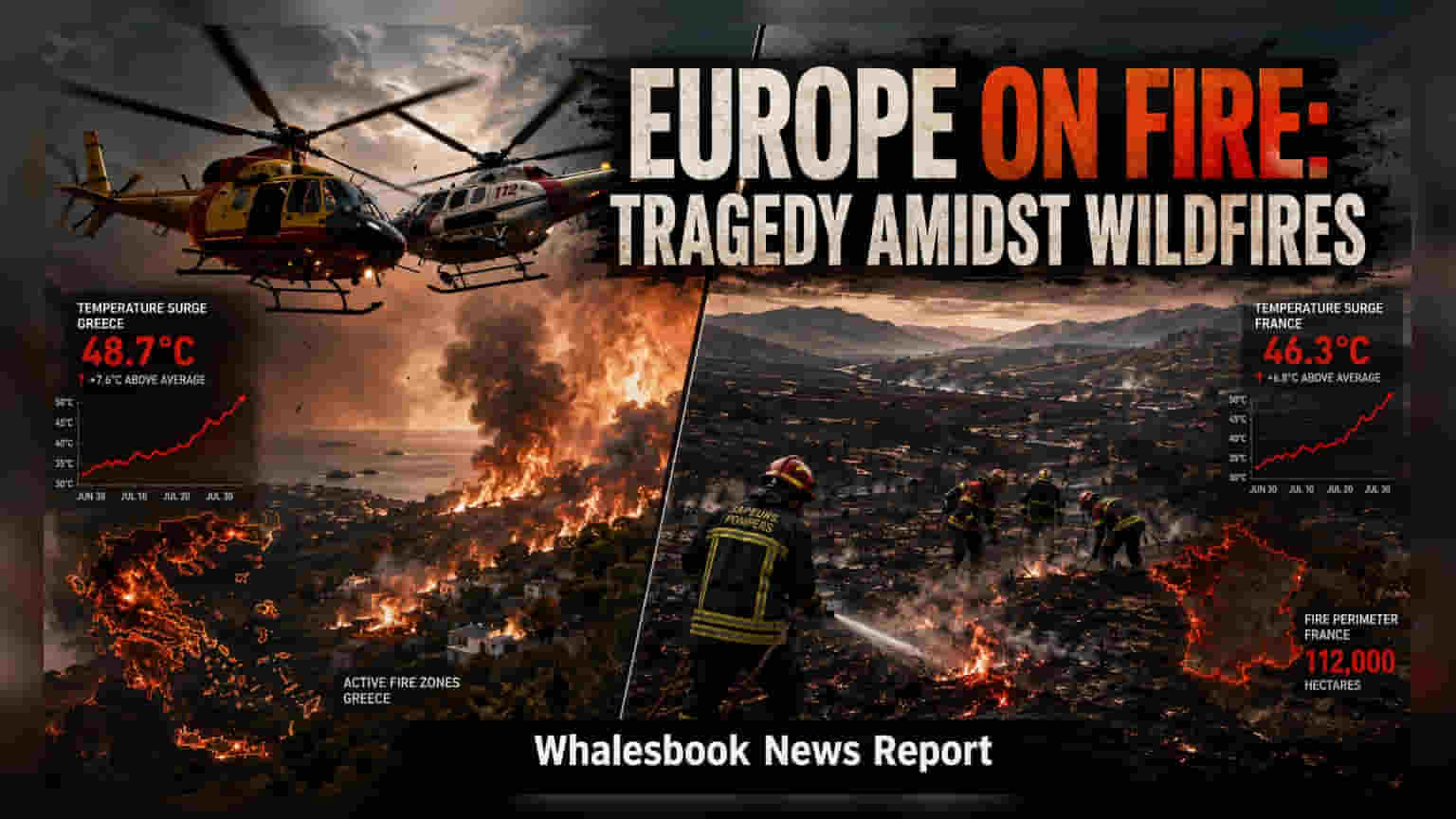
A mid-air collision between two firefighting helicopters near Athens on Sunday resulted in two deaths, as Greece battles severe wildfires. The tragedy highlights the extreme operational risks faced by emergency services amid intense European heatwaves and forest fires.
A mid-air collision between two firefighting helicopters occurred west of Athens on Sunday, resulting in the deaths of two crew members, one Greek and one Danish national. Two other crew members, a Greek and a British national, survived the crash. The aircraft were actively involved in suppression efforts against a fast-moving wildfire in the Psatha region when the incident took place.
Operational Pressures in Extreme Conditions
The accident highlights the severe strain on emergency response teams across Southern Europe. Intense gale-force winds and rugged terrain have significantly hindered aerial firefighting operations. In Greece, these conditions have forced authorities to initiate evacuations in coastal areas like Porto Germeno, as road access has become blocked by the spreading flames. More than 500 firefighters and 23 aircraft are currently deployed to contain the blazes, which have been exacerbated by a prolonged heatwave.
Escalating Wildfire Crisis Across Europe
The wildfire situation remains critical in other parts of the continent as well. In southwestern France, the massive Gironde blaze has consumed approximately 420 square kilometers, leading to the displacement of over 224,000 residents in what is reported as one of the country's largest civilian evacuations in recent decades. Nearly 3,000 firefighters remain on the ground to manage the active fire fronts. Spain has also faced a deadly season, reporting at least 13 wildfire-related deaths this year. While major fires in Spain are currently reported to have stopped their advance, the government has called for a national strategy to address the growing frequency of these events.
Broader Environmental and Economic Impact
Scientific data indicates that Europe is warming at more than twice the global average, a trend that experts link to an increased frequency of extreme fire-weather conditions. For stakeholders and governments, the crisis poses significant challenges related to disaster management funding, insurance costs for affected properties, and the long-term economic impact on tourism and forestry sectors. As the season progresses, the ability of regional authorities to maintain sustained firefighting operations and the impact of these disasters on local infrastructure will remain primary monitorables for the European authorities.