

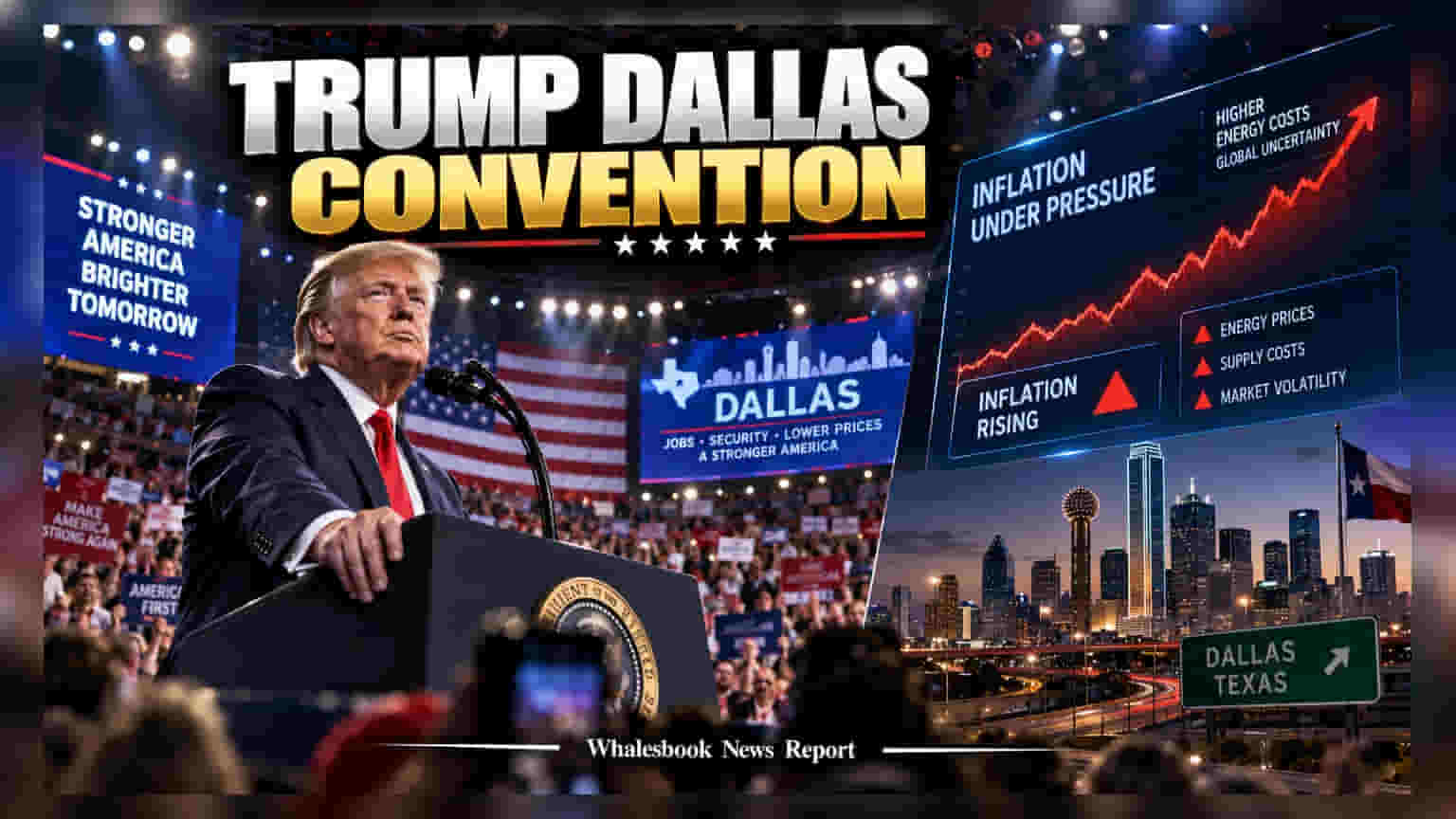
As Donald Trump hosts a two-day midterm convention in Dallas, the event faces significant economic headwinds with Brent crude surpassing $100 per barrel. Investors are monitoring how the escalating Iran conflict and political uncertainty ahead of the November 3, 2026, elections might influence market volatility and energy policy.
Former President Donald Trump has convened a two-day midterm convention in Dallas, starting September 9, 2026, aiming to solidify Republican support less than two months before the crucial November 3 congressional elections. While the gathering is designed to act as a platform for party messaging, it is taking place against a backdrop of complex geopolitical and economic challenges that are drawing close attention from financial markets.
The convention’s timing coincides with significant pressure on the U.S. economy, primarily driven by the ongoing six-month conflict with Iran. Recent reports of Iranian strikes on U.S. assets in Kuwait and Jordan have contributed to rising global energy costs, with Brent crude prices recently climbing above $100 per barrel. For the broader market, these sustained high energy prices present a dual challenge, threatening to keep inflation elevated while increasing input costs for industries across the United States.
Political analysts are also tracking the potential electoral impact as Republicans work to defend narrow congressional majorities. Polls currently show the President’s approval rating at 33%, the lowest of his second term. This political climate has created a divide, with some Republican candidates in competitive districts choosing not to attend the Dallas event. This internal positioning highlights concerns about how voter frustration regarding the cost of living and foreign policy might translate at the ballot box in November.
From a market perspective, the interplay between political uncertainty and geopolitical risk remains a primary focus. Investors generally monitor such high-profile political events for signals regarding potential shifts in fiscal policy, trade, or energy strategy. With the conflict in the Middle East showing few signs of immediate de-escalation, the focus for many remains on how sustained energy price volatility and political shifts in Washington could impact corporate earnings and global economic stability in the coming quarters.
The effectiveness of the Republican messaging in Dallas will be tested by the ability of the party to address voter concerns about the economy and the ongoing foreign policy crises. As the event concludes, market participants will likely look toward the November 3 election results and any preceding updates on energy market stability as indicators of future policy direction and economic sentiment.