

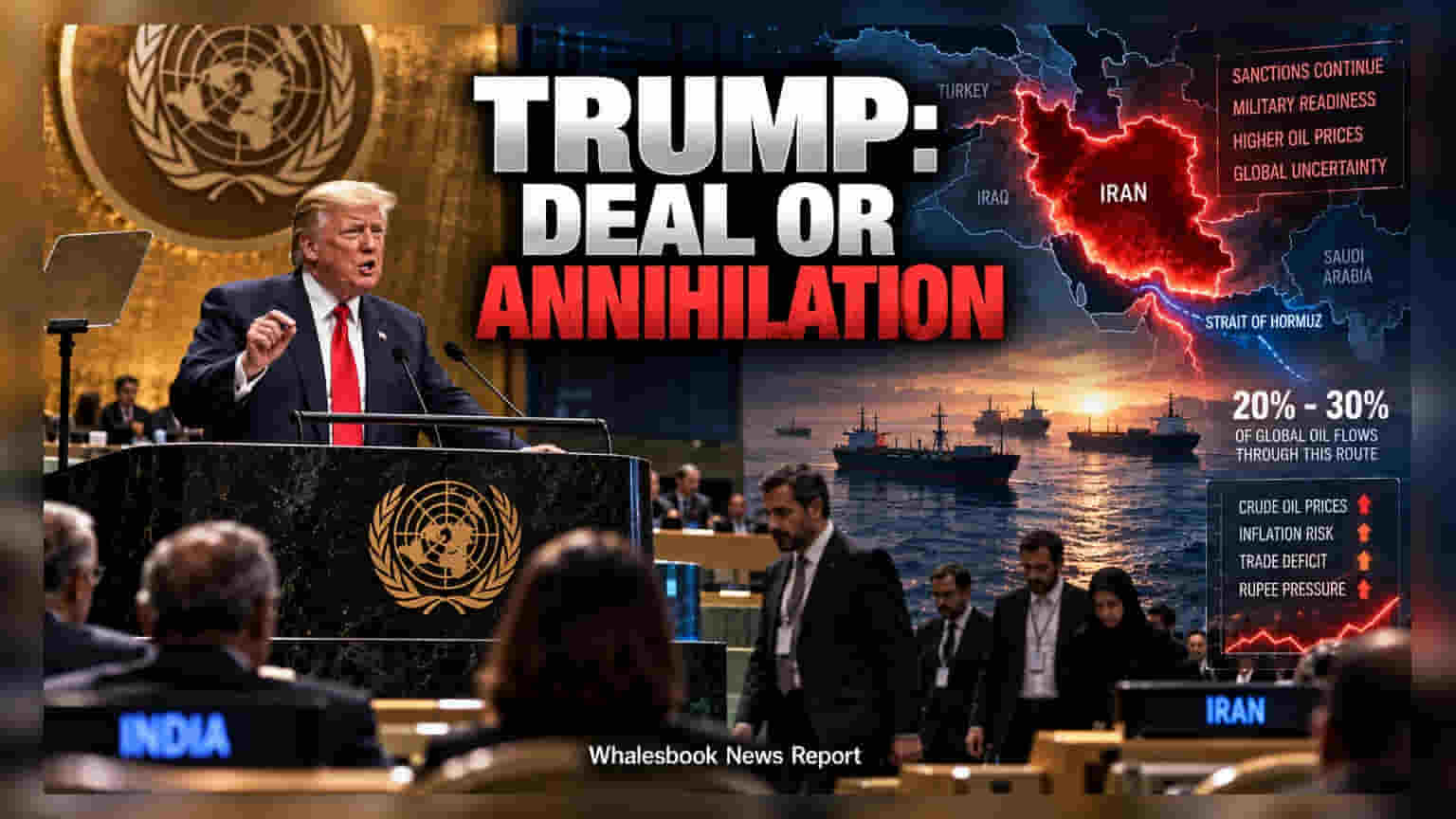
President Donald Trump threatened Iran with military action at the UN General Assembly while proposing potential negotiations after the US midterm elections. This geopolitical standoff directly impacts global energy security, as the Strait of Hormuz remains a critical artery for oil trade. Indian investors may watch crude oil prices closely, as energy supply disruptions often lead to higher import costs, inflation, and pressure on the domestic currency.
Donald Trump used his address at the United Nations General Assembly to issue a stark warning to Iran, presenting a choice between diplomatic engagement after the US midterm elections and the threat of military destruction. By declaring that Iran is no longer a dominant power, the US administration signaled that it intends to maintain current economic pressure while preparing for potential escalation if negotiations fail.
For investors, the most immediate impact of this rhetoric lies in the energy markets. The Strait of Hormuz, mentioned by the President as a secure corridor, is one of the world's most sensitive chokepoints. Roughly 20% to 30% of global oil consumption passes through these waters. Any sustained rhetoric regarding military confrontation increases the risk premium on crude oil. When global crude prices rise, it poses a direct challenge to oil-importing economies like India. Higher oil prices can strain the country’s trade deficit, pressure the Indian Rupee, and increase input costs for sectors ranging from manufacturing to transport.
The administration also highlighted that it is ramping up munitions production at new facilities, signaling a long-term commitment to maintaining military readiness. While the White House stated it has successfully escorted over 1 billion barrels of oil through the region, the market often reacts more to uncertainty than to current logistics. The boycott of the speech by Iranian delegates further suggests that the diplomatic rift remains wide, leaving little room for immediate de-escalation.
Investors may look toward movements in Brent crude futures as the primary indicator of how the market is pricing this geopolitical risk. Beyond oil prices, the key monitorable for Indian markets will be the government's stance on fuel pricing and the potential for inflation if global energy costs remain elevated. As both nations posture for the next phase of this standoff, the timing of post-election negotiations remains an uncertain variable that could either soothe or further rattle global commodity markets.