

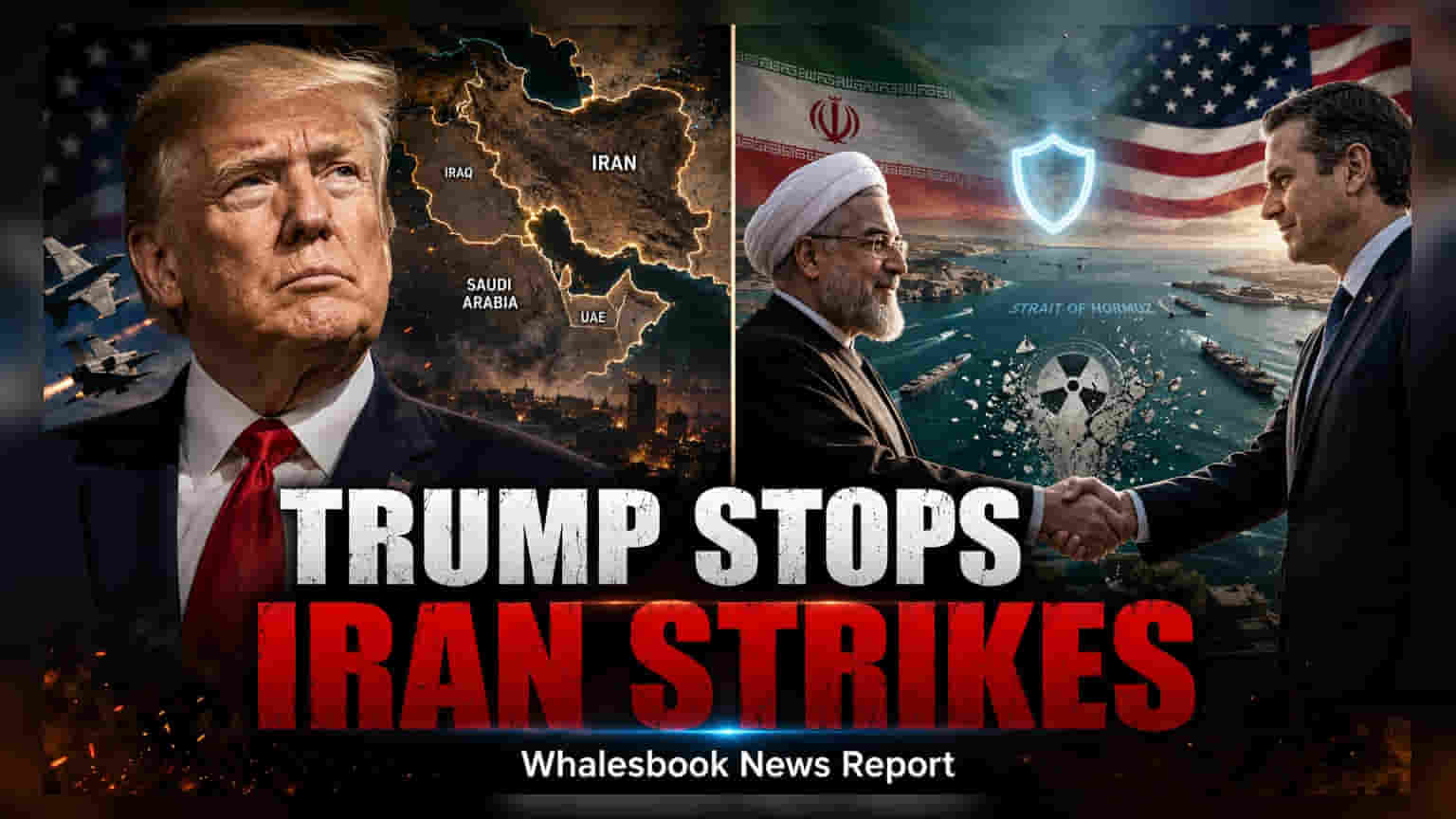
US President Donald Trump has cancelled planned military strikes against Iran following diplomatic requests from Tehran and Middle Eastern nations. This pause is linked to potential agreements regarding the Strait of Hormuz and Iran's nuclear program, which remain contingent on final negotiations.
US President Donald Trump announced on Sunday the cancellation of planned military strikes against Iran. This decision follows requests from Tehran and other Middle Eastern countries, marking a pause in a period of intense regional military escalation. Trump indicated that the suspension of potential conflict is conditional, relying on the swift completion of a broader diplomatic agreement between the parties involved.
Potential Impact on Global Energy Routes
Central to the proposed discussions is the status of the Strait of Hormuz. This narrow waterway is one of the most critical energy transit points in the world, as a significant portion of global oil and liquefied natural gas (LNG) passes through this region daily. Disruptions in this area have historically led to volatility in global energy prices, as any threat to shipping lanes directly impacts the cost of crude oil and fuel transport.
For investors monitoring the energy sector, the primary concern revolves around the security of infrastructure in the Middle East. Prior to this announcement, tensions had risen following warnings from Iranian state-affiliated media regarding the potential targeting of energy facilities in neighboring nations, including Saudi Arabia, the United Arab Emirates, and Qatar. While the current pause in military action provides a temporary reprieve from immediate supply disruption risks, the stability of these energy corridors remains sensitive to the progress of the announced diplomatic talks.
Geopolitical Context and Market Sensitivity
The situation remains fluid as both nations navigate the potential terms of a new accord, which is expected to address Iran's nuclear program alongside regional security and trade access. Historical data shows that heightened tensions in the Persian Gulf often lead to 'risk premiums' being priced into oil, where market prices rise due to the fear of supply shocks. The cancellation of military strikes suggests a movement away from immediate escalation, but the market's reaction will depend heavily on the actual finalization of the deal rather than the current announcement alone.
Investors should monitor official statements from the US State Department and regional energy bodies, as well as any developments concerning the reopening and security of the Strait of Hormuz. The next critical steps involve the verification of the 'broad parameters' of the deal mentioned by the US administration and whether both sides can reach a formal, enforceable agreement that eases concerns over the safety of global energy infrastructure.