

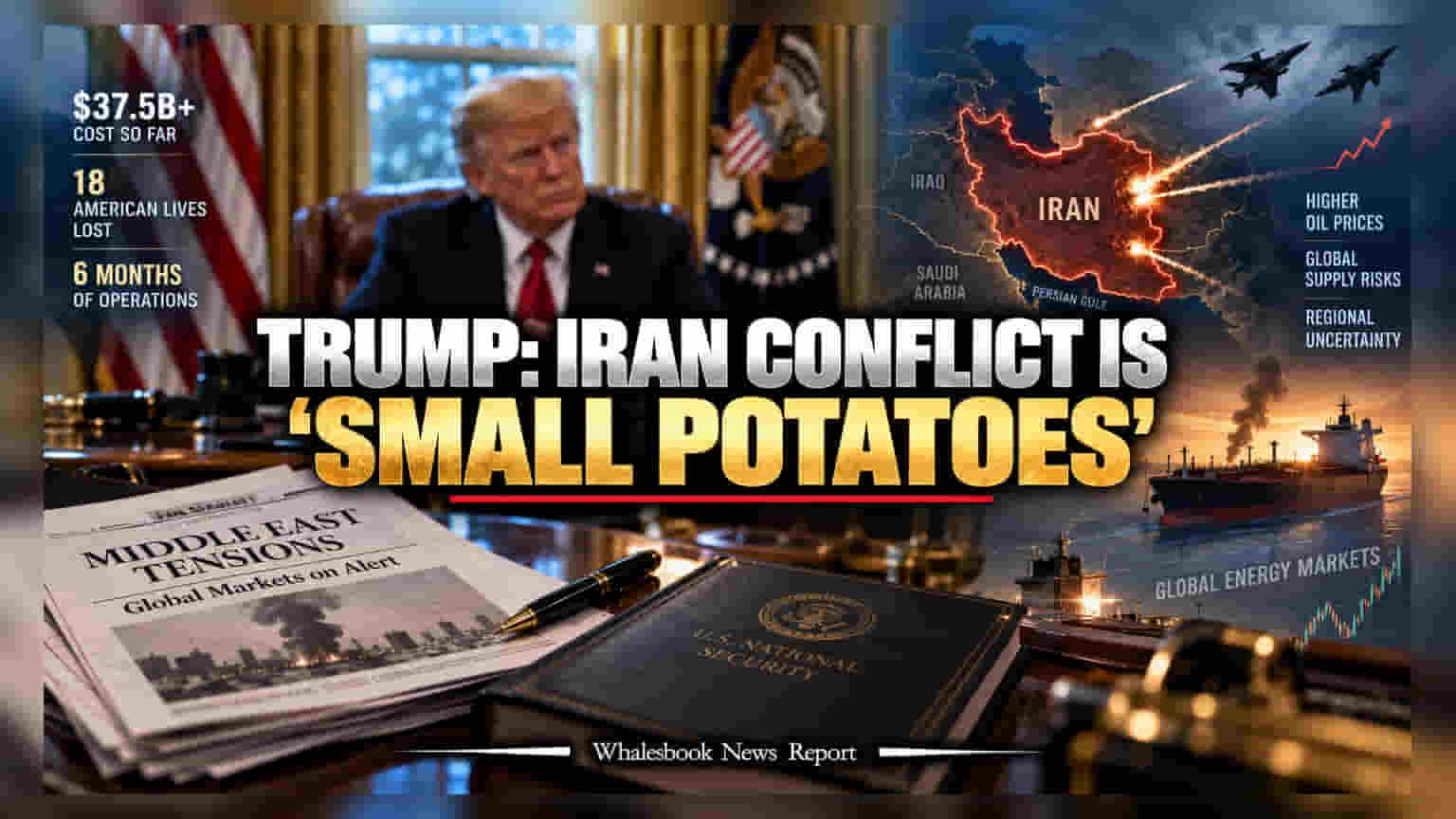
President Donald Trump has downplayed the six-month conflict with Iran, describing it as 'small potatoes' despite 18 US service member fatalities and over USD 37.5 billion in federal spending. For investors, the rhetoric highlights ongoing geopolitical uncertainty, which often impacts global oil prices, shipping logistics, and overall market stability ahead of the upcoming US congressional elections.
President Donald Trump has officially categorized the ongoing US military engagement with Iran as 'small potatoes,' defending Vice President JD Vance’s refusal to label the six-month operation a 'war.' This statement, delivered from the Oval Office on Friday, follows a series of military exchanges that have raised significant concerns regarding regional stability. For global markets and investors, the rhetoric serves as a reminder of the persistent geopolitical risk lingering in the Middle East, a region critical to global energy supply chains.
Financial data indicates that the campaign, which began on February 28, 2026, has already incurred costs exceeding USD 37.5 billion. While the administration frames the strikes as limited and intermittent, the human and financial toll remains a point of significant scrutiny. The reported loss of 18 American lives and the high operational costs add a layer of political sensitivity to the ongoing operations, especially as the United States approaches critical congressional elections on November 3.
Geopolitical developments in the Gulf region have historically been a significant driver of volatility in energy markets. Investors often monitor these escalations for their potential impact on crude oil prices and international shipping routes. When tensions rise in this corridor, supply chain risks can increase, potentially leading to higher freight costs or delays for global trade. Furthermore, the uncertainty surrounding the 'intermittent' nature of the current strikes can complicate risk management for companies with exposure to Middle Eastern markets or global logistics.
The administration's attempt to lower the political temperature by minimizing the conflict’s scale appears aimed at addressing public concern ahead of the midterm elections. However, market participants often look beyond political rhetoric to evaluate the actual duration and intensity of such engagements. Historical patterns suggest that even localized conflicts can create unpredictable fluctuations in global risk sentiment and commodity markets.
For investors, the situation underscores the importance of monitoring how this engagement influences global energy prices and whether further escalation could disrupt trade corridors. The administration's focus on containing the narrative suggests that they are prioritizing stability for domestic political reasons, but the market's reaction will likely depend on actual developments in the region. The next monitorable for investors will be the sustainability of this 'limited' approach and any new data on the conflict's financial impact in upcoming government reports. Investors may also track oil price trends and shipping costs as indicators of regional stability, while watching for any changes in the tone or intensity of the military engagement that could alter the economic outlook.