

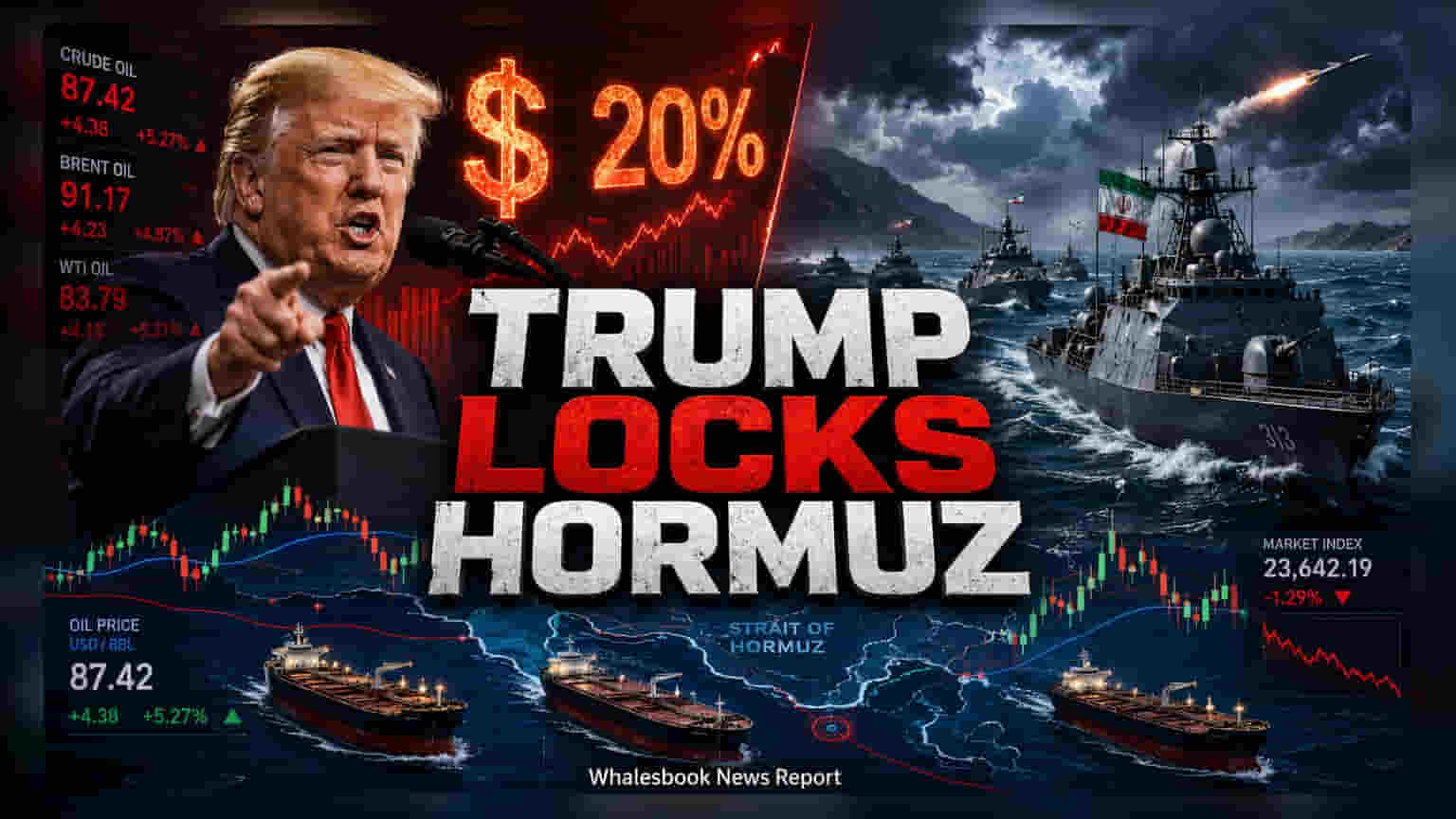
President Donald Trump has announced a US-led blockade on the Strait of Hormuz, demanding a 20% fee on all cargo. This move increases geopolitical risks for global energy markets, as the waterway handles about 20% of the world's oil supply. Investors may track potential spikes in crude oil prices and global shipping costs.
Global energy markets are on high alert following a major escalation in the Middle East. US President Donald Trump announced that the United States is imposing a blockade on the Strait of Hormuz and will charge a 20% fee on all cargo passing through the waterway. The President stated that the U.S. will act as the guardian of the strait, a move he claims is necessary for fairness in covering security costs.
Impact on Global Energy Supplies
The Strait of Hormuz is a critical passage for the global economy, connecting the Persian Gulf to the Gulf of Oman. Approximately one-fifth of the world’s oil and liquefied natural gas (LNG) shipments travel through this narrow channel daily. Any restriction or fee implementation at this location directly threatens to disrupt supply chains and inflate energy costs. For Indian investors, this development is significant because India is a large importer of crude oil, and any sustained increase in oil prices can put pressure on the country's import bill, current account deficit, and domestic inflation.
Geopolitical Tensions and Market Risks
The situation has intensified following recent military exchanges between U.S. and Iranian forces. Tehran has formally rejected the U.S. proposal, with its military command warning that it will not permit any American role in managing the strait. Iran has explicitly stated that any U.S. attempt to control the waterway without authorization will be met with confrontation and has cautioned regional nations against cooperating with Washington.
This heightened state of conflict creates uncertainty for businesses heavily reliant on energy imports, particularly in the manufacturing, chemical, and transportation sectors. When crude oil prices rise sharply due to supply concerns, profit margins for these sectors often come under pressure unless companies can pass the higher costs to consumers.
Investors should monitor how international shipping companies adjust their routes and whether insurance premiums for tankers passing through the region increase. The primary monitorable for the coming days will be the official response from major oil-exporting nations and the actual implementation of the proposed fee, as these will determine the extent of the impact on global oil price benchmarks and shipping logistics.