

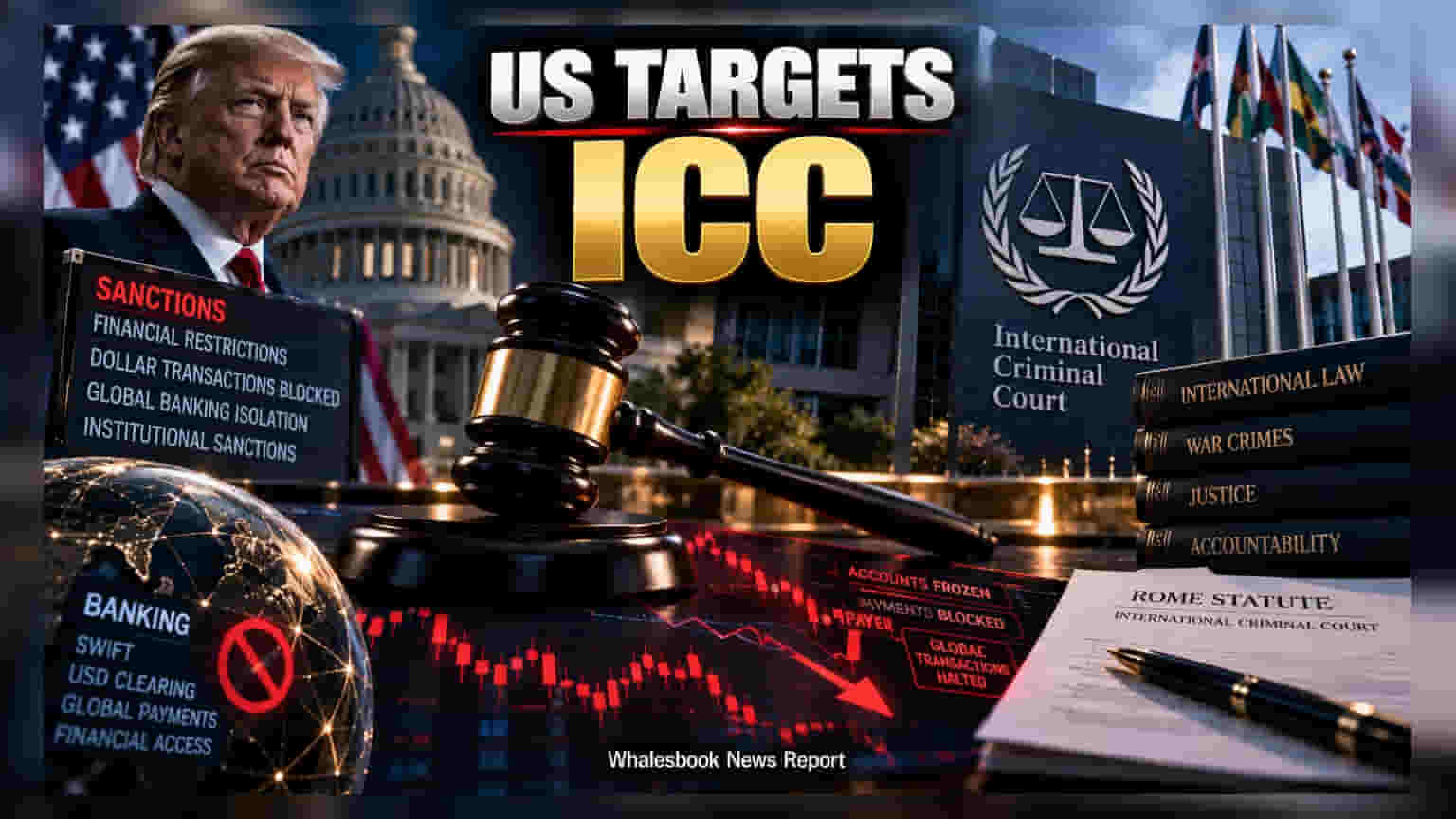
The U.S. government is finalizing sanctions against the International Criminal Court to restrict its access to the American financial system. This move aims to force the withdrawal of arrest warrants for Israeli officials. By blocking the tribunal's use of U.S. dollar-based transactions, the measure threatens to paralyze the court's global investigative operations.
The U.S. administration is preparing to impose wide-ranging sanctions against the International Criminal Court (ICC). Unlike previous diplomatic actions that often targeted specific individuals, this proposed strategy aims to sanction the Hague-based tribunal as a single institution. If these measures are implemented, the ICC would face a near-total cutoff from the U.S. financial system, effectively blocking its ability to conduct international financial transactions and vendor payments.
The core of this strategy relies on the global dominance of U.S. banking infrastructure. Most international financial settlements, including those used by non-profit and judicial organizations, depend on access to U.S. capital markets and dollar-clearing systems. Because global financial institutions generally avoid processing transactions that could violate U.S. sanctions, a freeze on the ICC would likely force banks worldwide to stop providing services to the court, disrupting its day-to-day ability to function as a global judicial body.
The direct catalyst for this decision is the ICC's issuance of arrest warrants for Israeli officials, including Prime Minister Benjamin Netanyahu, in November 2024 regarding the conflict in Gaza. The United States and Israel have consistently maintained that the court lacks legal jurisdiction over their citizens, as neither nation is a signatory to the Rome Statute, the treaty that established the court. Washington views the warrants as an overreach that challenges its strategic interests and its alliances.
For observers of global affairs and institutional stability, this move highlights the risks associated with the intersection of international law and sovereign financial power. By leveraging its control over the global financial plumbing, the U.S. is signaling a willingness to aggressively counter international bodies that act against its policy positions. Investors often monitor such geopolitical tensions because they can create volatility in trade relations, impact diplomatic cooperation, and complicate the operational environment for international organizations and global supply chains.
The upcoming United Nations General Assembly in New York is expected to be a focal point for this diplomatic standoff, with the administration potentially timing the announcement to deliver a strong message to the international community. The immediate monitorable for the global community will be whether these sanctions are fully enacted and how other international banking partners respond to the directive, which will determine the long-term impact on the ICC’s investigative capacity.