

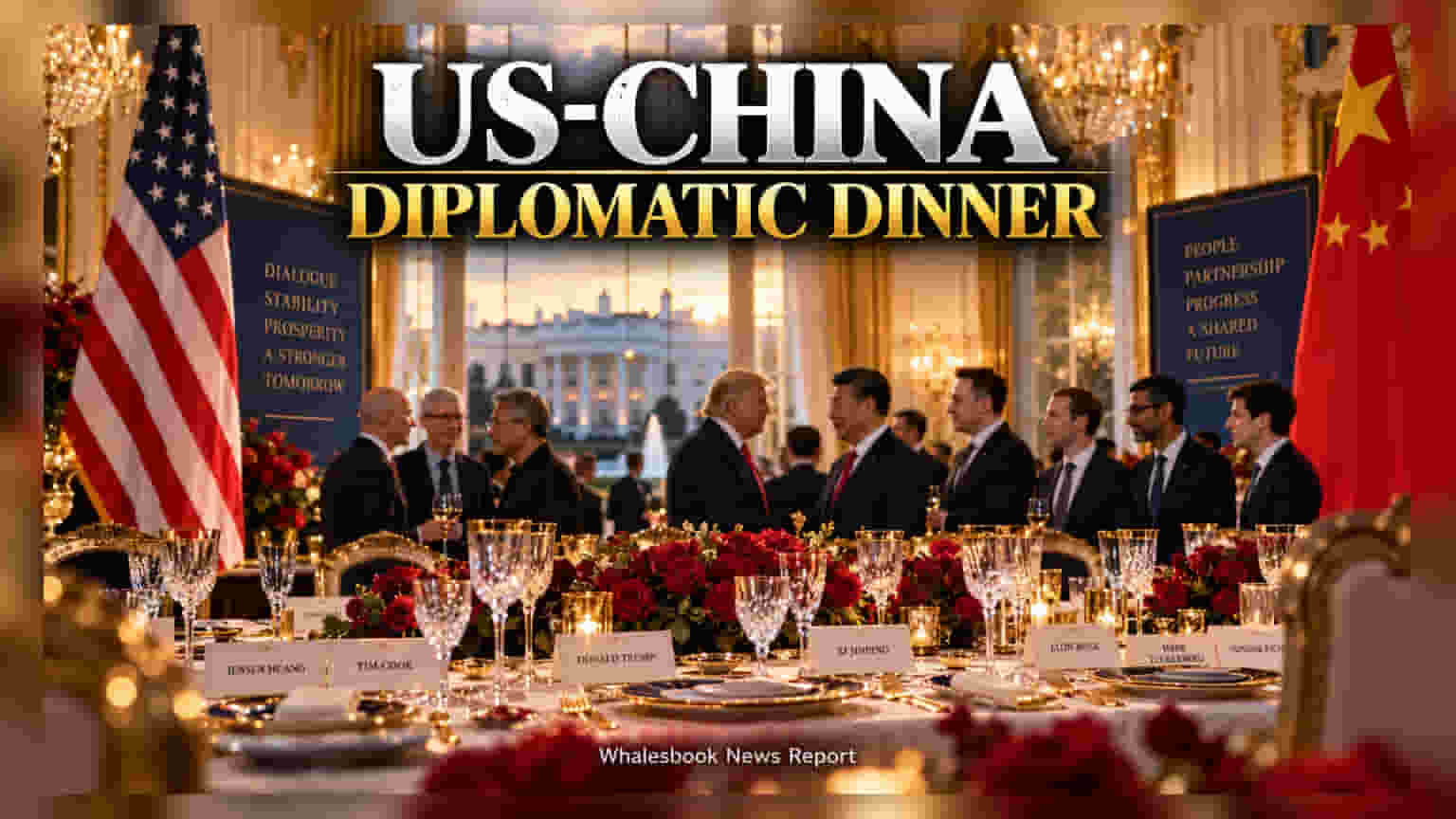
US President Donald Trump hosted Chinese President Xi Jinping for a state dinner, with top tech executives from Nvidia, Apple, and Tesla in attendance. The high-profile gathering underscores the deep operational and trade dependencies between major American technology firms and China, despite ongoing geopolitical friction and regulatory challenges.
US President Donald Trump hosted Chinese President Xi Jinping for a state dinner in Washington, marking a significant moment in the ongoing diplomatic recalibration between the two nations. The guest list drew intense focus from the financial community, featuring a who’s-who of the American technology sector, including Nvidia CEO Jensen Huang, Apple CEO Tim Cook, Tesla and SpaceX chief Elon Musk, Meta CEO Mark Zuckerberg, Amazon founder Jeff Bezos, Google CEO Sundar Pichai, and OpenAI head Sam Altman.
The presence of these leaders highlights the critical importance of US-China relations for the global technology sector. For investors, the event underscores the delicate balance these companies must navigate, as they depend heavily on China for manufacturing, revenue, and market access, while simultaneously dealing with complex geopolitical risks.
Strategic Tech Dependencies
Each of the companies represented has significant, albeit different, interests in the US-China trade landscape. Nvidia, for instance, has been navigating strict US export controls on high-performance AI chips, a policy that directly affects its ability to serve one of its largest potential markets. Meanwhile, companies like Apple and Tesla have heavily integrated their supply chains and production capacities within China. For Apple, the challenge remains balancing its massive manufacturing ecosystem in the country with diversification efforts. Tesla’s Shanghai Gigafactory has been a cornerstone of its production efficiency, making trade stability a key factor for its global manufacturing goals.
Other attendees like Meta, Google, and Amazon face different hurdles, ranging from regulatory scrutiny over data privacy to restricted access within the Chinese market. For these firms, the ability to operate, protect intellectual property, and navigate domestic regulations remains a constant pressure point.
Investor Monitorables
While the dinner was staged as an exercise in diplomatic hospitality, the concentration of tech leadership suggests that behind-the-scenes discussions may have touched on critical areas of trade policy, supply chain security, and technology regulation. Investors should track whether the high-level meeting leads to any concrete policy shifts regarding semiconductor export controls, data security regulations, or tariffs.
Moving forward, the primary concern for shareholders will be the stability of these trade channels. Any changes in the regulatory environment, whether through new restrictions or improved market access, will likely have a direct impact on the margins and growth trajectories of these tech giants. Market participants will continue to monitor management commentary and official government releases for any updates on the long-term trade outlook between Washington and Beijing.