

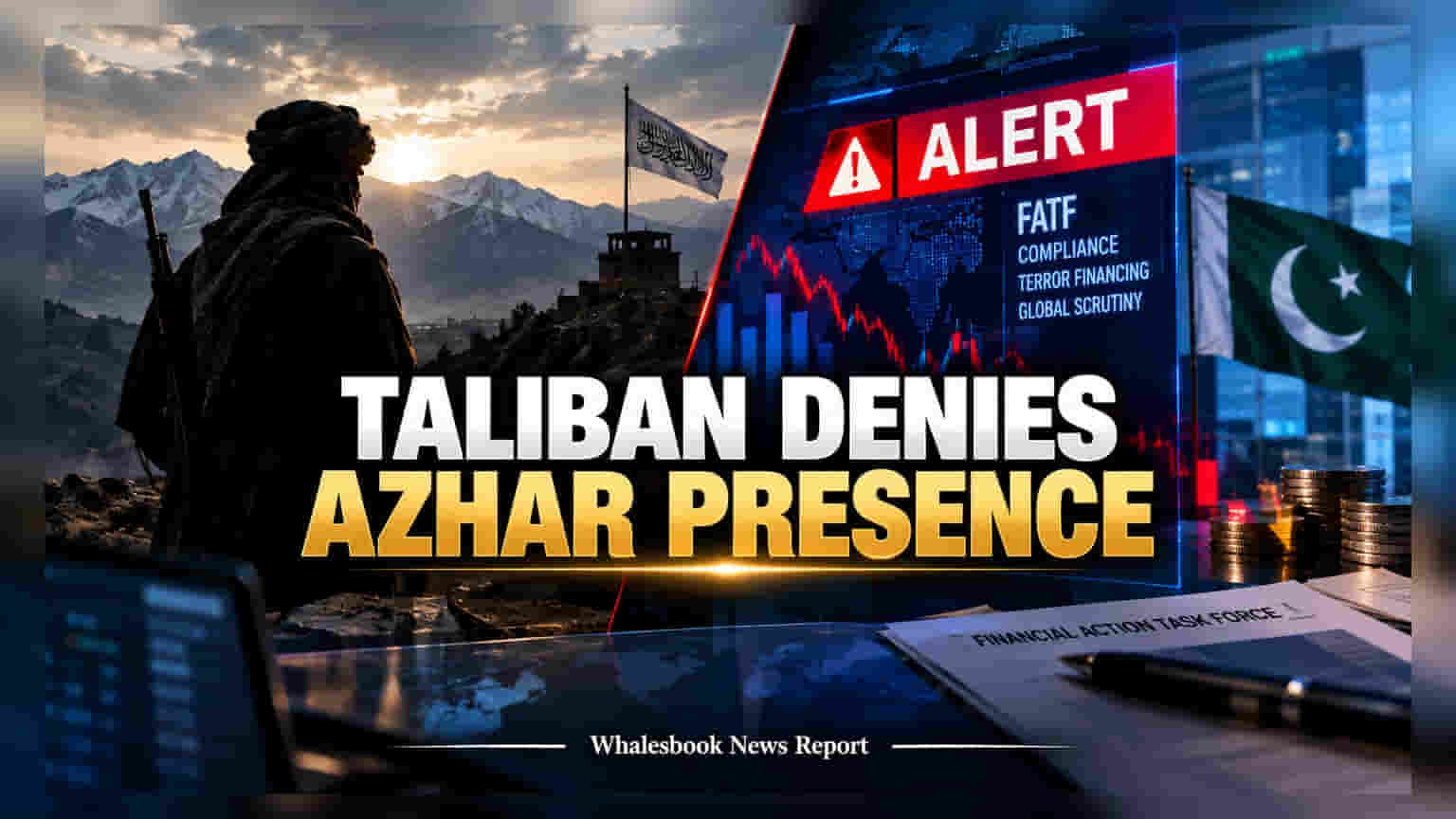
The Taliban government has officially rejected Pakistan's assertion that Jaish-e-Mohammed founder Masood Azhar is hiding in Afghanistan. For investors, this diplomatic row highlights concerns over Pakistan’s compliance with global counter-terror financing mandates, a factor that previously led the country to be placed on the FATF grey list.
The Taliban administration in Kabul has formally refuted recent claims by Pakistan that Masood Azhar, the founder of the militant group Jaish-e-Mohammed, is operating from Afghan territory. This denial creates a diplomatic standoff, as Islamabad has long cited Azhar’s alleged escape across the Durand Line as the primary reason for its inability to apprehend the UN-designated terrorist.
For international observers and markets, this disagreement carries significant weight regarding regional stability and financial compliance. Pakistan has been under continuous watch by the Financial Action Task Force (FATF), the global body that sets standards for anti-money laundering and counter-terror financing. Between 2018 and 2022, Pakistan remained on the FATF grey list due to identified failures in curbing financing for militant groups. While the country exited the list in 2022, that removal was conditional on Pakistan’s commitment to prosecuting high-profile individuals, including Azhar.
Financial analysts point out that the inability of Kabul and Islamabad to coordinate on security issues creates risks for Pakistan’s international standing. While Pakistan reported a conviction of Azhar in absentia in 2021, international monitors have frequently characterized enforcement efforts as superficial. The current friction suggests that the pressure to fully comply with global mandates remains a point of contention.
This diplomatic dispute is important to track because renewed international scrutiny on terror financing compliance can impact a nation's financial credibility and access to global capital markets. Investors and market watchers are likely to monitor whether this public denial by the Taliban leads to a tougher stance from global watchdogs or if it forces Islamabad to revisit its security strategy to avoid the risk of being placed back on international monitoring lists. The lack of cooperation between the two neighbors continues to be a complicating factor for regional economic predictability.