

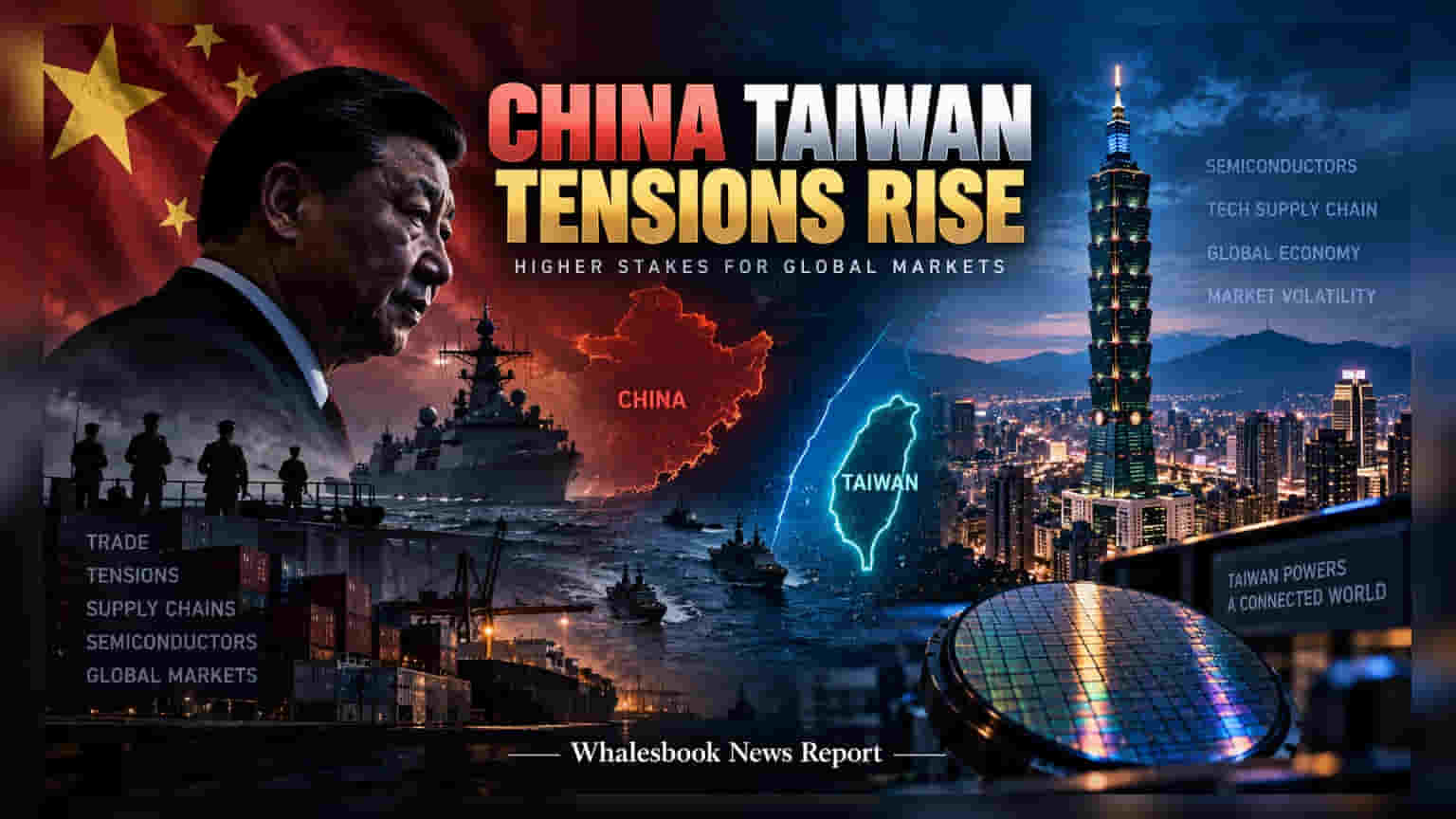
Chinese President Xi Jinping has pressed the US on Taiwan sovereignty, intensifying geopolitical frictions. For investors, this tension highlights risks to global supply chains, particularly in semiconductors. While immediate constitutional changes in Taiwan remain unlikely due to internal political gridlock, the ongoing diplomatic impasse keeps a risk premium on tech-heavy global markets.
Chinese President Xi Jinping has recently urged the United States to maintain a strict stance against Taiwan independence, a development that has reignited global attention on the geopolitical situation in the Taiwan Strait. While diplomatic maneuvering is common between Beijing and Washington, any escalation in this region carries significant implications for global trade, particularly for the electronics and technology sectors.
Impact on Global Semiconductor Supply
For global investors, the Taiwan Strait is not just a political flashpoint but the nerve center of the world's semiconductor industry. Taiwan Semiconductor Manufacturing Company (TSMC), based in Taiwan, produces a vast majority of the world's most advanced computer chips used in everything from smartphones to artificial intelligence hardware. Any disruption in this region, whether through trade sanctions, naval blockades, or prolonged conflict, would have immediate, cascading effects on global manufacturing and stock markets. Indian investors, particularly those with exposure to technology-linked mutual funds or global tech companies, often track these tensions as a key risk factor for sector performance.
The Status Quo and Market Stability
Despite the elevated rhetoric, formal changes to Taiwan's political status appear unlikely in the near term. Taiwan's internal legislative landscape, split between the Democratic Progressive Party and the opposition Kuomintang, makes it difficult to pass major constitutional amendments. This political deadlock acts as a stabilizer, as it prevents sudden, drastic shifts that could trigger a full-scale crisis. Markets have historically priced in this 'status quo' reality, where tension exists but remains beneath the threshold of open conflict.
However, the risks to investors arise when diplomatic ambiguity gives way to economic pressure. Both the US and China have deepened their economic defenses, with the US strengthening its domestic chip manufacturing and China pushing for self-reliance in technology. These moves indicate that both superpowers are preparing for a long-term decoupling of their supply chains. This shift could lead to higher costs for global tech firms as they diversify their manufacturing hubs away from the Taiwan Strait.
What Investors Should Track
Investors should look beyond the daily political headlines and instead monitor shifts in global trade policy and semiconductor pricing. While the risk of immediate conflict is tempered by economic realities, the ongoing diplomatic pressure keeps volatility in play for tech-heavy indices. Key monitorables include updates on US-China trade negotiations, reports on global semiconductor inventories, and any sudden shifts in regional naval activity that could threaten shipping lanes. Monitoring how global companies manage their supply chain dependency on Taiwan remains a prudent approach for long-term investors in the tech space.