 Whalesbook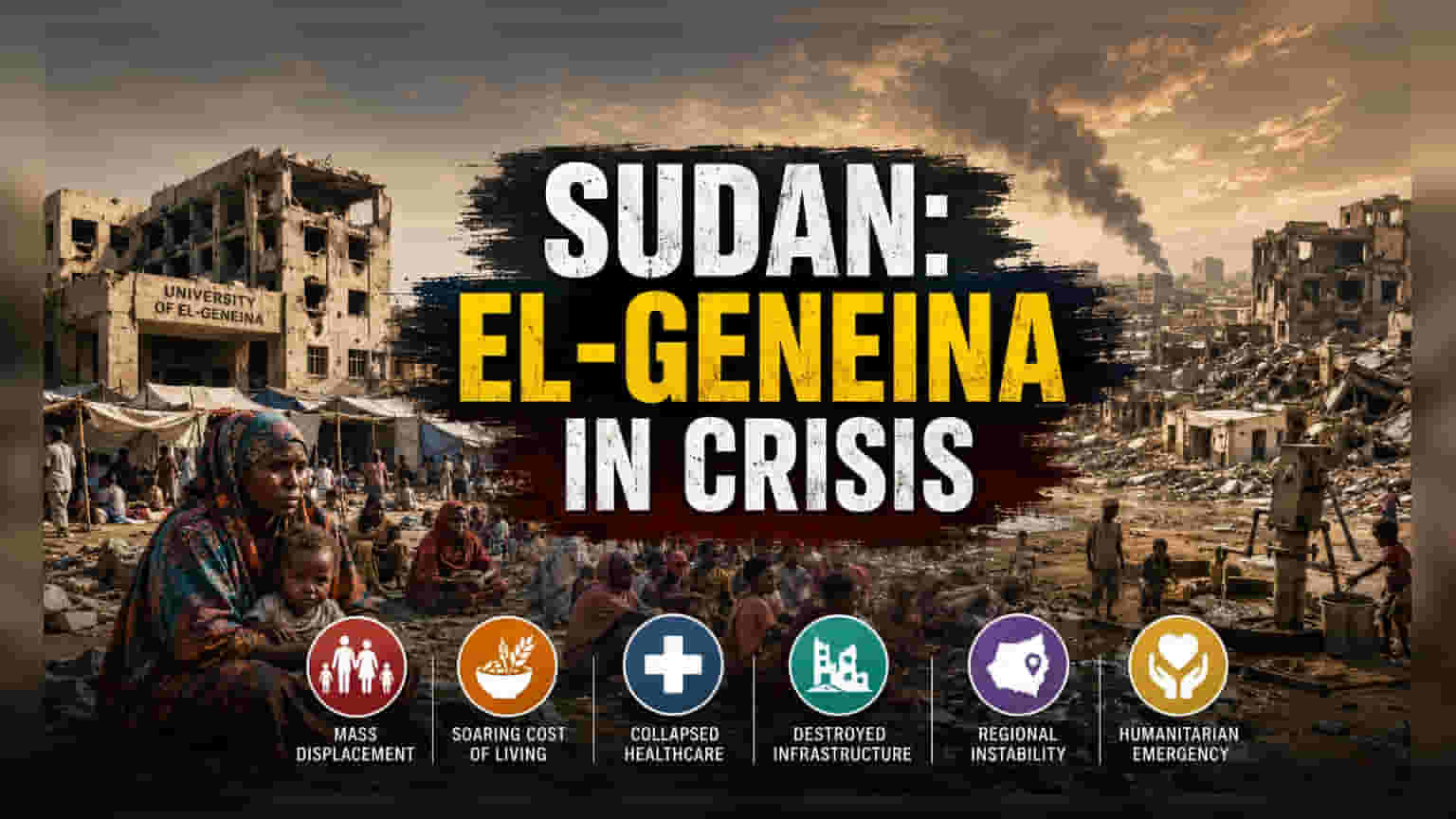


The civil war in Sudan has led to a severe economic and humanitarian crisis in El-Geneina, with civilians facing hyperinflation, infrastructure collapse, and a struggle for basic survival. This breakdown in public services and the displacement of thousands highlight the profound regional instability stemming from the ongoing conflict between the Sudanese Armed Forces and the Rapid Support Forces.
What Happened
The ongoing civil war in Sudan has resulted in a deep humanitarian and economic crisis in El-Geneina, the capital of West Darfur. The city’s infrastructure, including educational and medical facilities, has been repurposed into makeshift shelters for thousands of displaced civilians. This shift reflects the broader collapse of essential services in regions affected by the conflict, where the cost of living—specifically for food, clean water, and medical care—has become prohibitive for most residents.
The crisis is marked by a severe lack of resources. The University of el-Geneina, once a center for education, now serves as a refuge for families who have lost their homes and livelihoods. Reports from those on the ground indicate a total breakdown in government service institutions, which were previously the backbone of the local economy and social stability.
The Economic Toll
For the local population, the war has translated into immediate economic devastation. The closure of schools and the destruction of jobs have left many without income, forcing families to rely on limited and often sporadic aid. In El-Geneina, basic goods that were once affordable and readily available are now out of reach due to hyperinflation and supply chain disruptions.
This economic pressure is most visible in the healthcare sector. Essential surgeries and treatments have become unaffordable for the average citizen. With the destruction of public infrastructure, the cost to access even basic medical procedures has surged, creating a barrier that many cannot overcome. This collapse of the public health system is a key indicator of the long-term damage the conflict is inflicting on the region's socio-economic fabric.
Regional Stability and Security Context
El-Geneina is currently under the control of the Rapid Support Forces (RSF), while the Sudanese Armed Forces (SAF) retain control of other key areas, including Khartoum. The conflict, which escalated significantly in late 2023, has had devastating effects on the region. The United Nations and various human rights organizations have documented widespread violence and displacement. According to these international bodies, the conflict has resulted in tens of thousands of casualties and has been characterized by reports of ethnic violence targeting specific groups, such as the Masalit tribe. The persistence of these conditions continues to create immense pressure on neighboring regions and international humanitarian organizations trying to provide relief.
Why This Matters for Observers
While the situation is primarily a humanitarian disaster, it also represents a significant geopolitical risk. The Horn of Africa is a region of strategic importance, and the sustained instability in Sudan affects trade routes, refugee migration patterns, and the allocation of international aid resources. The destruction of local markets and the disappearance of formal employment sectors mean that any future recovery will face substantial challenges in rebuilding basic economic stability.
What to Monitor
Observers and international stakeholders are tracking several critical factors. The primary monitorable is the ability of humanitarian organizations to deliver aid effectively in a restricted security environment. Furthermore, the continued collapse of public infrastructure, such as hospitals and schools, suggests that the cost of future rehabilitation will be high. The sustainability of the current ceasefires or periods of relative calm remains fragile, and any further escalation in fighting could exacerbate the existing humanitarian and economic pressures, potentially leading to further migration and regional strain.