

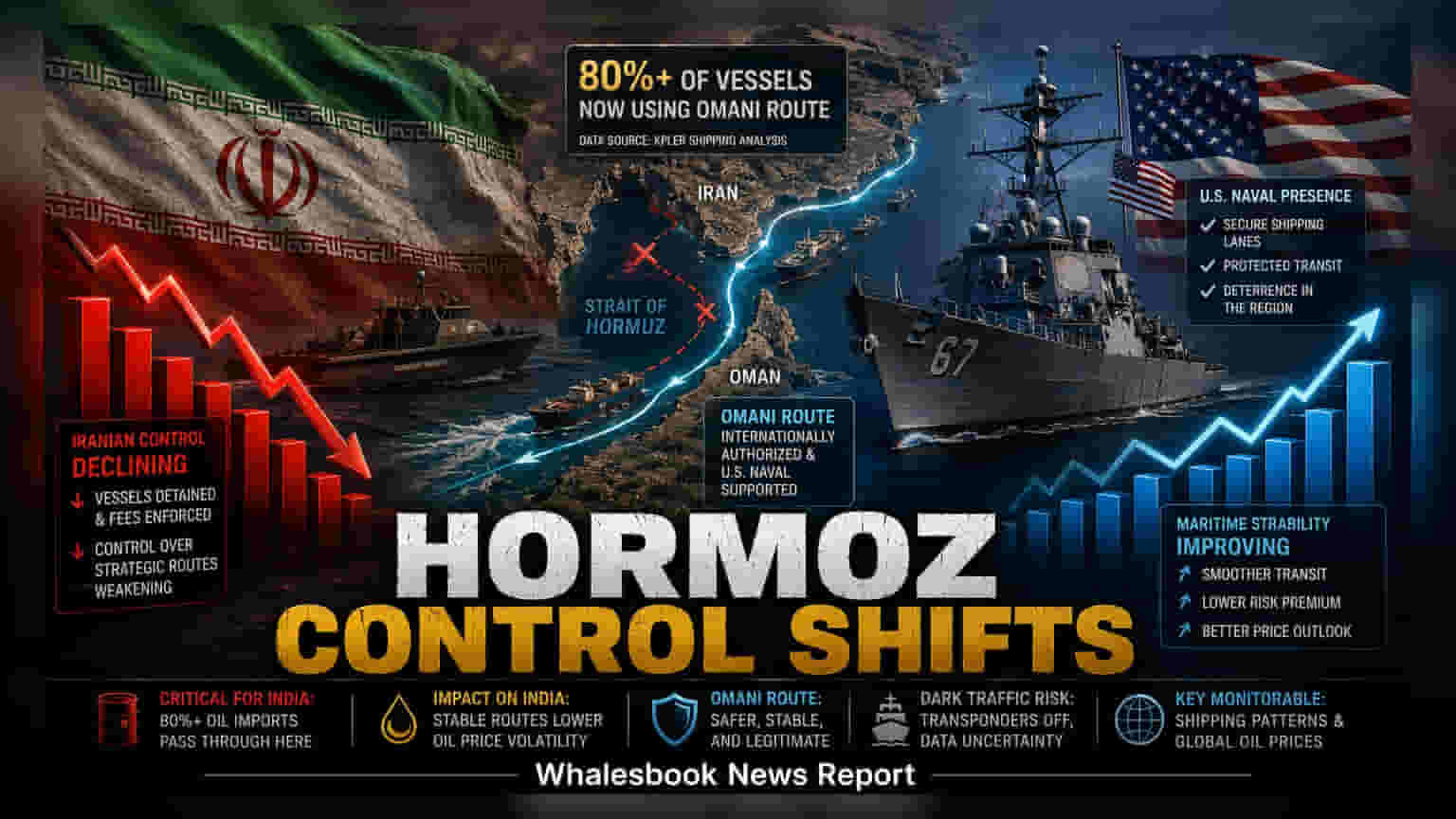
Data shows over 80% of ships are now using the Omani-side route through the Strait of Hormuz, avoiding zones previously controlled by Iran. This shift reduces Tehran’s leverage over the strategic chokepoint and stabilizes shipping logistics. For Indian investors, this is a key monitorable as stable transit is critical for global oil prices and national energy security.
A significant change in maritime traffic has been observed in the Strait of Hormuz, a critical chokepoint for global oil supplies. Shipping data analyzed by Kpler reveals that over 80% of vessels are now utilizing an alternative route along the Omani coast. This move effectively allows commercial ships to bypass areas where Iran had previously asserted control, including instances where it attempted to enforce transit fees or detain vessels. The shift toward this Omani corridor, which operates with international authorization and is supported by U.S. naval presence, suggests a marked decrease in Tehran's ability to dictate navigation through the waterway.
For the Indian market, stability in the Strait of Hormuz is a matter of national economic interest. India imports a substantial portion of its crude oil and gas requirements, much of which passes through this specific region. Historically, any threat of disruption, whether through geopolitical tension or direct interference with shipping lanes, has been a trigger for volatility in global oil prices, which directly impacts India's import bill and inflation metrics. A move toward a more stable and internationally protected route can reduce the risk premiums often priced into shipping insurance and freight costs.
While the increased use of the Omani route provides a level of operational relief, the region remains geopolitically complex. Analysts have pointed out that despite the shift, the environment is not entirely transparent. A notable challenge in tracking precise traffic volume is the practice of ships switching off their transponders, often referred to as 'dark traffic.' This makes it difficult to assess the exact volume of oil flowing through the region and complicates efforts to establish a clear picture of total control. Furthermore, while the current trend suggests a weakening of Iranian leverage, the overall security of the strait remains subject to diplomatic negotiations and broader regional tensions.
Investors monitoring the energy sector should track the stability of these shipping patterns alongside global crude oil price movements. While the bypass reduces the immediate risk of vessel seizures in Iranian-controlled zones, potential escalations or unexpected policy changes by regional actors could still affect energy supply chains. Future updates from maritime authorities and energy agencies regarding the consistency of traffic flows will provide a clearer view of whether this shift toward the Omani route will remain a long-term standard for commercial shipping.