 Whalesbook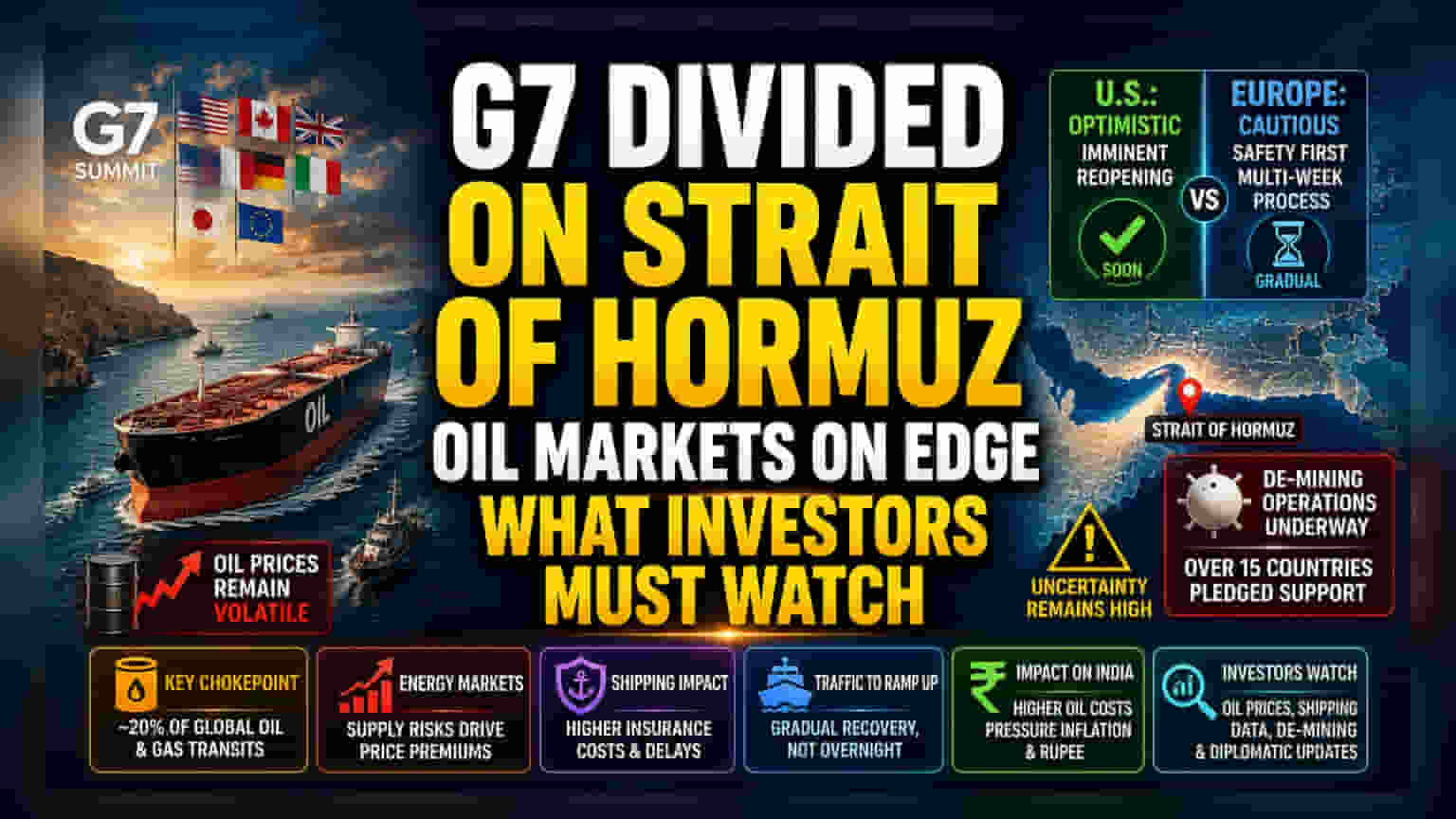


Conflicting timelines among G7 leaders regarding the reopening of the Strait of Hormuz have left global energy markets in a state of flux. The diplomatic gap between US and European officials, combined with complex logistical hurdles like mine clearance, suggests that a return to normal shipping traffic may take time. For investors, this volatility impacts crude oil price trends and affects energy-reliant sectors.
What Happened
Leaders at the G7 summit have expressed differing views on the timeline for reopening the Strait of Hormuz, a critical waterway for global oil and natural gas transit. While US leadership has expressed optimism regarding an imminent reopening, European allies have adopted a more cautious approach. This disagreement centers on the feasibility of resuming full trade operations immediately, with European officials citing the need for extensive safety measures, including de-mining operations, and clarity on interim agreements before normal traffic can safely resume.
Why This Matters For Investors
The Strait of Hormuz is one of the world's most significant energy chokepoints. Any delay in its full restoration impacts the global supply chain, leading to price volatility in crude oil and liquefied natural gas (LNG). For investors, market uncertainty often leads to premium pricing on energy assets and higher shipping insurance costs. The divergence in the official timelines—ranging from an immediate reopening to a gradual, multi-week process—means that energy markets may continue to react to every new update regarding maritime safety and diplomatic progress.
The Operational Reality
Beyond diplomatic discussions, the physical restoration of the waterway presents significant logistical challenges. The process involves more than just lifting restrictions; it requires extensive mine-clearing missions. Over 15 countries have pledged resources to ensure the safety of the channel. However, military and maritime experts have noted that these operations are complex and require a stable environment to proceed safely. The uncertainty regarding the number and location of potential mines adds another layer of risk, which could further delay the return to pre-conflict shipping levels, regardless of what political deadlines are set.
How Investors May Read This
For investors, particularly those tracking energy stocks, this situation highlights the difference between political announcements and operational reality. A senior US official has acknowledged that traffic may ramp up gradually rather than overnight, suggesting a phased approach that could span weeks. This reinforces the need for investors to monitor actual shipping volume data rather than relying solely on political statements. In India, volatility in global crude oil prices has a direct impact on Oil Marketing Companies (OMCs), as fluctuations in input costs can pressure profit margins if fuel retail prices do not adjust accordingly. Furthermore, elevated energy costs are a macro monitorable, as they can influence inflation and the value of the rupee.
What Investors Should Track Next
The most important monitorable is the trend in global oil prices, such as Brent and WTI crude. Additionally, investors should look for official communications from international maritime authorities and major energy shipping companies regarding actual transit volumes through the region. Any updates on the de-mining status or confirmed progress on the interim agreement between the US and Iran will be key indicators of when normal operations might resume. Market participants will likely focus on whether the reopening occurs on the optimistic timeline suggested by some leaders or if the more cautious, phased approach becomes the reality.