

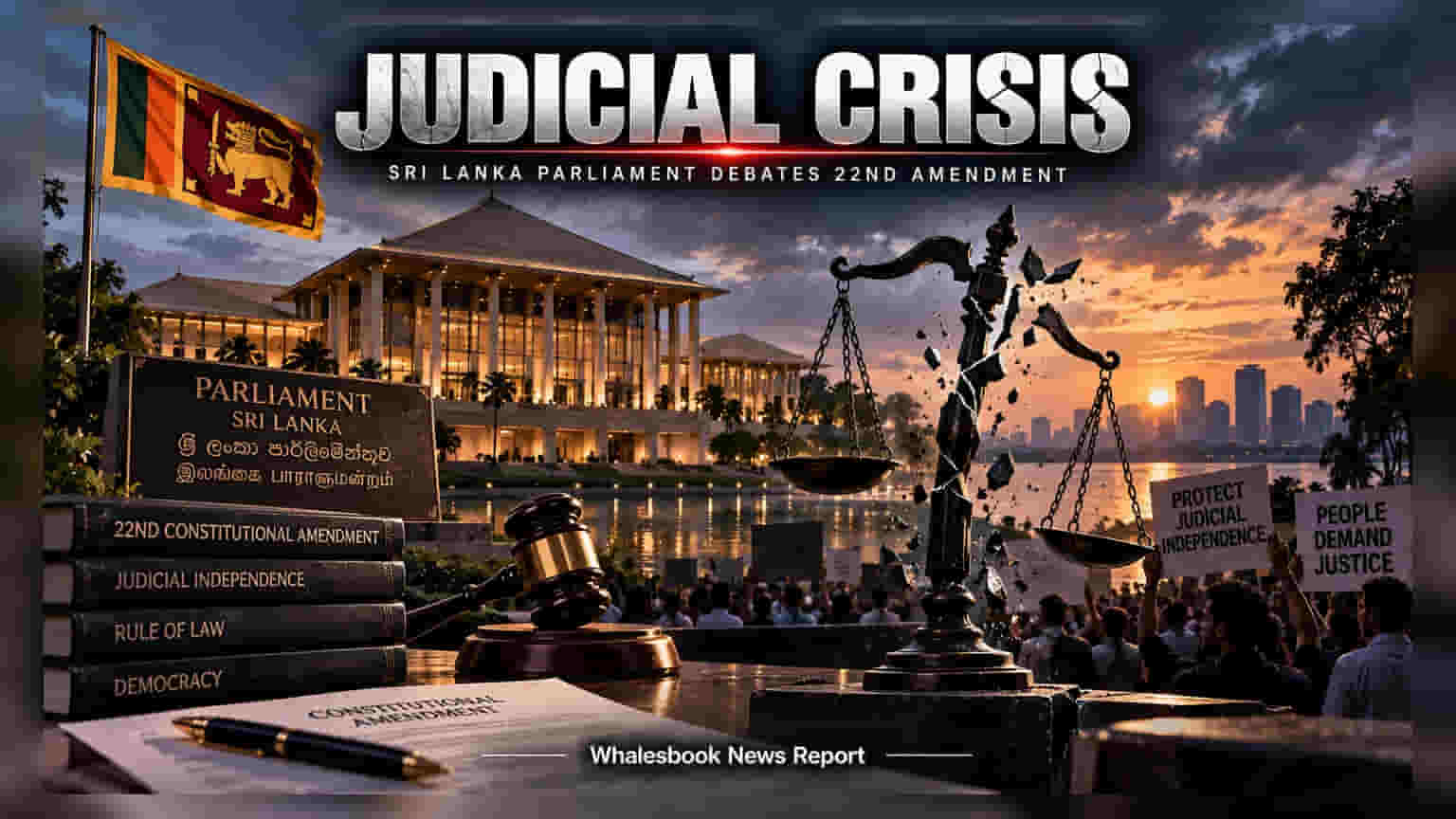
Sri Lanka’s Parliament is debating the 22nd Constitutional Amendment, aiming to raise judicial retirement ages and expand the Court of Appeal to clear a 1.1 million case backlog. Despite a two-thirds majority for the government, opposition groups and the Bar Association are protesting, citing risks to judicial independence. Investors are watching for political stability, as the nation continues its economic recovery efforts.
Sri Lanka’s Parliament is currently engaged in a two-day debate regarding the 22nd Constitutional Amendment, a significant legislative proposal that seeks to alter the structure of the judiciary. The government has introduced the bill with the stated objective of addressing a severe administrative crisis—a backlog of more than 1.1 million pending cases. To tackle this, the proposal aims to raise the retirement age for Supreme Court judges to 67, Court of Appeal judges to 65, and lower court officials to 62. Additionally, the government plans to increase the strength of the Court of Appeal from 20 to 25 judges.
The government, led by the National People’s Power coalition, holds 159 seats in the 225-member Parliament. This two-thirds majority theoretically positions the ruling party to pass the legislation comfortably when the vote occurs this Friday. A key obstacle was removed recently when the Supreme Court ruled that the amendment does not require a nationwide referendum to become law.
However, the proposal has triggered intense political and legal friction. Outside the legislative assembly, the Samagi Jana Balawegaya party has led large-scale protests, arguing that the changes could centralize power and potentially compromise the independence of the judiciary. This concern is shared by the Bar Association of Sri Lanka, which has filed over 60 legal petitions challenging the validity of the move. These groups maintain that such fundamental changes to judicial oversight require deeper public consensus.
For investors, the situation highlights the delicate balance of political stability in the country. Sri Lanka is currently navigating a period of economic recovery, and consistent institutional stability is often viewed as a prerequisite for sustained investor confidence. While the government emphasizes administrative efficiency through the backlog reduction, the ongoing confrontation between the executive branch and legal institutions creates uncertainty.
International bodies, including the United Nations and the Commonwealth Lawyers Association, have also expressed concern regarding the potential implications for judicial oversight. The immediate focus for observers remains the outcome of the parliamentary vote on Friday. Market participants will likely track whether the passage of this bill leads to prolonged civil unrest or if the government can proceed with its administrative agenda without further institutional friction.