

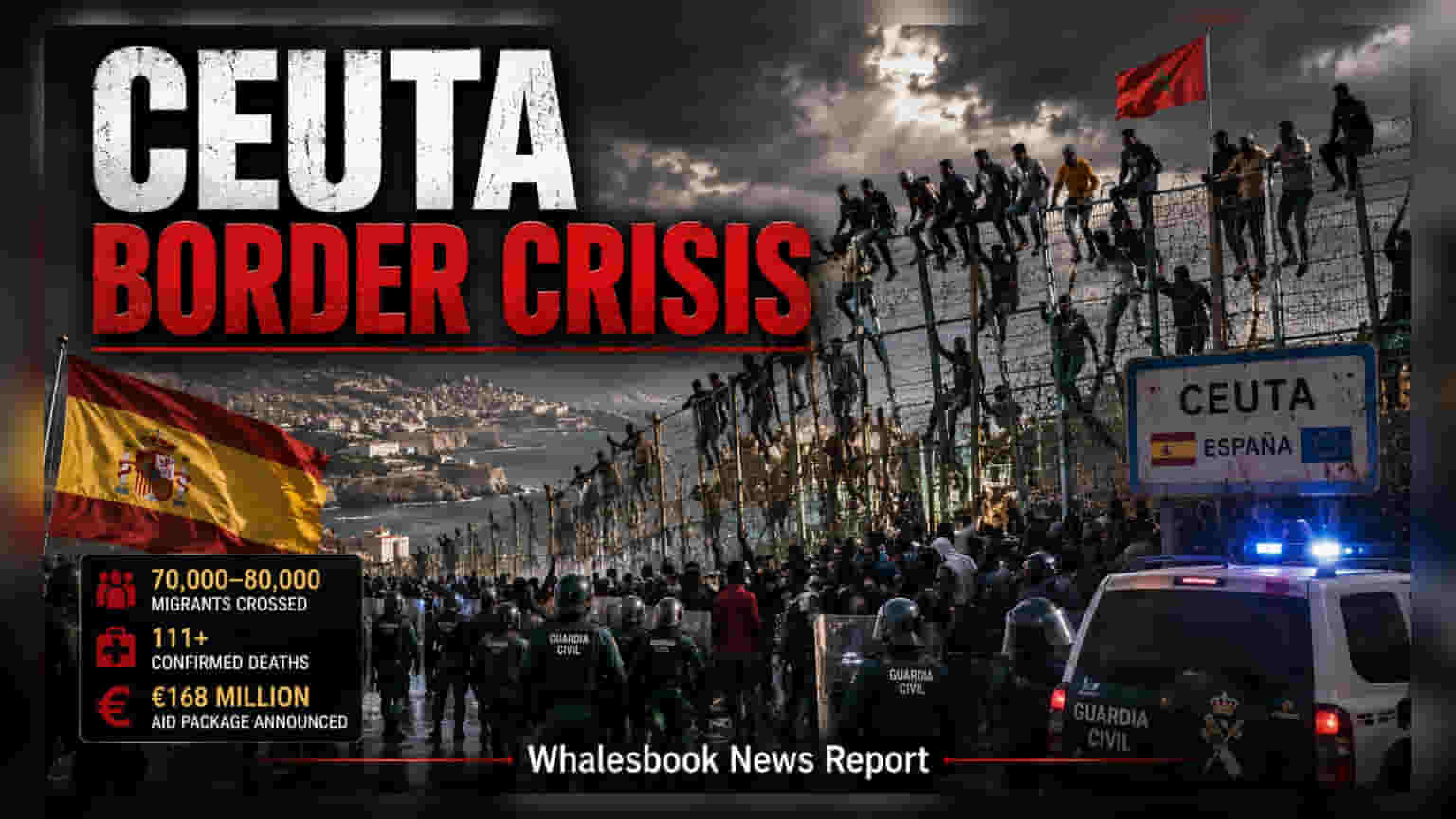
Prime Minister Pedro Sánchez has formally denied allegations of Moroccan orchestration in the July migrant crisis in Ceuta, which resulted in 111 deaths. The government has pledged 168 million euros in aid to stabilize the region. Investors are monitoring the situation for potential political instability in Spain and ongoing diplomatic friction with North African trade partners.
Spanish Prime Minister Pedro Sánchez addressed the parliament in Madrid this week, explicitly rejecting claims that Moroccan authorities orchestrated the mass migrant crossing into the North African exclave of Ceuta in late July. The crisis, which saw approximately 70,000 to 80,000 individuals breach the border, resulted in at least 111 confirmed deaths and has triggered intense political scrutiny across Spain.
While the Prime Minister denied state-level involvement by Morocco, he acknowledged that Moroccan security forces demonstrated significant permissiveness during a critical 10-hour window on July 30. This security failure allowed the border breach to proceed without intervention, a point that remains a major source of contention for opposition parties such as the People's Party (PP) and Vox. These parties have cited a police report describing the event as a planned operation, fueling domestic protests and calls for government accountability.
Fiscal and Geopolitical Implications
To manage the fallout and address the humanitarian needs in Ceuta, the Spanish government has pledged 168 million euros in additional aid. For observers of the Spanish economy, this expenditure represents an unplanned fiscal cost, though the primary concern remains the broader diplomatic and security environment. Spain has summoned the Moroccan ambassador to address statements regarding the sovereignty of Ceuta and Melilla, signaling that diplomatic tensions remain fragile.
Adding a layer of complexity to the situation, Prime Minister Sánchez accused Russia and Israel of conducting disinformation campaigns aimed at destabilizing Spain and the European Union. By linking foreign state actors to the narrative surrounding the crisis, the administration is attempting to manage public sentiment, though this has also amplified concerns regarding national security and regional stability.
Risks for Investors
The ongoing political and diplomatic friction presents several challenges for the Spanish government. The most immediate risk is heightened domestic political polarization, which could hamper legislative efficiency and create uncertainty for foreign investments. Furthermore, the strained relations with Morocco—a critical partner in trade and migration control—create potential risks for cross-border supply chains and regional policy cooperation.
Investors will likely track the stability of the current administration as opposition pressure mounts. Additionally, the effectiveness of the 168 million euro aid package in restoring order and security in Ceuta will be a key monitorable. Any further escalation in diplomatic disputes over sovereignty, or prolonged social unrest, could impact investor sentiment regarding Spain’s institutional and economic stability.