

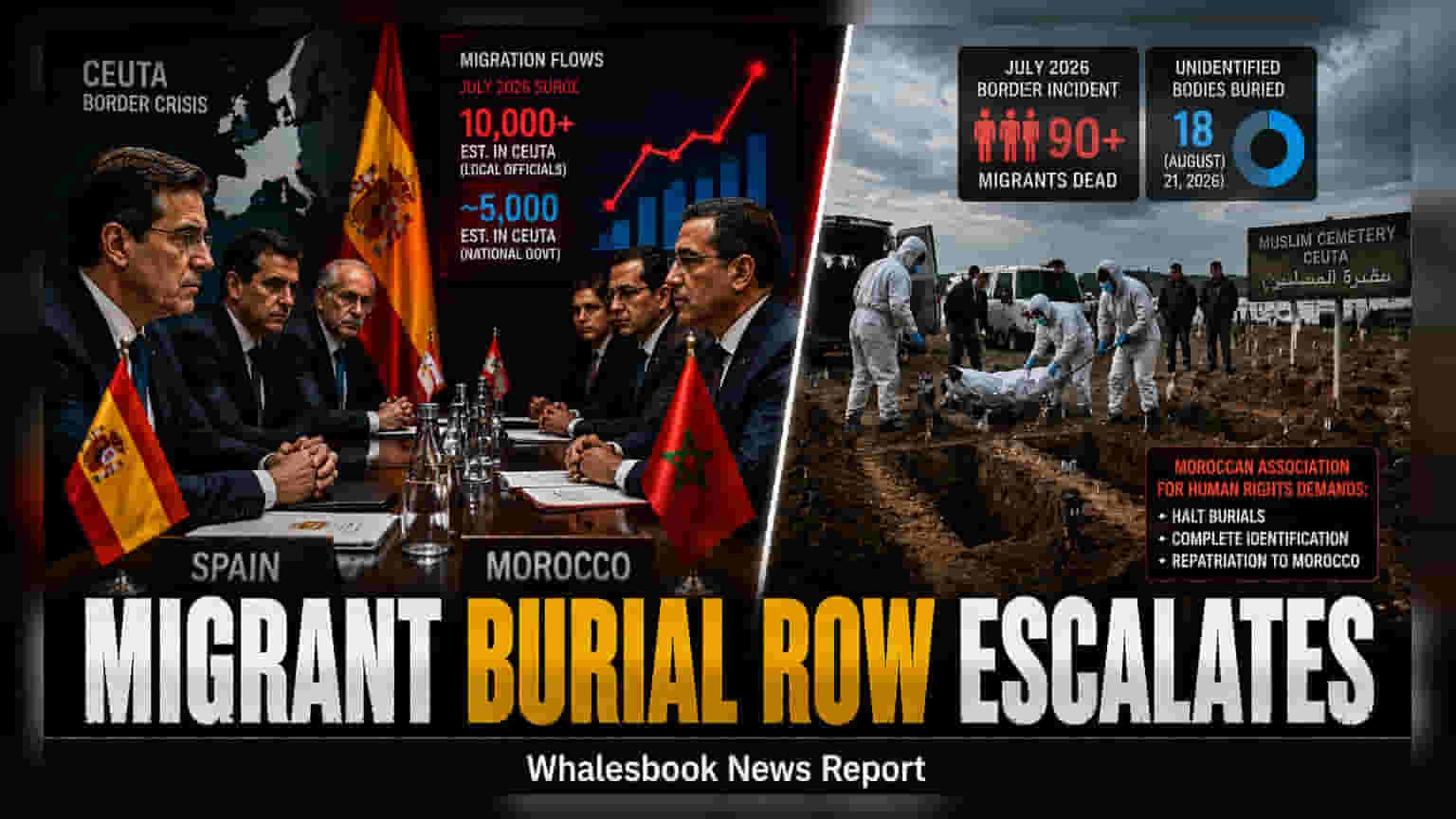
Spanish authorities have begun burying unidentified migrants in the North African territory of Ceuta following a deadly border crisis in late July. The move has drawn criticism from rights groups demanding a pause for formal identification. This humanitarian situation highlights ongoing diplomatic tensions between Spain and Morocco, which continue to strain local administration and pose risks to regional stability.
Spain has initiated the burial of unidentified migrants in the North African territory of Ceuta, a move that follows a severe border incident in late July 2026. The crisis, which resulted in more than 90 reported fatalities, has intensified pressure on local authorities to manage both the immediate humanitarian challenge and the resulting diplomatic friction.
The burial process at a Muslim cemetery in Ceuta involved the interment of 18 unidentified men who died during attempts to cross a breakwater near a border checkpoint. These burials have faced immediate opposition from organizations such as the Moroccan Association for Human Rights. The group has formally called for a suspension of the burials, arguing that authorities must exhaust all possible identification methods and arrange for repatriation to Morocco, allowing families to perform dignified burials.
A diplomatic stalemate has complicated the situation. Local officials in Ceuta report that the required administrative documentation for repatriating the deceased has been completed and processed. However, there has been no official acceptance or movement from the Moroccan government regarding these papers. The absence of a formal response from Morocco's foreign ministry has left the repatriation process at a standstill, effectively shifting the administrative and social burden of the fatalities onto the Spanish enclave.
For observers tracking regional stability, the situation in Ceuta remains critical. Estimates regarding the number of migrants currently in the enclave vary, with local officials suggesting as many as 10,000 individuals, including women and children, are present, while national government figures estimate approximately 5,000. This large concentration of people in a limited geographic area continues to strain local public services and administrative capacity. The initial influx in late July was driven by a combination of economic hardship, the search for better opportunities, and misinformation that led to a chaotic mass crossing attempt.
Moving forward, the primary risk for the region lies in the potential for continued social unrest and the widening diplomatic gap between Spanish and Moroccan authorities. Investors and regional analysts often monitor such geopolitical friction, as it affects the stability of trade and migration corridors in the Mediterranean. The next steps will likely depend on whether high-level diplomatic channels can resolve the deadlock over identification and repatriation. Continued inability to resolve these issues may further complicate the management of the enclave and exacerbate the ongoing humanitarian and administrative pressure on Ceuta.