

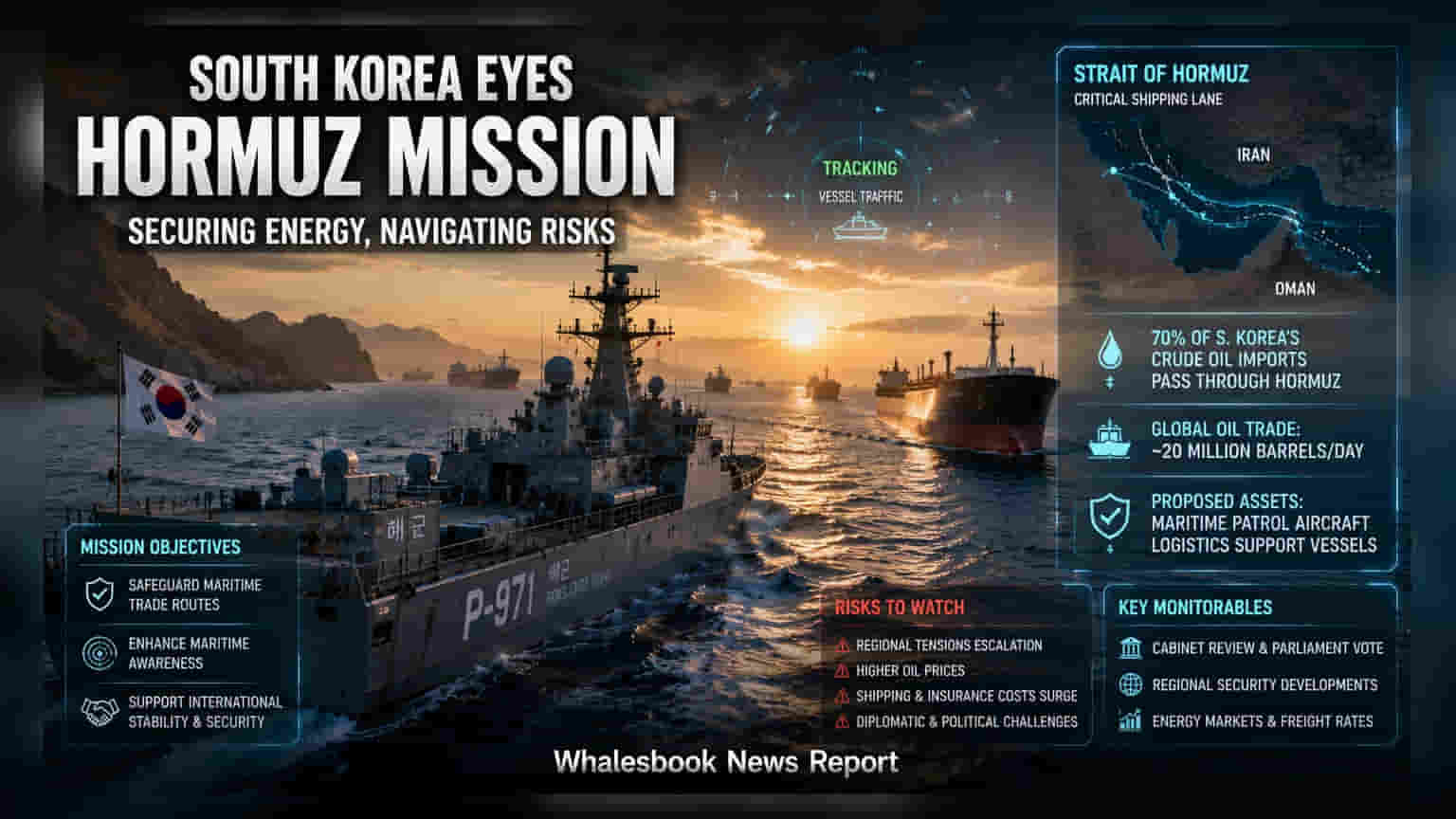
South Korea is discussing the potential deployment of non-combat naval assets to the Strait of Hormuz to protect vital energy shipping lanes. The government has clarified that a final decision has not been reached, as it balances alliance commitments with the need to secure its oil imports. Instability in this region remains a critical risk for energy prices and global trade.
South Korea is currently evaluating a plan to deploy non-combat naval units to the Strait of Hormuz, a critical shipping chokepoint for global energy supplies. The proposed deployment, which may include maritime patrol aircraft and logistics support vessels, is intended to help maintain the security of international maritime routes. This potential move highlights the country's need to navigate complex diplomatic relationships while ensuring the safety of its energy supply chain.
The Strait of Hormuz is vital to the South Korean economy, as the nation depends on this route for approximately 70% of its crude oil imports. Any increase in regional volatility poses a significant risk to energy security. For investors, the concern is that escalated tensions could lead to higher crude oil prices, increased shipping freight charges, and rising insurance premiums for commercial tankers. These factors can contribute to inflationary pressure across Asian markets, including India, which are heavily dependent on imported energy.
While reports have circulated regarding a confirmed deployment, the presidential Blue House has officially stated that no final decision has been made, calling some media reports inaccurate. The government’s approach requires a formal cabinet review and subsequent consent from the National Assembly. This legislative requirement means the proposal will likely face significant parliamentary debate and domestic political scrutiny before any action is taken.
This development comes against a backdrop of long-standing pressure on South Korea to increase its contribution to regional security tasks. By considering a role in the Strait of Hormuz, Seoul appears to be aiming to better align its foreign policy with the expectations of key allies, such as the United States. However, the decision carries potential diplomatic risks. Direct military or logistics involvement in the region could complicate relations with Middle Eastern trading partners and face resistance from domestic groups concerned about the implications of involvement in overseas operations.
Investors should monitor energy market developments and any official updates regarding the government's parliamentary proceedings. The ultimate impact of this potential move will depend on whether regional stability is maintained and how energy supply chains react to the ongoing geopolitical situation.