

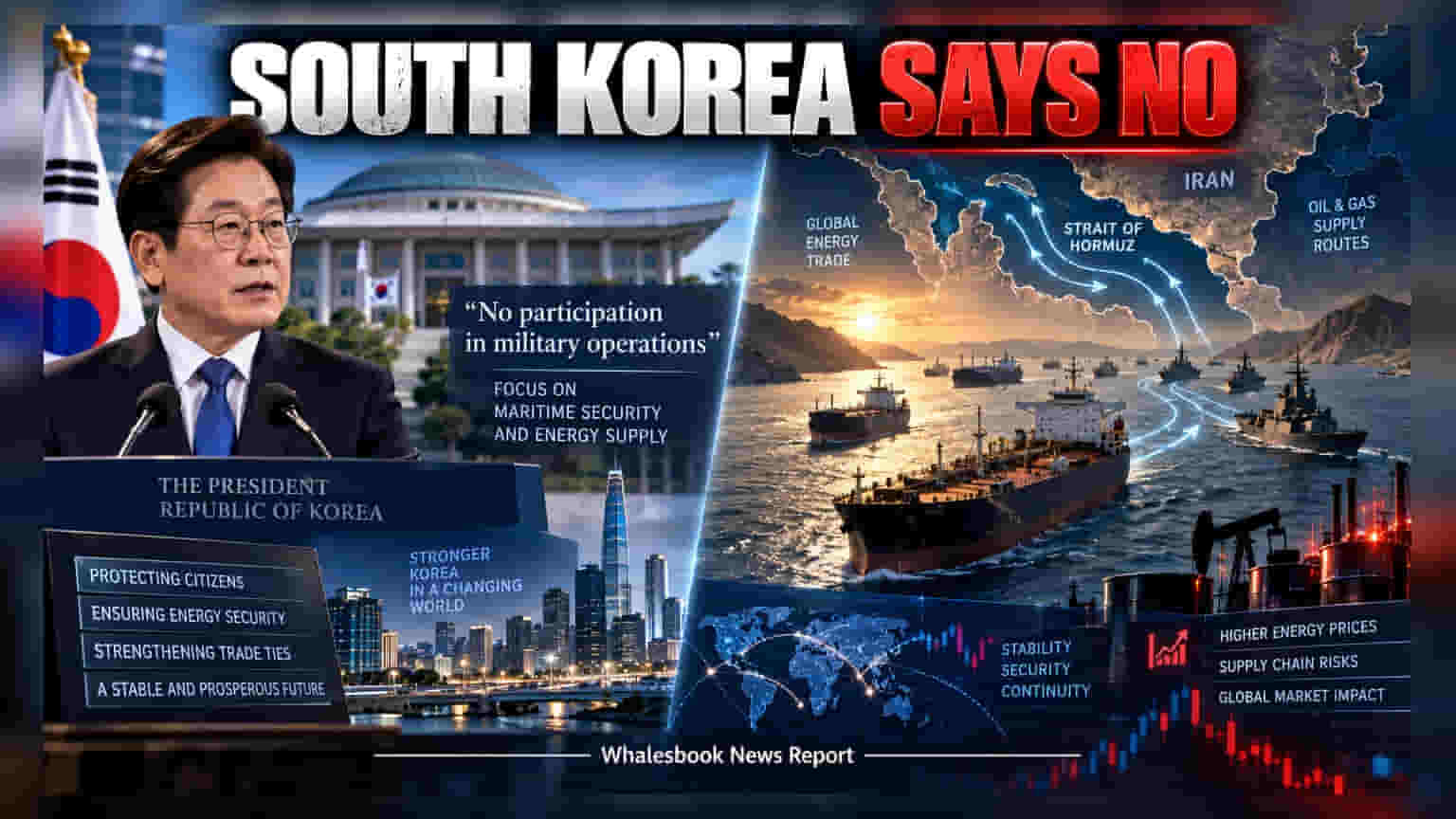
South Korea will not deploy military assets to the Iran conflict, citing a need to protect commercial and energy security. The government continues to negotiate trade and investment deals with the US, including a US$350 billion manufacturing commitment that is currently under review.
South Korea has officially declined to participate in US-led military operations that could draw it into the conflict involving Iran. President Lee Jae Myung confirmed that the government would not authorise the deployment of military assets for such combat roles, choosing instead to focus on the safety of merchant vessels and energy supplies.
For investors, the decision highlights the delicate balance countries face in managing geopolitical risks alongside energy security. The Middle East remains a vital corridor for global energy trade, including oil and gas imports. Any disruption in this region, particularly around the Strait of Hormuz, typically puts pressure on global energy prices. For large energy-importing economies, including South Korea and India, stability in this region is a critical factor in managing inflation and industrial costs.
Beyond security, trade relations between Seoul and Washington remain a focal point. South Korea has previously committed to investing US$350 billion in US manufacturing, a move heavily linked to tariff agreements and trade terms for Korean exports. The government is currently in discussions to finalise these commitments. Investors in manufacturing sectors often watch these trade agreements closely, as changes to tariff structures or investment terms can directly impact the operating margins and global competitiveness of large industrial firms.
The government is balancing these international commitments with domestic priorities. President Lee reaffirmed that he would not seek another term beyond the current mandate, which concludes in 2030, and outlined plans to decentralise government functions by strengthening Sejong as a political hub while keeping Seoul as the primary economic center.
Looking ahead, the market will continue to monitor the progress of these trade negotiations. The key points for investors to track include any updates on the US$350 billion investment commitment, the potential impact of Middle Eastern geopolitical tensions on global oil prices, and any further developments in trade policies between the two nations that could affect supply chains and manufacturing costs.