

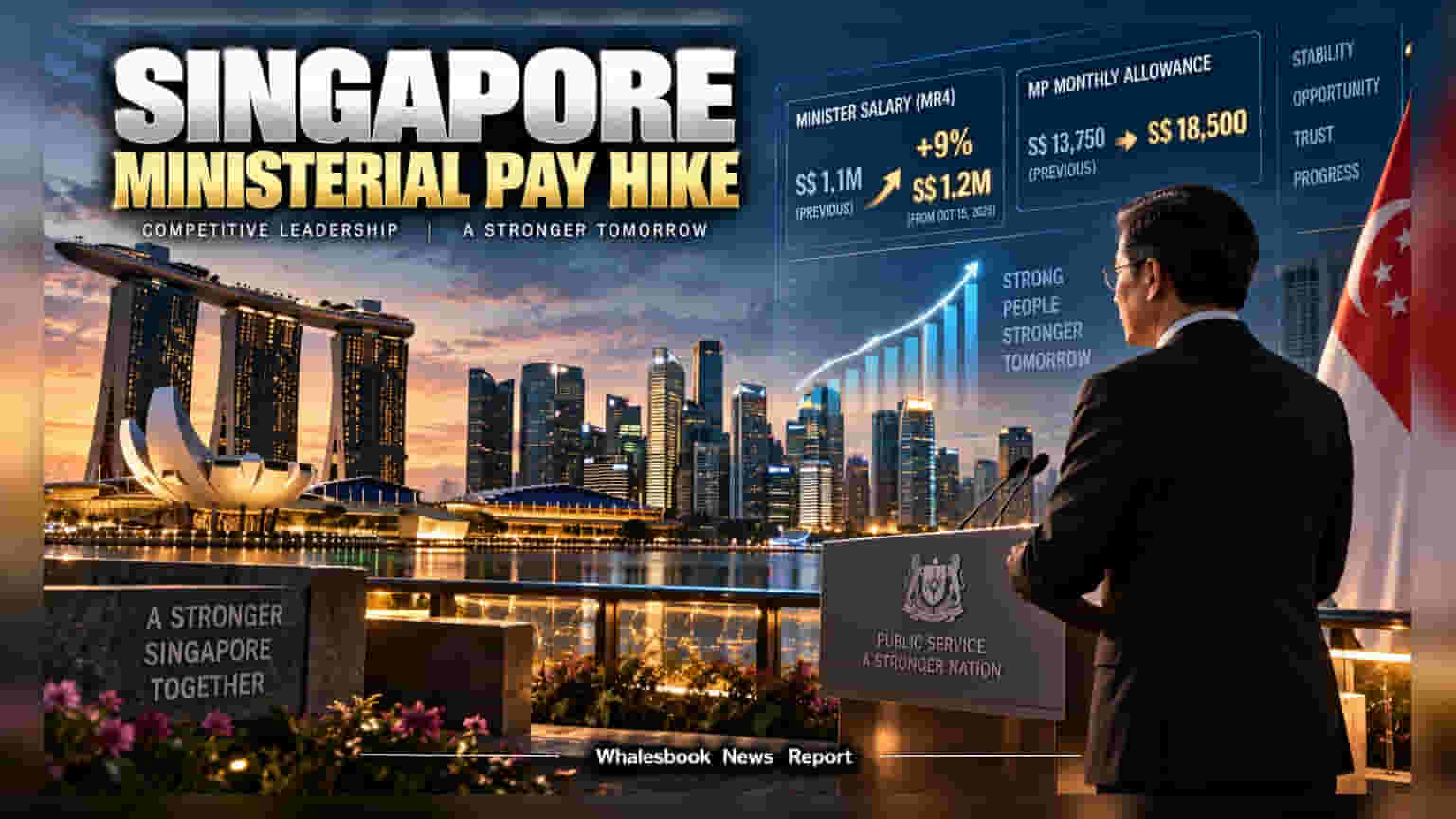
Singapore is raising ministerial salaries by 9% starting October 15, 2026, marking the first compensation adjustment in 15 years. The decision aims to attract high-quality leadership by aligning political pay with private sector benchmarks, following recommendations from an independent review committee.
Singapore has announced a structural adjustment to political compensation, with a 9% increase for ministers taking effect on October 15, 2026. This marks the first salary revision for the country’s leadership in 15 years. The decision follows recommendations from an independent committee established to review the competitiveness of public sector compensation against the private market.
While an independent review committee recommended a higher benchmark for entry-level ministers (MR4) at S$1.8 million, the government has opted for a measured approach. Instead of an immediate jump to the full benchmark, officials will receive a 9% adjustment, bringing the annual salary for an MR4 minister to approximately S$1.2 million. The government intends to use this framework to address the widening gap between private sector earnings and public service compensation, which officials argue is necessary to ensure the country can continue to recruit top-tier professional talent.
Alongside the ministerial adjustment, the monthly allowance for Members of Parliament (MPs) will increase to S$18,500, up from the previous S$13,750. The current compensation framework is indexed to the median income of the top 1,000 earners among Singaporean citizens, with a 40% discount applied to reflect the spirit of public service. This system is subject to periodic review every five years to ensure it remains relevant and financially sustainable.
Prime Minister Lawrence Wong announced that he will donate his entire personal salary increase to charity for the next five years. This gesture comes as the government prepares for upcoming parliamentary debates on September 10, 2026, where the adjustment is expected to face public scrutiny. Political compensation is a sensitive topic in the nation, and the government maintains that high, transparent salary benchmarks are a critical strategy to ensure competitive leadership and maintain institutional standards against corruption.
The next steps for this policy involve the formal implementation of the pay structure in October. Investors and the public will be monitoring the upcoming parliamentary session to see how the government defends these changes and whether further adjustments are proposed to address public concerns regarding the cost of living and the scale of political earnings.