

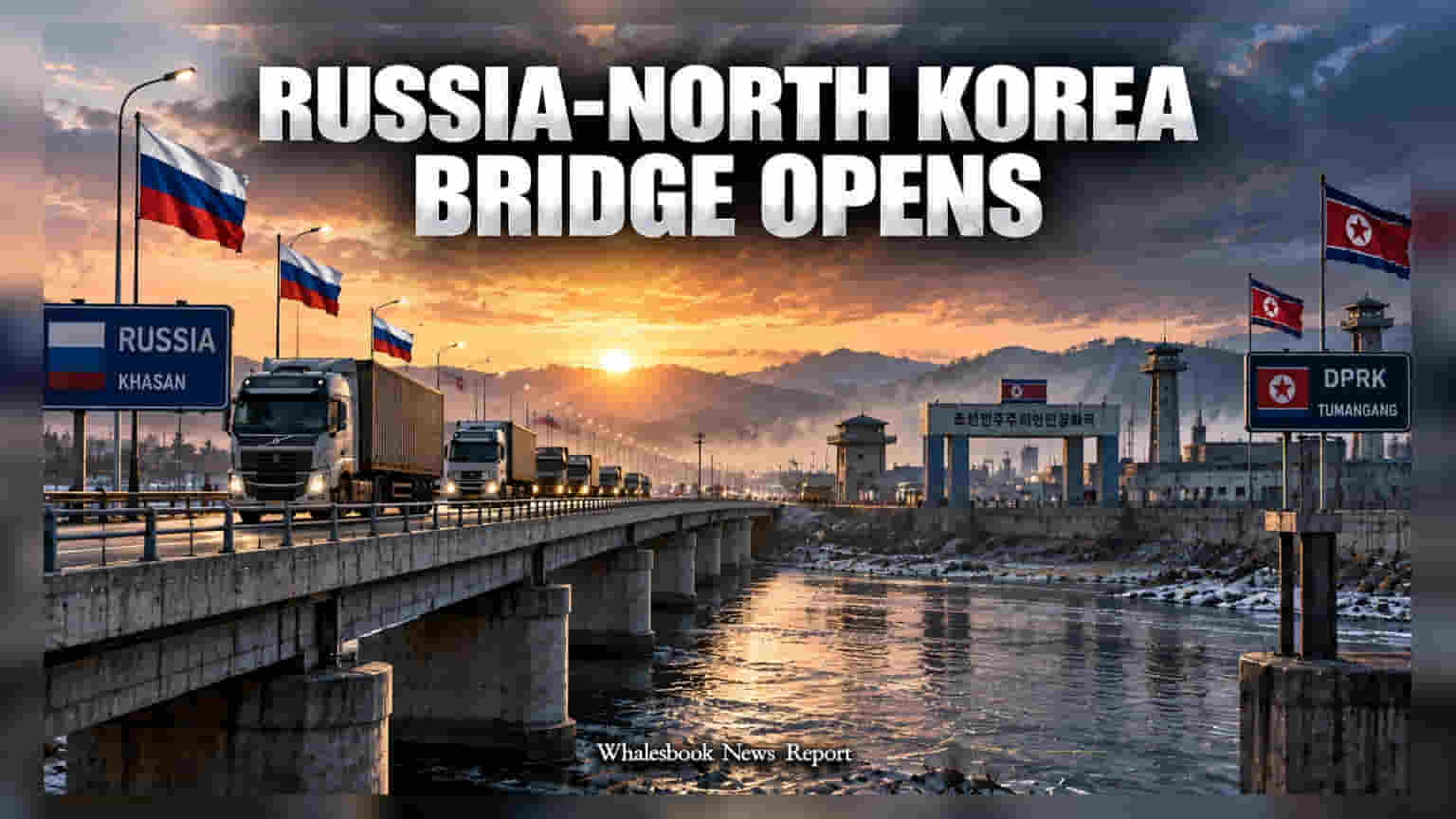
Russia and North Korea have officially opened the Yakov Novichenko bridge, a 1-kilometer road link over the Tumen River. Built at a cost of 9 billion rubles, the structure replaces outdated crossing methods to facilitate daily cargo and passenger transit. This strategic infrastructure project is intended to solidify economic and supply chain cooperation, though observers note the development may invite further international scrutiny.
Russia and North Korea officially inaugurated their first dedicated road bridge across the Tumen River on September 7, 2026. The new infrastructure, named the Yakov Novichenko Bridge, connects Khasan in Russia with Tumangang in North Korea. This 1-kilometer, two-lane structure represents a modernization of the border crossing, replacing the previous, less efficient system where vehicles had to cross using wooden planks laid over an existing 1959 rail bridge.
The project was completed at a cost of approximately 9 billion rubles. It is designed to handle up to 300 vehicles and 2,300 passengers daily, marking a significant upgrade in the logistics capacity between the two nations. The inauguration ceremony was held virtually, with Russian Prime Minister Mikhail Mishustin and North Korean Premier Pak Thae Song officiating the opening. Construction on the project had been moving forward since April 2025, following high-level bilateral agreements made the previous year.
Strategic and Economic Implications
For regional analysts and trade observers, the bridge is viewed as a physical manifestation of the deepening economic and military alignment between Moscow and Pyongyang. By formalizing this road link, both nations are establishing a permanent and more reliable supply line that is integrated into Russia's federal highway network. This connection provides a more efficient corridor for cargo transit, which is expected to facilitate trade in various goods.
From a logistics standpoint, the upgrade allows for consistent, year-round traffic flow, which was previously hindered by the weather-dependent and manual nature of the old crossing method. The ability to move vehicles directly across the border is expected to streamline the movement of materials and potentially support long-term cooperation in scientific and technological exchanges.
Geopolitical Risk and Outlook
While the bridge provides a functional upgrade to cross-border logistics, investors and regional observers should account for the geopolitical nature of this cooperation. The project is being developed during a period of intense international focus on the military and economic partnership between the two countries.
There are inherent risks related to the project's long-term utility. Any future changes in the international regulatory environment, such as further sanctions or tightening of cross-border trade restrictions, could impact the volume and types of goods that are permitted to traverse the crossing. Additionally, infrastructure projects in this specific geopolitical corridor may face complications related to international diplomatic pressure. The next important update for observers will be the reported volume of commercial cargo and passenger transit as the bridge enters its initial months of full-scale operation.