

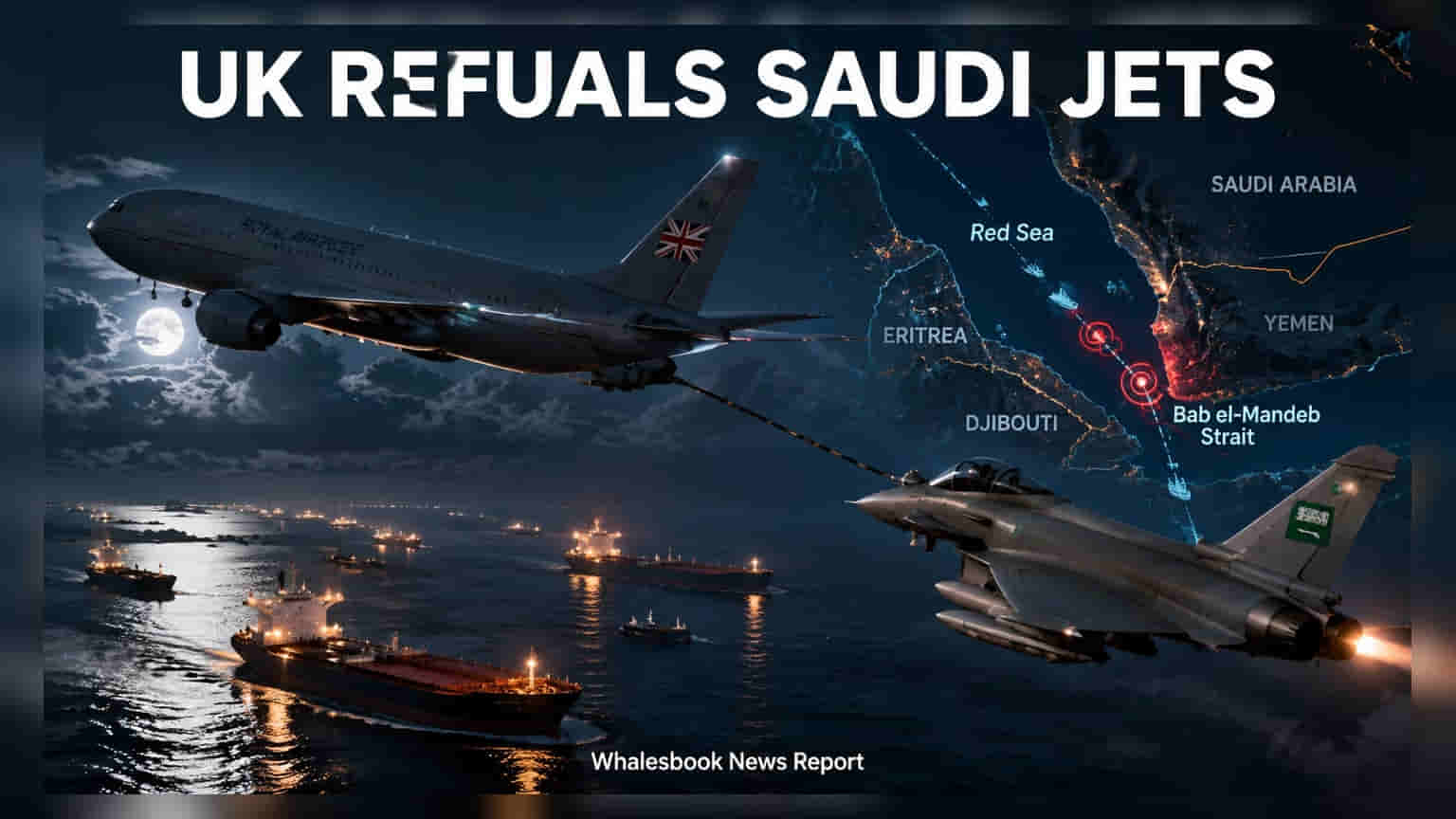
The UK has authorized Royal Air Force refueling support to help Saudi Arabia defend Red Sea shipping routes from ongoing Houthi strikes. For Indian investors, continued volatility in this critical trade corridor remains a key monitorable that can influence global shipping freight rates, insurance premiums, and import costs for domestic energy companies.
The British government has announced a military deployment aimed at securing the Red Sea, a vital maritime corridor for global trade. The Royal Air Force has been authorized to provide air-to-air refueling support to Saudi Arabian aircraft. This move follows a formal request for assistance from Riyadh as the region faces a series of drone and missile strikes, which have created significant uncertainty for commercial shipping and regional energy infrastructure. Prime Minister Andy Burnham stated that the deployment is intended to help maintain stability for international supply chains, which are currently facing heightened geopolitical friction.
Impact on Global Trade and Shipping
The Red Sea, connected to the Suez Canal, serves as one of the world's most important shipping channels, handling roughly 12 percent of global trade. When security risks rise in this area, shipping companies often face a difficult choice: they must either navigate the high-risk zone, which significantly increases insurance premiums and operational costs, or divert vessels around the Cape of Good Hope. The latter option adds several days to transit times, burning more fuel and delaying the delivery of goods. For industries dependent on just-in-time inventory and energy supplies, these delays and the associated cost increases can translate into margin pressure.
Relevance for Indian Investors
For Indian markets, the Red Sea is a major gateway for oil and gas imports from the Middle East. India relies heavily on imported crude oil to meet its domestic energy needs, and any sustained disruption or increase in freight costs in this region can have a direct impact on the import bill. Investors in the energy sector, such as Indian Oil Corporation, Bharat Petroleum, and Reliance Industries, often watch these developments closely, as shipping costs and insurance premiums are important components of their landed cost of crude. Furthermore, companies with large export volumes to Europe, particularly in the engineering, textile, and pharmaceutical sectors, face potential logistical challenges when freight costs rise or transit times become unpredictable. While the UK’s tactical support is designed to mitigate some of these threats, the broader geopolitical situation remains fluid. Investors may continue to track global oil prices, shipping freight indices, and updates regarding the security of maritime corridors to understand the potential impact on domestic inflation and corporate profitability.