

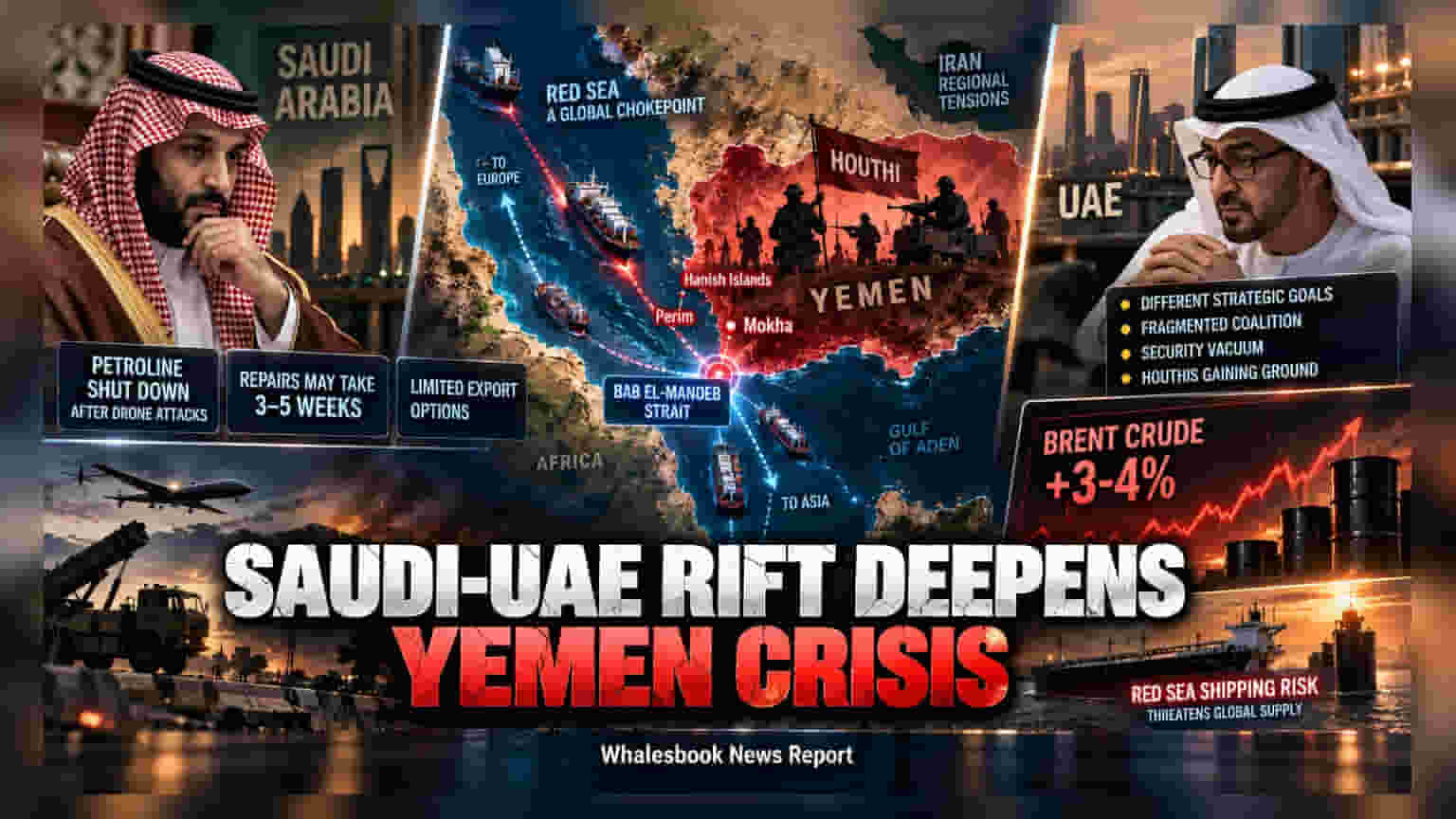
Houthi rebels have seized strategic islands and ports near the Bab el-Mandeb Strait, while attacks on Saudi Arabia’s East-West pipeline have halted operations. This dual disruption threatens global energy flows and has already pushed Brent crude prices up by 3-4%. For India, a major energy importer, this rising geopolitical tension signals potential risks for domestic fuel costs, inflation, and the trade balance.
The global energy market is facing a new period of uncertainty following a significant security escalation in the Middle East. Houthi forces have seized control of the port city of Mokha and strategic locations, including Perim and the Hanish islands, situated near the Bab el-Mandeb Strait. This waterway is a vital maritime chokepoint that handles a substantial portion of global shipping, particularly between Asia and Europe.
This territorial advance by Houthi forces has worsened an already critical situation for Saudi Arabia. On September 10, 2026, the kingdom’s essential East-West pipeline, known as the Petroline, was forced to shut down following a series of drone and missile attacks. The pipeline is critical for transporting oil across the country to Red Sea terminals for export. Estimates suggest that repairs could take between three to five weeks, leaving the country with limited options for moving its energy output.
Impact on Global Oil Prices
The simultaneous pressure on two major export routes—the Strait of Hormuz and now the Red Sea—has caused immediate concern in global markets. With both passages facing security risks, the market is pricing in the potential loss of up to 4% of global oil supply. By September 14, 2026, Brent crude oil prices had risen by approximately 3-4% as traders and analysts factored in these supply risks.
The situation is further complicated by internal friction within the anti-Houthi coalition. Reports have highlighted that competing objectives between Saudi-backed and UAE-backed factions in Yemen have created a security vacuum. This fragmentation has weakened the coalition's ability to contain the Houthi movement, allowing them to make deeper territorial gains than in previous periods of the conflict.
What This Means for India
For Indian investors and the broader economy, the geopolitical tension in the Red Sea is a key monitorable. As one of the world's largest importers of crude oil, India is highly sensitive to price volatility in the energy sector. A sustained rise in global crude prices directly impacts India’s import bill, which can put pressure on the trade balance and the Indian Rupee.
Additionally, higher energy costs have the potential to fuel inflationary pressure across the economy, as transportation and logistics costs often rise when fuel prices increase. While India has been working to diversify its energy sources, the sudden disruption to a major global supply route remains a significant concern for macroeconomic stability.
Investors should track the timeline for the Petroline pipeline repairs and any potential resumption of diplomatic talks. Regional diplomatic efforts, including discussions with Iran, were scheduled for September 14, 2026, but have been postponed, adding to the uncertainty. The ability of the affected nations to restore security and repair infrastructure will determine how long this geopolitical premium remains in energy prices.