

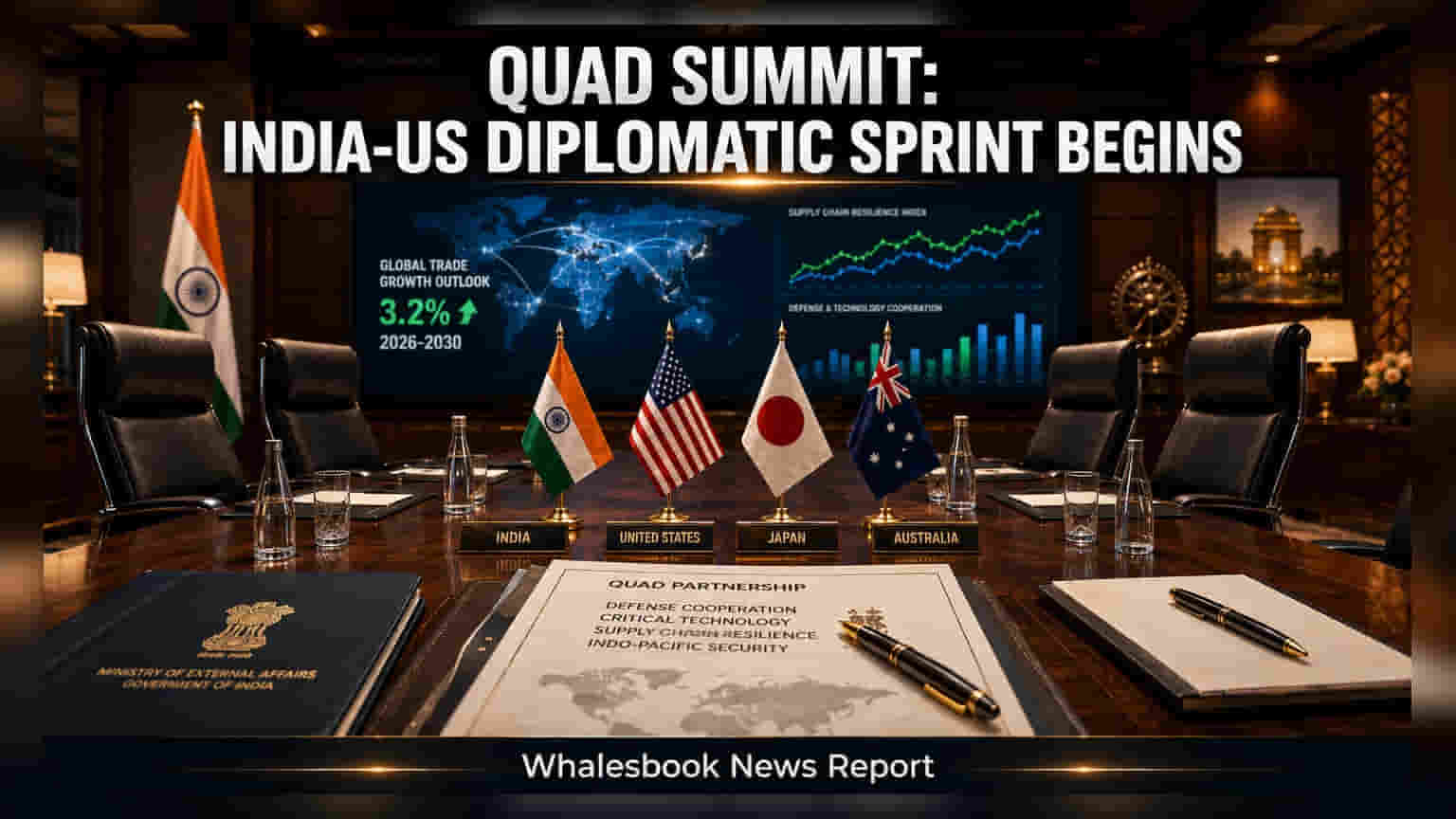
Quad Sherpas from India, the US, Australia, and Japan are gathering in New Delhi to coordinate strategic policy. For investors, this diplomatic alignment is significant as it sets the stage for future collaborations in defense, technology, and critical minerals, which are key focus areas for Indian trade and industrial growth.
The designated Sherpas from India, the United States, Australia, and Japan have convened in New Delhi for a strategic meeting hosted by Indian Foreign Secretary Vikram Misri. This session marks the beginning of a dense diplomatic calendar that will span the next three months, culminating in the G20 Leaders' Summit in December 2026. While the meeting operates behind the scenes, the outcomes are expected to define the parameters for cooperation in defense, critical technology, and supply chain resilience.
For the Indian investment community, the significance of these discussions lies in the policy direction they set. Strategic alignment between these nations often accelerates bilateral agreements that impact specific sectors. Investors typically watch for developments in defense manufacturing, where technology transfers and joint production are ongoing priorities. Furthermore, the collaboration on critical minerals is a vital monitorable, as it directly impacts supply chain security and the long-term feasibility of domestic manufacturing projects in the electronics and electric vehicle sectors.
The meeting serves as a foundational step for high-level engagements, including upcoming ministerial-level discussions and the anticipated visit of the US Secretary of State in October. These political interactions are designed to translate broad strategic goals into tangible policy outcomes. The consistency of these diplomatic efforts suggests a push to institutionalize partnerships at a bureaucratic level, providing a more predictable framework for cross-border trade and investment.
However, the path ahead involves significant variables. Global geopolitical tensions continue to present challenges for trade and energy security, which could influence the speed and depth of collaborative initiatives. The effectiveness of these meetings will be tested by the ability of the involved nations to navigate these global instabilities while maintaining focus on their shared economic and security goals.
Moving forward, market observers will monitor subsequent ministerial meetings and the official outcomes of the December G20 summit for signs of progress on trade negotiations and sector-specific policy reforms. The primary investor monitorable will be any movement on trade standards, digital infrastructure initiatives, and commitments to supply chain diversification that could eventually benefit industries tied to global trade integration.