

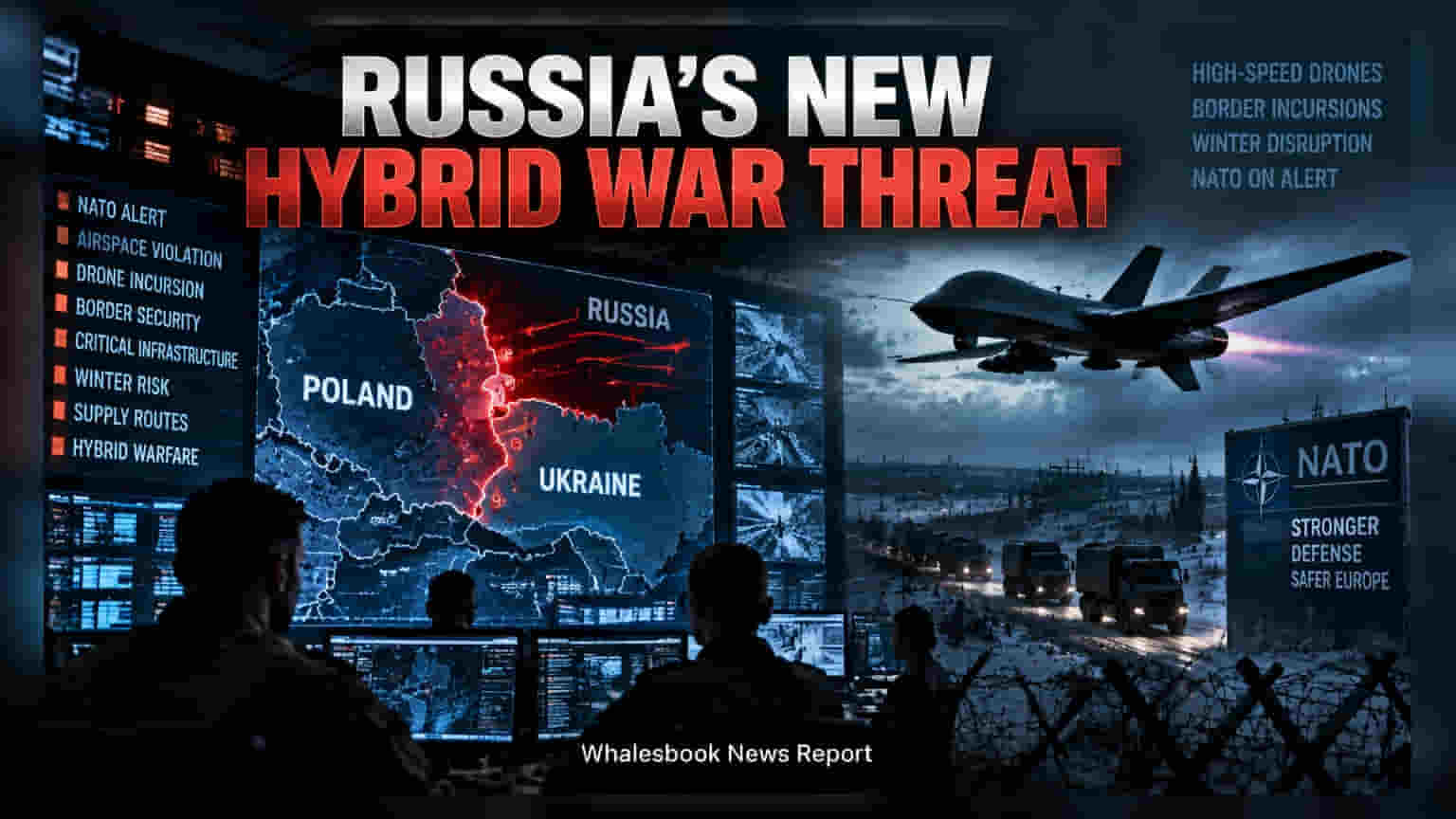
Polish Prime Minister Donald Tusk has warned of potential Russian drone strikes on NATO territory aimed at testing the alliance's defensive commitment. These security concerns, paired with ongoing negotiations for a permanent US military base in Poland, signal rising regional tensions that could influence European supply chains and energy security ahead of winter.
Polish Prime Minister Donald Tusk has issued a serious warning regarding the potential for Russian hybrid warfare operations targeting NATO territory. According to intelligence shared by Western and Ukrainian agencies, there is a growing concern that Moscow may deploy sophisticated, jet-powered drones to test the collective defense commitment of NATO members. The strategy, as outlined by Tusk, involves utilizing high-speed incursions that are designed to evade traditional detection systems while being framed as accidental events to avoid direct military retaliation.
The strategic focus of these actions reportedly centers on the upcoming winter months. Moscow appears to be aiming to disrupt the logistics lifelines between Ukraine and its European neighbors, particularly targeting critical border infrastructure. For investors and market observers, this adds to the regional operational risks, as any disruption to supply routes could further strain the energy and logistical networks that remained vital to the region's stability during previous phases of the conflict. The potential for such sabotage creates ambiguity in security, which often contributes to heightened uncertainty in regional business environments.
In response to these emerging threats, the security architecture of the region is undergoing a significant shift. Warsaw is currently in negotiations with the United States to establish a permanent American military base on Polish soil. This move, which has seen progress during dialogues involving US President Donald Trump and the Polish leadership, serves as a counterbalance to the heightened Russian presence in the region. The integration of deeper US-Polish military interests represents a pivot in regional defense policy, with potential long-term implications for local infrastructure and investment.
Tusk is expected to continue coordinating diplomatic and defensive strategies with regional partners, including Slovakia, and Ukrainian President Volodymyr Zelenskyy, to mitigate these security challenges. For investors, the situation underscores the ongoing importance of monitoring geopolitical stability in Eastern Europe. The key monitorables will be NATO’s official response to potential incursions, the progress of the permanent US military base negotiations, and the impact of the winter season on regional logistics and energy pricing. Increased defense spending and shifts in security infrastructure may also influence the outlook for defense and energy-related sectors across European markets.