

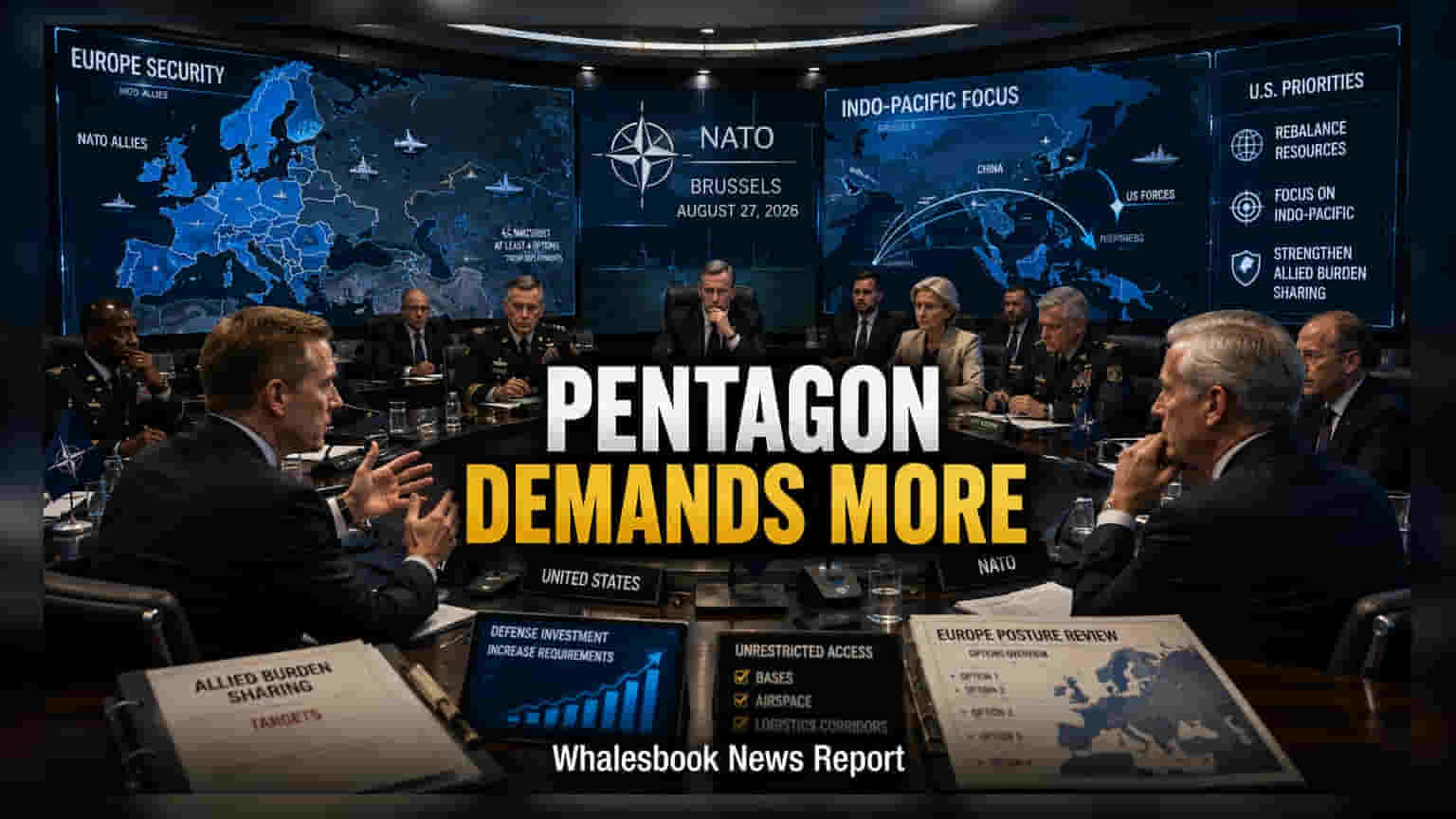
The U.S. Pentagon is demanding that NATO members take charge of European conventional defense to allow Washington to focus on the Indo-Pacific. This strategic shift, dubbed "NATO 3.0," requires allies to increase defense budgets and guarantee logistical access. The move is expected to drive long-term changes in global defense procurement, with the U.S. planning to finalize its troop deployment options for Europe by November 6, 2026.
U.S. Under Secretary of Defense for Policy Elbridge Colby met with NATO officials in Brussels on August 27, 2026, to discuss a major shift in how the alliance handles conventional security. The Pentagon is pushing member nations to assume greater responsibility for the defense of Europe, marking a departure from the traditional model of heavy reliance on American military support. This strategy, often referred to as "NATO 3.0," is designed to allow the United States to reallocate resources toward security challenges in the Indo-Pacific region.
For investors tracking the global defense sector, this shift is significant. It implies a structural increase in defense spending across European nations as they move to fill the gap left by potential U.S. troop reductions. Countries are expected to accelerate upgrades to their military hardware, logistics, and personnel readiness to meet these new, higher expectations. This shift toward self-reliance creates a potential long-term trend of increased order flows for major defense contractors who supply equipment, technology, and maintenance services to the European market.
The U.S. demands go beyond simple budget figures. Washington is seeking guaranteed, unrestricted access to European bases and airspace for its military operations. This requirement is partly driven by frustrations over previous diplomatic friction during past conflicts. The U.S. aims to ensure its operational flexibility remains intact even as its footprint in Europe potentially changes, allowing it to act decisively without waiting for protracted consultation.
The transition carries clear risks for global stability and market sentiment. If U.S. forces are reduced before European allies can fully build up their own capabilities, it could create a security vacuum. There is also the risk of transatlantic friction; if major allies fail to meet the new spending or logistical targets, the cohesion of the alliance could be tested, leading to uncertainty in security markets.
The next critical date for investors is November 6, 2026. This is the deadline for the "Europe Posture Review," a six-month assessment initiated by Defense Secretary Pete Hegseth. The review will present at least four options for future troop deployments in Europe. Market participants and analysts will be watching this date closely for clarity on the pace of potential U.S. withdrawals and the resulting impact on defense budget allocations across the continent.