

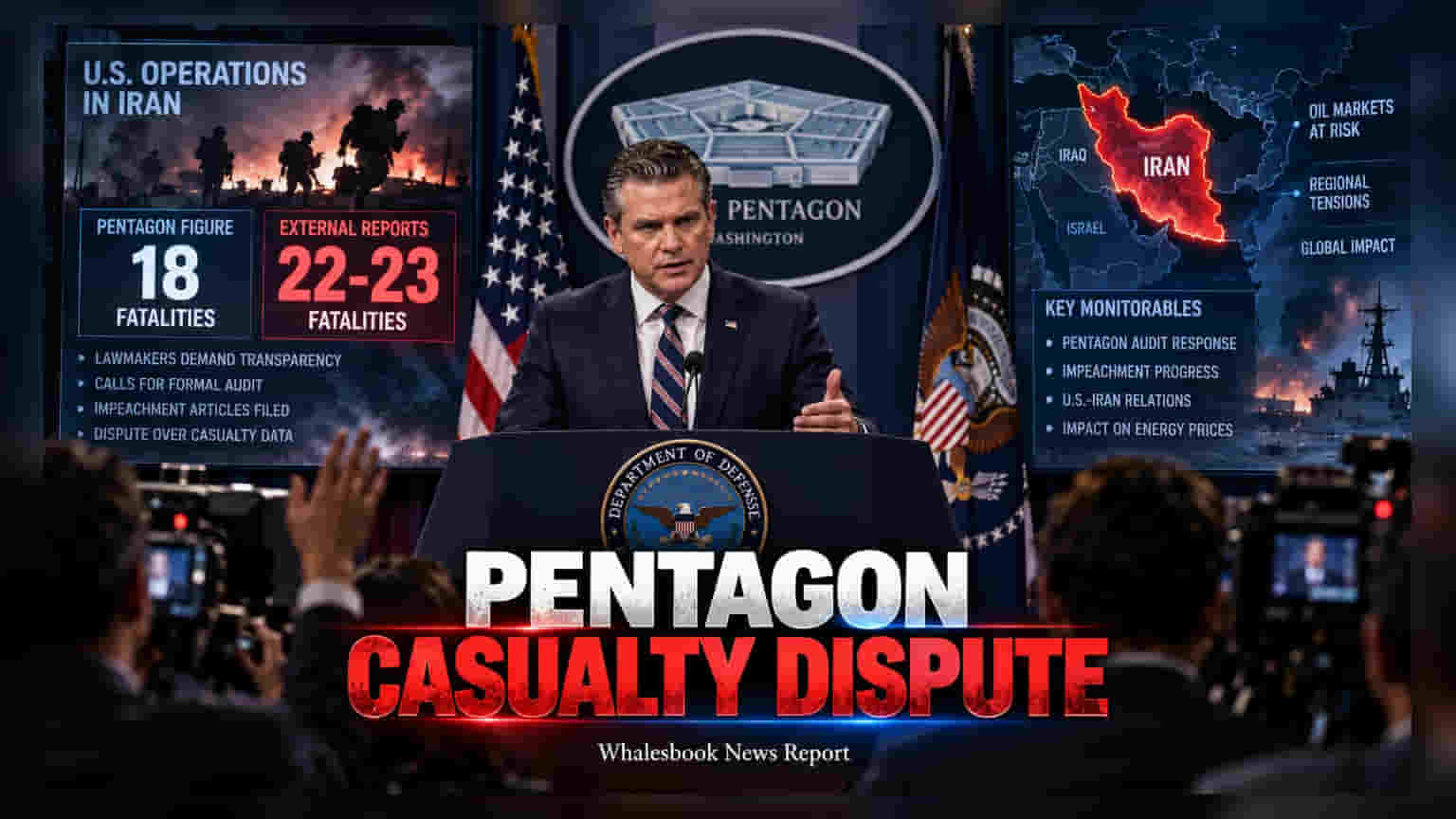
Discrepancies in US casualty counts regarding Iran operations have sparked a political conflict, with lawmakers filing articles of impeachment against Defense Secretary Pete Hegseth. This administrative tension and uncertainty regarding US foreign policy creates geopolitical risks that can influence global market sentiment and commodity prices.
The US Department of Defense is under intense scrutiny after reports surfaced regarding discrepancies in military casualty data related to the conflict with Iran. Official figures from the Pentagon currently stand at 18 fatalities, while external reports suggest the actual toll could be higher, between 22 and 23. This gap has led to significant administrative and political friction, with lawmakers demanding greater transparency and a formal audit of the casualty reporting process.
Political Friction and Impeachment Pressure
Defense Secretary Pete Hegseth has rejected the reports of undercounting, labeling them as disinformation. However, the situation has escalated into a broader institutional crisis. Representative Thomas Massie has introduced articles of impeachment against Hegseth, citing the unauthorized launch of operations against Iran and tactical strikes in the Caribbean as the primary grounds. While an immediate House vote on the impeachment remains uncertain, the move highlights deepening legislative hostility toward the current leadership.
Simultaneously, Democratic lawmakers, including Representative Jason Crow, are moving to introduce legislation aimed at preventing the Pentagon from excluding or altering casualty data in public records. This legislative push underscores the lack of trust between the Pentagon and oversight committees.
Why Investors Monitor Geopolitical Uncertainty
For global markets, including in India, this administrative and political uncertainty regarding the Pentagon carries indirect risks. Geopolitical friction, particularly involving Iran—a key player in global energy markets—can influence volatility in crude oil prices. When US military policy and leadership face instability, market participants often assess the potential for policy shifts that could impact regional security and global energy supplies.
Investors typically watch these developments for signs of escalation or cooling of tensions. Persistent friction between the US legislative and executive branches regarding military operations may keep sentiment cautious, as markets prefer policy predictability.
The next important monitorables include the Pentagon’s official response to the audit demands, any legislative progress on the impeachment articles, and developments in US-Iran relations. Significant fluctuations in energy prices or sudden changes in diplomatic stances would be the primary indicators of a material market impact.