

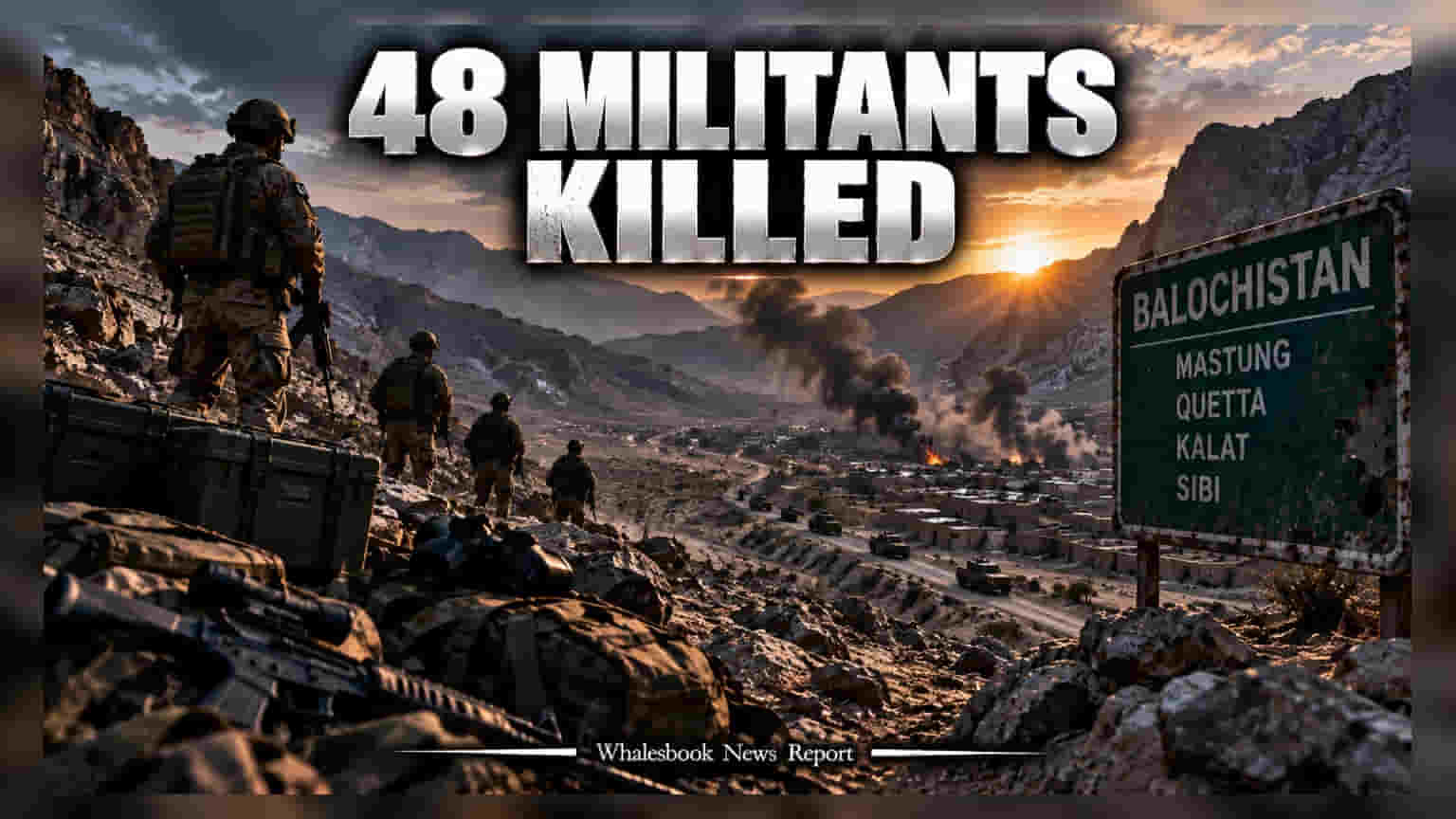
The Pakistan military confirmed that security forces killed 48 militants during an intelligence-based operation across several Balochistan districts. This spike in violence in the western province highlights ongoing regional security challenges that remain a critical consideration for geopolitical stability and infrastructure development in the border regions.
The Pakistan military’s media wing, the Inter-Services Public Relations, announced that security forces killed 48 individuals identified as militants during a series of counter-terrorism operations in the Balochistan province. These tactical maneuvers took place over a period of 48 to 72 hours across the districts of Mastung, Quetta, Kalat, and Sibi.
During the operations, military forces reported the recovery of weapons and improvised explosive devices. The authorities stated that the sweep targeted active cells associated with groups such as the Baloch Liberation Army and the Tehrik-e-Taliban Pakistan. These organizations are frequently involved in conflict with state security forces in the region, which has led to a persistent cycle of violence and defensive military posturing.
For investors and regional observers, the situation in Balochistan represents a notable area of geopolitical risk. The province is significant due to its mineral resources and its position as a central corridor for infrastructure projects, including major transport and energy initiatives. The ongoing instability in this region often leads to disruptions in local services and infrastructure, which can impact the feasibility and safety of economic activities in the area.
The Pakistani government continues to characterize these militant groups as significant threats to national stability. In its public statements, the military has often alleged foreign support for these insurgent activities, specifically pointing toward India. It is important to note that these allegations are a recurring part of the diplomatic narrative from Pakistan, though the focus for observers remains on the concrete impact of these security incidents on regional stability.
Looking ahead, the stability of the western border region will be an important factor to track. Heightened security responses, while intended to restore order, often lead to temporary disruptions in local commerce and transportation. The ability of the state to maintain long-term security without recurring mass casualty events or large-scale civil disruption will determine the overall investment climate and economic predictability for the western provinces.