

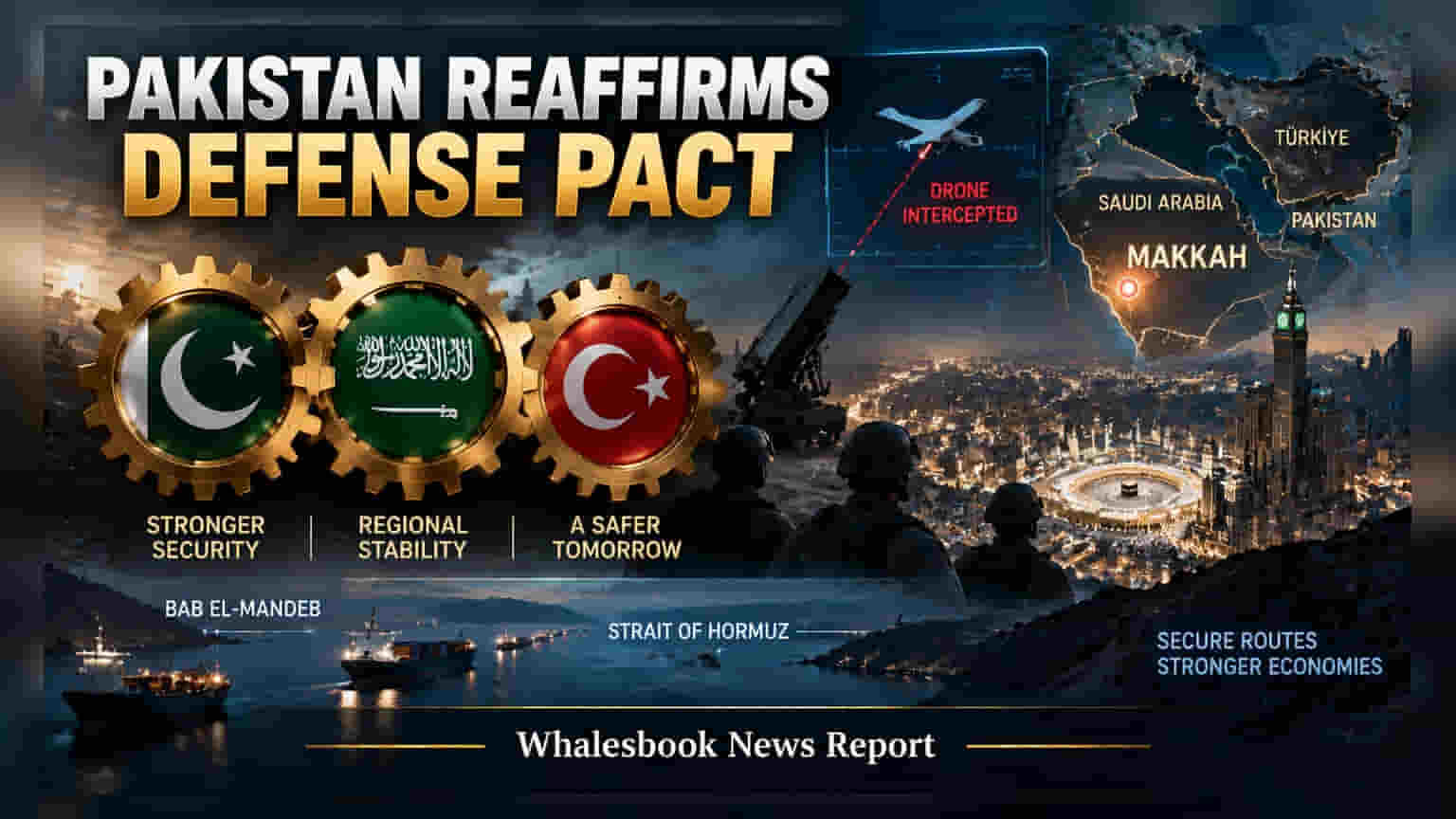
Pakistan has confirmed its commitment to the trilateral Makkah defense agreement following a Houthi drone threat. The pact focuses on collective security, which is vital for maintaining the stability of trade routes and protecting key infrastructure in the region.
Pakistan has officially reaffirmed its commitment to the recently signed trilateral defense pact with Saudi Arabia and Turkiye. This security framework, which establishes a system of collective deterrence, mandates that an armed attack on any one of the three nations is viewed as an aggression against all signatories. The reaffirmation follows reports that a Houthi drone was intercepted south of Makkah, an event that has triggered renewed focus on regional security.
From a strategic perspective, the agreement is intended to create a unified security front against regional threats. While government officials have clarified that specific tactical responses and the mechanisms for activating the pact remain confidential, they emphasized that the security of holy sites is a non-negotiable priority. The administration maintains that diplomatic engagement is the preferred route for de-escalating tensions, rather than direct military confrontation.
For the broader economy and the investment landscape, the stability of the Middle East is of paramount importance. The region hosts critical maritime chokepoints, including the Bab el-Mandeb strait and the Strait of Hormuz, which serve as essential conduits for global trade, particularly for oil and gas. Instability in these waters can directly impact global energy markets, increase shipping insurance premiums, and create supply chain delays. Pakistan, as an energy importer that relies on these shipping routes for trade, faces tangible economic risks from any sustained escalation in the area.
Beyond religious and security ties, this pact represents a notable shift in how nations are organizing their defense strategies to counter non-state actors. The agreement acknowledges that individual national security is increasingly linked to collective regional defense. Moving forward, the key factor for the market to track is whether regional diplomatic efforts succeed in preventing the spillover of hostilities. Investors and analysts will continue to monitor updates regarding maritime security, as any significant disruption to these trade lanes could introduce volatility into energy costs and logistics chains.