

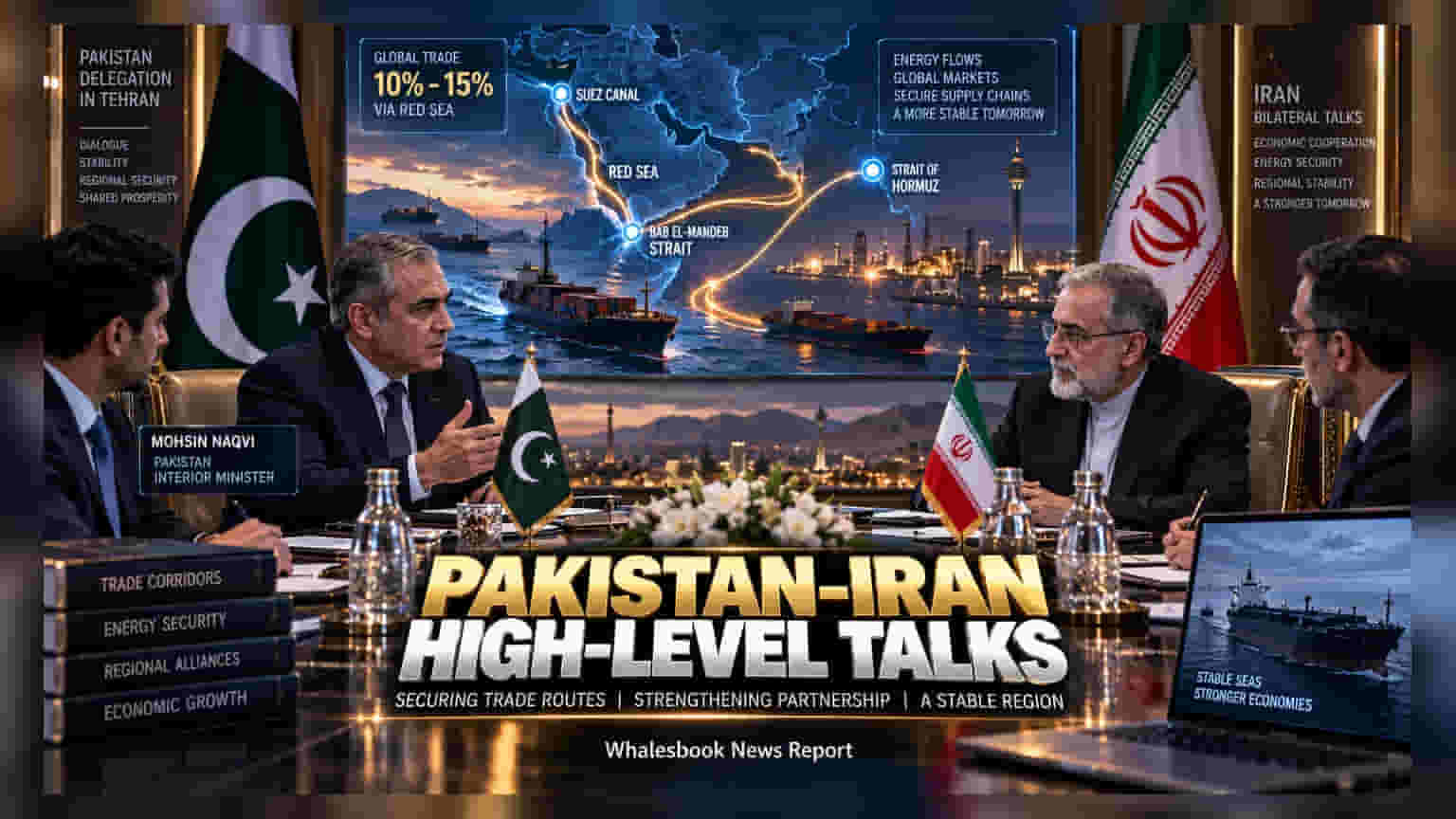
Pakistan Interior Minister Mohsin Naqvi has arrived in Tehran for critical talks as rising regional tensions threaten global energy supply routes. Investors are tracking these developments closely as instability in the Red Sea and the Strait of Hormuz could increase volatility in energy prices and shipping costs, impacting logistics and energy import economics.
Pakistan's Interior Minister, Mohsin Naqvi, arrived in Tehran this Sunday to lead a delegation for high-level bilateral discussions. While official statements from Tehran describe the visit as a routine exchange regarding existing agreements, the timing reflects growing concerns over regional stability and the safety of critical energy infrastructure.
Impact on Global Energy and Trade
The security of vital maritime corridors remains a primary concern for international markets. Data suggests that approximately 10% to 15% of global maritime trade relies on the Red Sea and the Bab el-Mandeb Strait. Ongoing hostilities in this region have sparked fears regarding the vulnerability of energy supplies, particularly with the Strait of Hormuz facing operational disruptions. For investors, these bottlenecks are significant because any sustained instability in these areas tends to drive up freight costs and energy prices, creating uncertainty for industries dependent on imports and logistics.
Evolving Regional Alliances
The geopolitical landscape has shifted following the August 7 signing of a tripartite defense pact between Pakistan, Saudi Arabia, and Turkey. This agreement, which implies a collective response to aggression against any signatory, adds a new layer to the existing security calculus in the region. Pakistan continues to navigate a delicate position, balancing its role as a mediator in stalled negotiations between Tehran and Washington while managing its own regional security commitments. Foreign Minister Ishaq Dar has previously highlighted that the economic recovery of developing nations remains tied to the stability of these global supply chains.
Investor Monitorables
While the direct impact of these diplomatic efforts on local markets may be indirect, investors typically track geopolitical tensions in the Middle East as a signal for potential volatility in energy and shipping stocks. The primary risk remains that escalation in these maritime routes could exert upward pressure on commodity prices, potentially affecting profit margins for energy-intensive sectors. Future market updates will likely focus on whether these diplomatic engagements can reduce operational risks in these vital trade corridors, ensuring the flow of energy resources remains uninterrupted.