 Whalesbook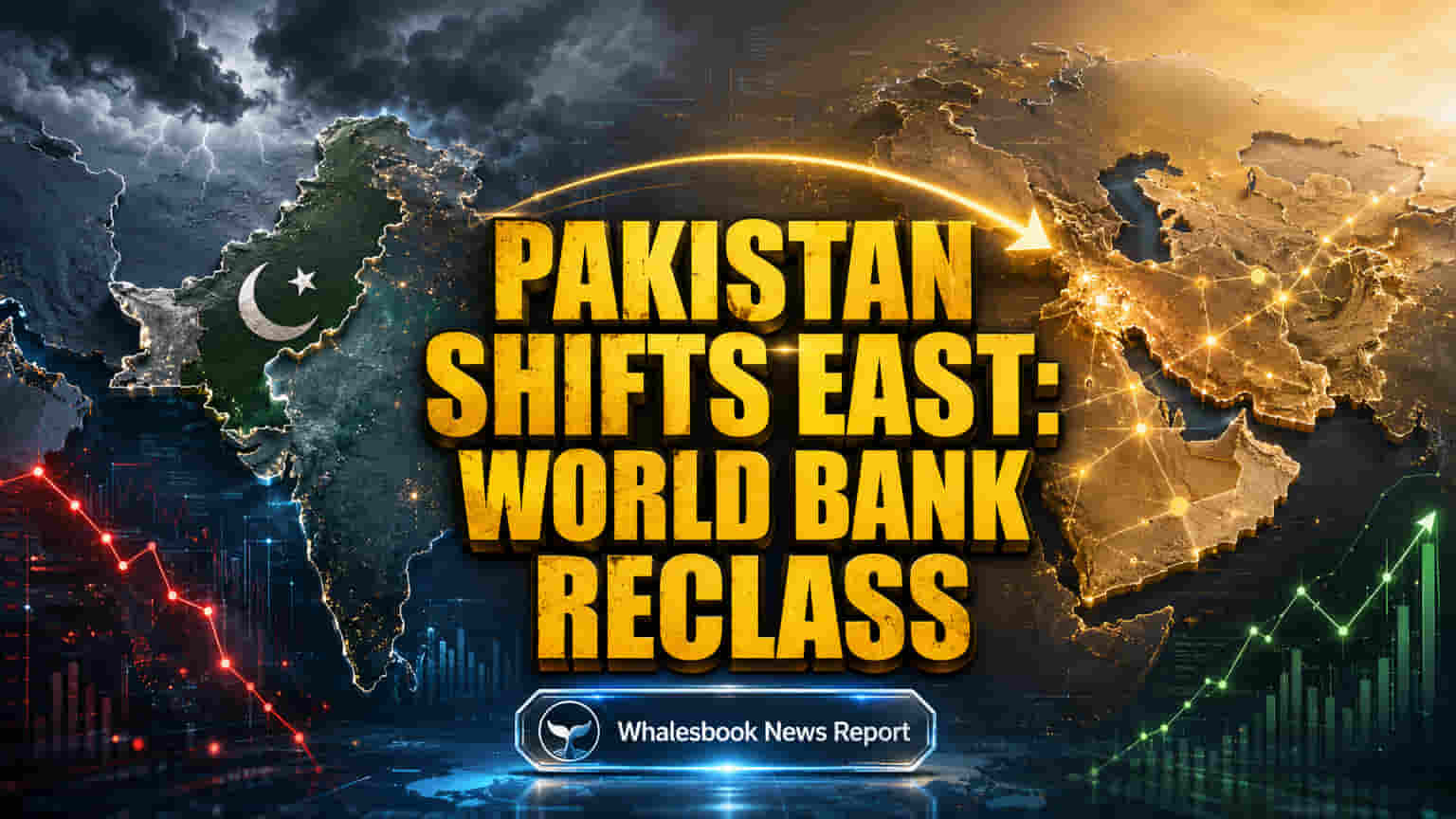


Pakistan Joins Middle East Region: World Bank Shift Reshapes Economic View
The World Bank's decision to move Pakistan from its South Asia grouping to the Middle East, North Africa, Afghanistan, and Pakistan (MENAP) region fundamentally reshapes how its economy will be seen internationally. By shifting Pakistan alongside nations facing greater economic challenges and geopolitical risks, this move means investors will now compare Pakistan's economic performance and risk profile against a different set of countries. This realignment could influence sovereign credit ratings and borrowing costs.
New Regional Benchmarks and Economic Risks
Within the MENAP context, Pakistan's economic indicators present a mixed picture. While its per capita income and industrial sector size lag behind the average for the MENA countries, its poverty rate is higher than the South Asia average. Foreign direct investment, vital for growth, stands at just 0.7% of GDP, mirroring South Asia but far below the MENAP region's 3.8% average. The World Bank forecasts modest regional growth of 2.8% in 2025 and 3.3% in 2026. However, ongoing conflicts in the Middle East could further slow this growth and expose Pakistan to higher energy and food import costs, reduced remittances from workers abroad, and tighter global financial conditions.
Credit Ratings Steady Amid Regional Instability
Despite joining a region facing significant challenges, Pakistan's sovereign credit ratings have recently improved. In April/May 2026, Fitch and S&P reaffirmed Pakistan's 'B-' rating with a stable outlook, while Moody's kept its 'Caa1' rating stable. These ratings acknowledge progress in managing the country's finances, improving its ability to pay foreign debts, and continued support from institutions like the International Monetary Fund (IMF). S&P forecasts Pakistan's GDP to grow by 3.6% in 2026, with Fitch and Moody's predicting around 3.1% to 3.5%. Fitch estimates inflation at about 7.9% for fiscal year 2026, and Moody's expects around 7.5%. However, Pakistan's debt remains high, projected at 68.9% of GDP for FY26 by Fitch, above the typical 'B' rating level. The country's heavy reliance on imported energy, with up to 90% of its oil from the Gulf, makes it vulnerable to price shocks and supply disruptions due to regional conflicts.
Market Perception Shifts with New Region
This reclassification impacts market perception by placing Pakistan alongside economies that often face greater economic instability and reliance on financial support. This comparison could lead to higher risk premiums on Pakistan's debt, potentially increasing its borrowing costs internationally, even with recent rating upgrades. The previous grouping with faster-growing South Asian economies offered a different narrative. Now, amid Middle East tensions, Pakistan is more directly exposed to regional instability, affecting its crucial energy imports and remittances. While Pakistan's stock market has grown recently, partly due to IMF program progress and reforms, it remains sensitive to geopolitical events. The country's long-term economic stability will depend on managing these external risks and continuing structural reforms, rather than solely on external aid.
Pakistan's Strategy in a Volatile Bloc
Pakistan's role as a geopolitical intermediary and its stronger ties with Gulf states are highlighted by its move to the MENAP region. This positioning could offer diplomatic advantages and attract investment through regional cooperation. However, it also places Pakistan squarely within a bloc dealing with significant pressures from regional conflict and volatile energy markets. The country's economic recovery, supported by the IMF and reforms, will continue to depend on navigating these complex international dynamics. Pakistan's success in its new regional role will be measured by its ability to build sustainable economic strength and stable institutions, separate from its former South Asian neighbors.