

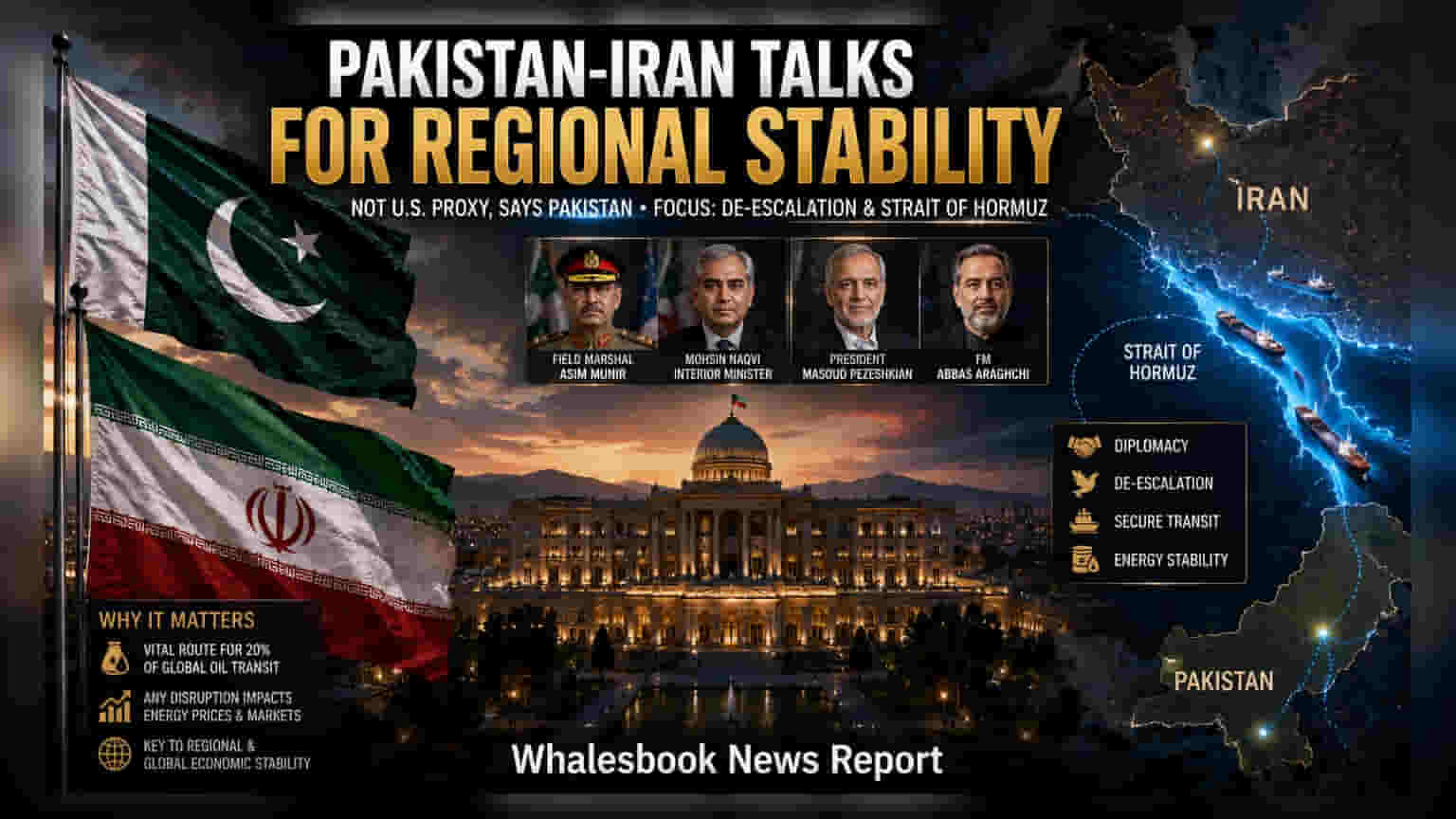
Pakistan’s Foreign Office has dismissed reports that Army Chief Field Marshal Asim Munir traveled to Tehran as a United States envoy. The government clarified the visit was a regional mediation effort aimed at easing tensions and resolving the blockade of the Strait of Hormuz. For global markets, this reflects continued volatility in West Asia, a key region for energy transit, as diplomatic channels struggle to stabilize the corridor.
Pakistan's Foreign Office has officially dismissed speculation that Army Chief Field Marshal Asim Munir acted as a proxy for the United States during his recent diplomatic visit to Tehran. Spokesperson Tahir Andrabi clarified that the delegation, which included Interior Minister Mohsin Naqvi, traveled to Iran strictly to pursue regional mediation efforts aimed at de-escalating the ongoing military stalemate.
The visit involved high-level discussions with Iranian leadership, including President Masoud Pezeshkian and Foreign Minister Seyed Abbas Araghchi. The primary focus of these talks was to address regional stability and the critical issue of access to the Strait of Hormuz. This waterway serves as a vital chokepoint for global petroleum transit, and any disruption or military deadlock in this area historically impacts energy supply chains and price stability.
While this event is diplomatic in nature, it holds significant interest for global observers tracking developments in West Asia. Diplomatic channels between Washington and Tehran have remained fragile since the collapse of interim agreements earlier in the year. The resurgence of military escalations since February has caused periodic instability in transit routes, which remains a key concern for global trade and energy markets. Pakistan’s role as a mediator highlights the persistent pressure to restore secure navigation and normalize trade relations in the region.
The Foreign Office reiterated that Pakistan conducts its diplomatic and trade engagements in accordance with international law, distancing itself from the narrative that the Army Chief was carrying messages or mandates on behalf of foreign powers. Islamabad’s stated goal is to stabilize the security environment, particularly as it prepares to lead the Shanghai Cooperation Organisation during its upcoming chairmanship.
For those monitoring global economic and geopolitical trends, the immediate focus remains on whether these mediation efforts can yield a lasting de-escalation in the region. The security of the Strait of Hormuz and the success of diplomatic attempts to bridge the divide between Washington and Tehran will be the key indicators to watch. Any further deterioration in the security environment could pose renewed risks to energy transit and regional economic stability, making the progress of these ongoing discussions a critical area to follow in the coming weeks.