

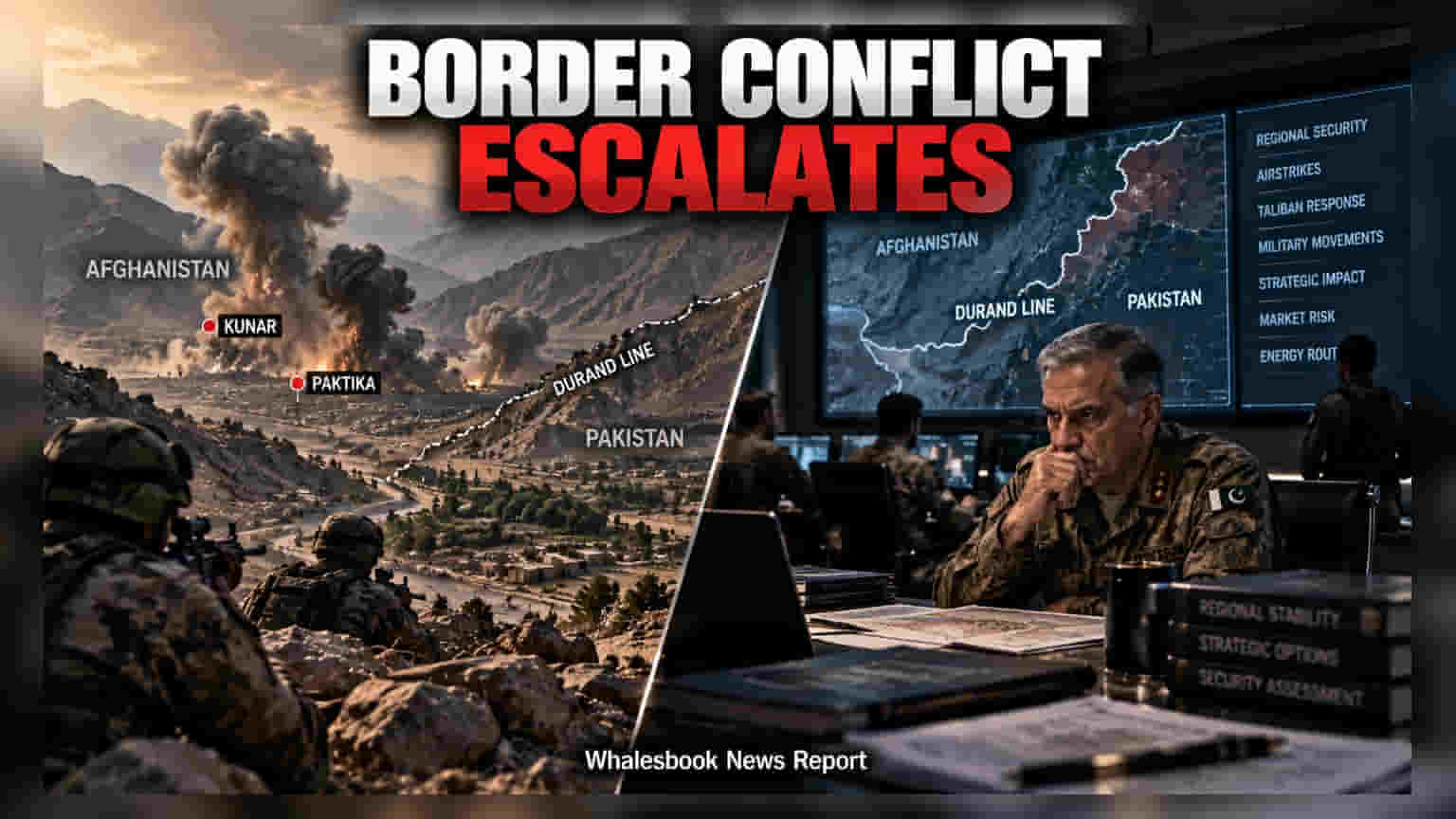
Escalating border conflict on the Durand Line has led to recent airstrikes and ground clashes, raising regional instability risks. For Indian investors, the event increases focus on geopolitical risk premiums, potential volatility in FII flows, and continued interest in the domestic defense sector, which remains sensitive to regional security changes.
A surge in hostilities along the Durand Line has introduced new regional volatility, following reported Pakistani airstrikes in Afghanistan's Kunar and Paktika provinces. The conflict, which involves direct combat between Pakistani forces and the Taliban, has disrupted the fragile security framework that has historically characterized this 2,600-km border region. For Indian market observers, the primary concern lies in the potential for these tensions to affect regional stability and, by extension, investment sentiment in South Asia.
Geopolitical Risk and Market Sentiment
Regional geopolitical tensions often act as a barometer for investor risk appetite. When conflict flares in neighboring regions, international investors—particularly Foreign Institutional Investors (FIIs)—often adopt a cautious stance toward South Asian markets. While the conflict is localized to the Pakistan-Afghanistan border, investors generally watch such developments to assess whether they could escalate into broader regional instability. Any prolonged uncertainty can lead to a 'flight to safety' sentiment, where global capital moves out of emerging markets toward safer assets, potentially creating short-term volatility in the Indian Rupee (INR) and the broader equity indices.
Sector Focus: Defense and Security
Indian defense stocks frequently draw investor attention during periods of heightened border volatility in the subcontinent. Companies in the defense manufacturing, electronics, and aerospace sectors often see renewed focus as the government prioritizes security spending and indigenous defense production. While this conflict is specific to the Pakistan-Afghanistan border, the overall regional security environment is a structural factor that influences long-term government capital allocation toward national defense. Investors often monitor how such geopolitical events reinforce the strategic necessity of the domestic defense push under the 'Make in India' initiative.
Macroeconomic and Trade Implications
Beyond direct security concerns, investors track potential impacts on energy security and trade logistics. While India's direct trade with Afghanistan via Pakistan remains limited due to historical factors, regional instability can indirectly influence energy commodity prices or impact broader South Asian trade corridors. Market analysts typically track whether such border disputes lead to broader diplomatic freezes, as these can affect regional trade cooperation. Furthermore, should the conflict contribute to any instability in energy supplies or shift global attention toward regional geopolitical risk premiums, it could influence the cost of imports and trade dynamics.
Monitoring the Escalation
For investors, the immediate next steps involve monitoring the duration and scale of the conflict. The key monitorable will be whether diplomatic channels reopen or if the military engagement escalates further. Investors should also observe official statements from regional and global stakeholders, as these will provide signals regarding the potential for long-term regional disruption. Market reactions to such news are often driven by how quickly the situation stabilizes; thus, the focus remains on whether this is a limited skirmish or the beginning of sustained instability along the Durand Line.