

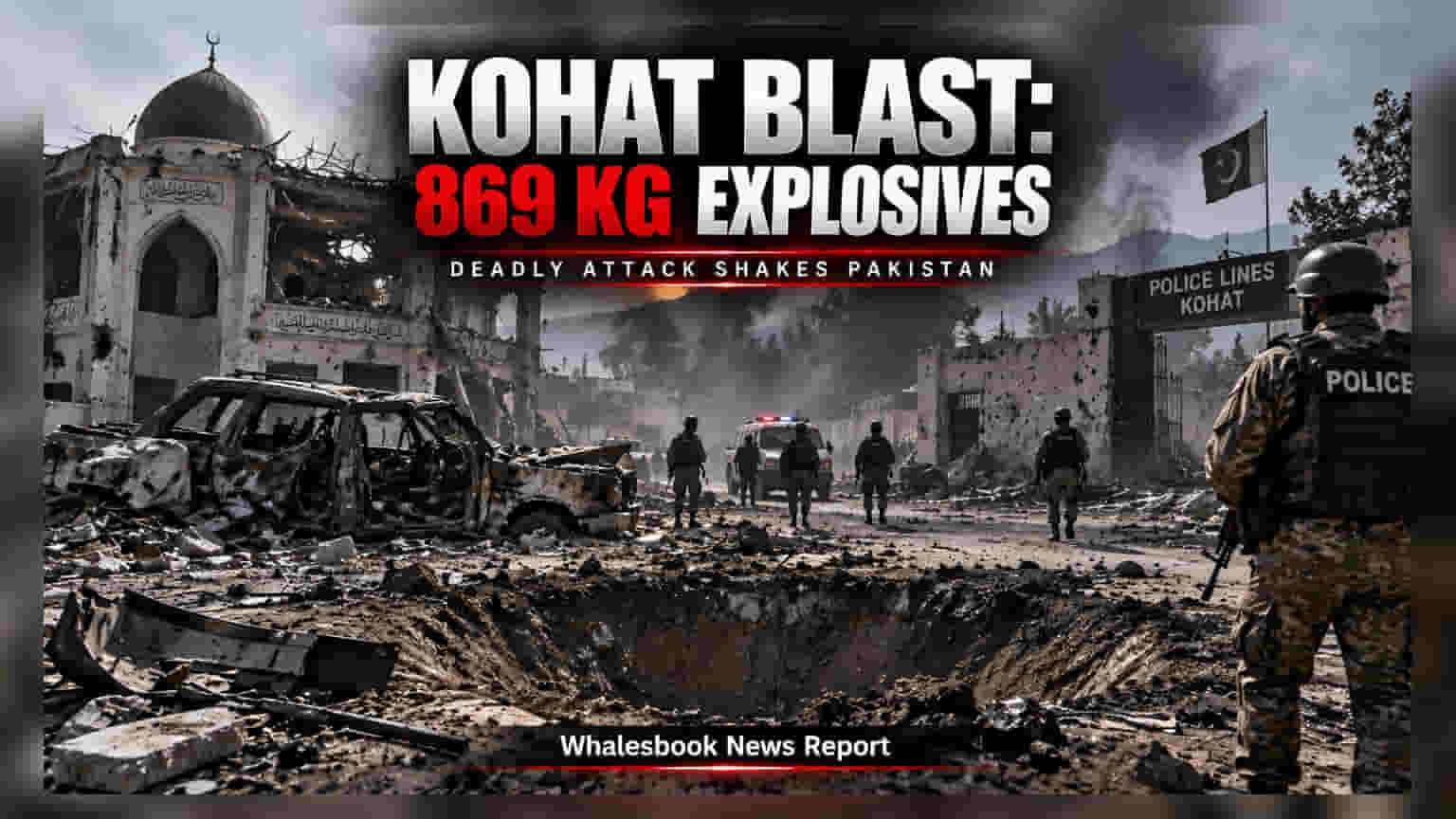
A suicide attack in Pakistan’s Kohat district involving 869 kg of explosives resulted in 21 fatalities, including 16 police officers. The incident, claimed by the Ittehad-ul-Mujahideen Pakistan, underscores the volatile security situation currently observed in the Khyber Pakhtunkhwa region.
Security officials in Pakistan have confirmed that a major suicide attack occurring on September 18 in the Kohat district of Khyber Pakhtunkhwa involved nearly 870 kg of explosive material. The scale of the detonation caused significant infrastructure damage, with bomb disposal units identifying a blast crater measuring 6.6 feet by 11 feet with a depth of 4.6 feet at the site.
The attack was executed in two distinct phases. Militants initiated the event by detonating a vehicle-borne explosive device at a mosque during Friday prayers. Following the initial blast, the perpetrators launched an armed assault on the nearby old Police Lines compound. The assailants fortified their position within the special branch block, resulting in a prolonged security operation. During the subsequent clearance phase, security forces eliminated eight militants and recovered additional unexploded ordnance, including multiple improvised explosive devices and a suicide vest containing further explosive components.
The official casualty toll stands at 21 deaths, of which 16 were police officers, while 103 individuals sustained injuries. The responsibility for the event has been claimed by the Ittehad-ul-Mujahideen Pakistan, a newly formed coalition that includes the Hafiz Gul Bahadur Group, Harakat Inqilab-e-Islami Pakistan, and Lashkar-e-Islam.
From a regional risk perspective, this incident reflects the increasing security instability within the provinces of Khyber Pakhtunkhwa and Balochistan. The use of high-volume explosives and coordinated tactics against state security infrastructure is an important monitorable for those tracking geopolitical risk in the South Asian region. Security analysts often evaluate such events to assess the potential for long-term operational disruption and regional economic stability.