

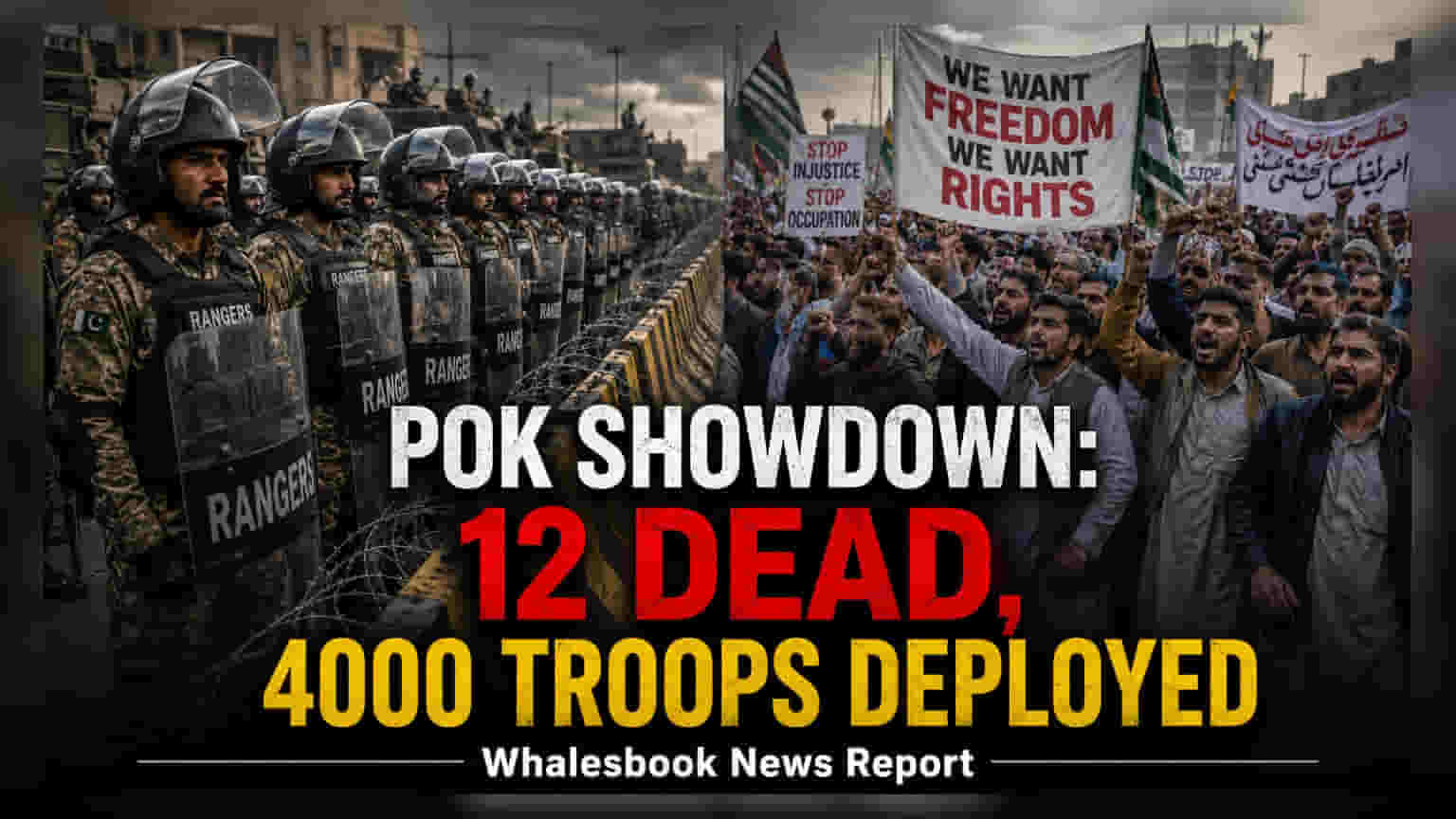
Violent clashes in Pakistan-Occupied Kashmir (POK) have resulted in 12 fatalities as authorities deploy 4,000 security personnel to block a planned protest march. The Joint Awami Action Committee is leading demonstrations against inflation and governance issues, leading to severe internet and media restrictions across the region.
The situation in Pakistan-Occupied Kashmir (POK) has reached a critical stage following violent clashes on Tuesday that left 12 people dead, including two security personnel. The region is currently experiencing a severe security crackdown ahead of a planned march organized by the Joint Awami Action Committee (JAAC) from Rawalakot to Muzaffarabad. In an effort to contain the protests, the administration has deployed approximately 4,000 personnel from the Pakistan Rangers, police, and Frontier Corps, while also enforcing internet and media blackouts to restrict information flow.
Origins and Expansion of Protests
The current unrest is the result of four weeks of intensifying demonstrations. Initially sparked by opposition to reserved assembly seats for non-residents, the movement has evolved into a 38-point charter demanding comprehensive economic and political reforms. Key grievances cited by the JAAC include the high cost of living, elite privileges, and a lack of local control over natural resources such as the Mangla Dam. Protesters are seeking significant policy changes, including a minimum monthly wage of 50,000 Pakistani rupees, improvements in public healthcare and education, and the withdrawal of legal cases against activists.
Conflicting Accounts of the Violence
Authorities have taken a confrontational stance, characterizing the JAAC as an armed group and alleging that activists initiated the violence. In response, JAAC leadership has denied these claims, maintaining that their movement is peaceful. The committee has alleged that the state is using individuals in civilian clothing to provoke conflict and justify the security crackdown. These conflicting narratives remain a major point of tension as the region faces ongoing administrative and social instability.
Diplomatic and Regional Impact
India has closely monitored the developments, with the Ministry of External Affairs labeling the situation a result of systemic exploitation and the denial of fundamental rights in the region. This statement highlights ongoing international concerns regarding the administration of POK. For residents and those monitoring the region, the primary focus remains on the outcome of the protest march and the potential for further administrative actions. The situation remains volatile, with future stability dependent on whether the authorities choose to engage with the JAAC's demands for reform or continue the current policy of suppression and military deployment.