

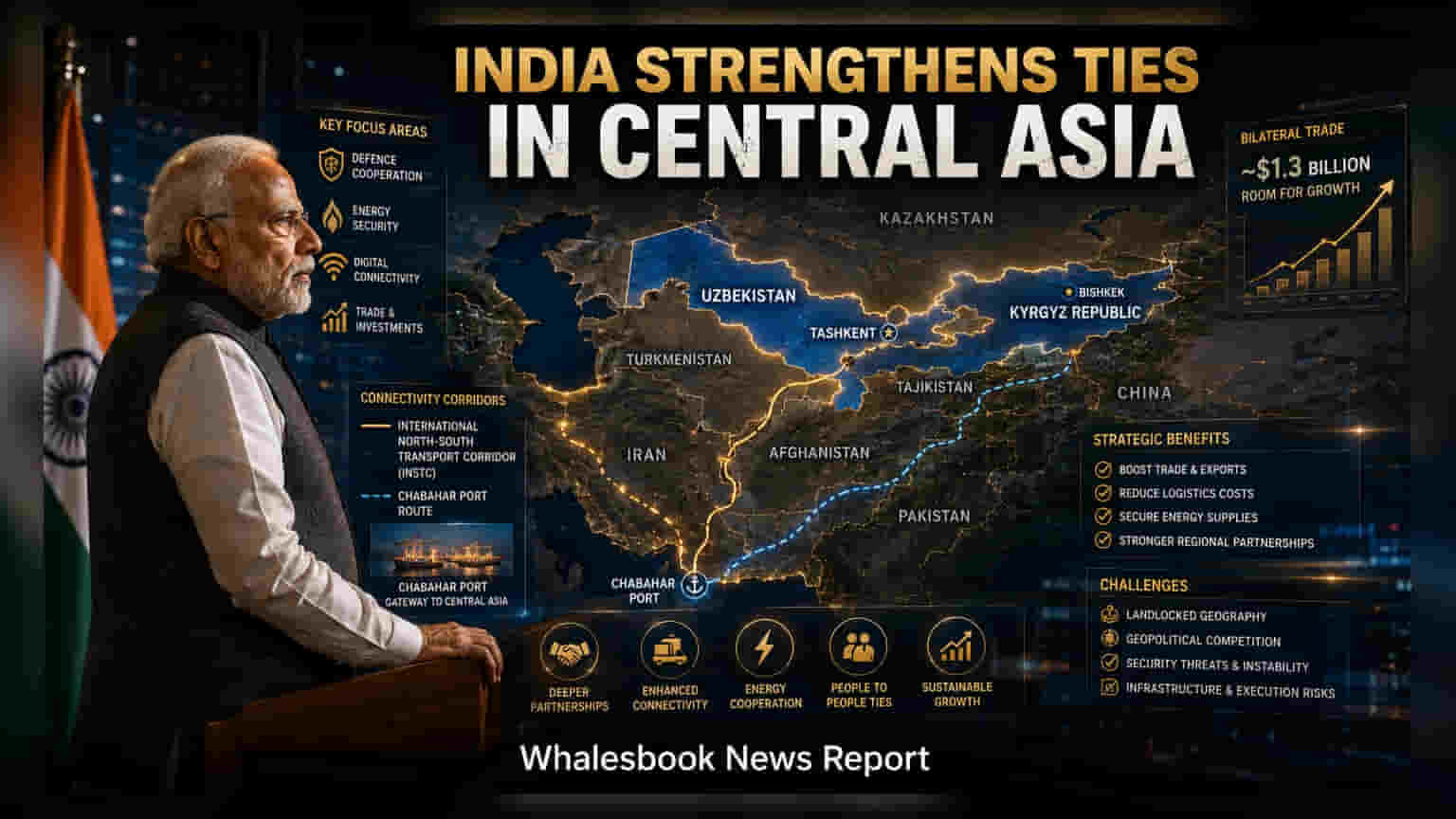
Prime Minister Narendra Modi has commenced a four-day diplomatic visit to Uzbekistan and the Kyrgyz Republic, focusing on regional security, trade, and energy cooperation. For Indian investors, the tour is significant as it aims to unlock long-term trade corridors and energy supply lines. The focus remains on overcoming logistical challenges to improve India’s economic footprint in Central Asia and aligning growth strategies like 'Viksit Bharat 2047' with local development plans.
Prime Minister Narendra Modi began a four-day diplomatic visit to Uzbekistan and the Kyrgyz Republic on August 29, 2026. This trip includes a bilateral state visit to Tashkent to meet President Shavkat Mirziyoyev, followed by India’s participation in the 26th Shanghai Cooperation Organisation (SCO) Summit in Bishkek, scheduled for August 31 to September 1.
For investors and the Indian business community, this visit marks a strategic effort to deepen ties in a region that acts as a vital bridge between South Asia and Europe. The diplomatic agenda centers on strengthening defense cooperation, energy security, and digital connectivity. A primary theme is the alignment of India’s long-term economic roadmap, 'Viksit Bharat 2047', with the 'Uzbekistan-2030' development strategy, which aims to create a more favorable investment climate for Indian firms.
Expanding Trade and Logistics
The most important takeaway for businesses is the ongoing focus on connectivity. Trade between India and Central Asian nations, including Uzbekistan, remains below potential—with bilateral trade currently hovering around $1.3 billion. To bridge this gap, India is pushing for the utilization of the International North-South Transport Corridor (INSTC) and the Chabahar Port in Iran. These routes are essential for Indian exporters and manufacturers, as they bypass the traditional land routes that have historically been restricted due to geopolitical friction in the region. Improving these corridors could significantly reduce logistics costs and transit times, allowing for more robust trade in pharmaceuticals, agriculture, textiles, and engineering goods.
Geopolitical and Logistical Challenges
While the expansion of trade ties presents opportunities, investors must also consider the inherent risks associated with the region. The primary hurdle remains geography; the lack of direct land access to Central Asia forces India to rely on complex, multi-modal routes. These routes often involve multiple trans-shipments, which can increase operational costs and execution risk for companies.
Furthermore, the region is a theater of intense competition between major global powers, including China and Russia. This geopolitical rivalry can lead to regulatory uncertainty and competition for infrastructure projects. Additionally, the region faces persistent security threats, particularly extremism and instability originating from the Af-Pak border, which remain top-of-mind concerns for regional security and long-term project stability.
Future Monitorables
Moving forward, the success of this diplomatic push will depend on execution. Investors may track the progress of specific infrastructure projects related to the INSTC and the actual realization of trade agreements announced during the summit. The ability of the government to secure reliable energy supply corridors and reduce trade barriers will be key indicators of whether the economic potential of this region can be effectively unlocked for Indian industries.