

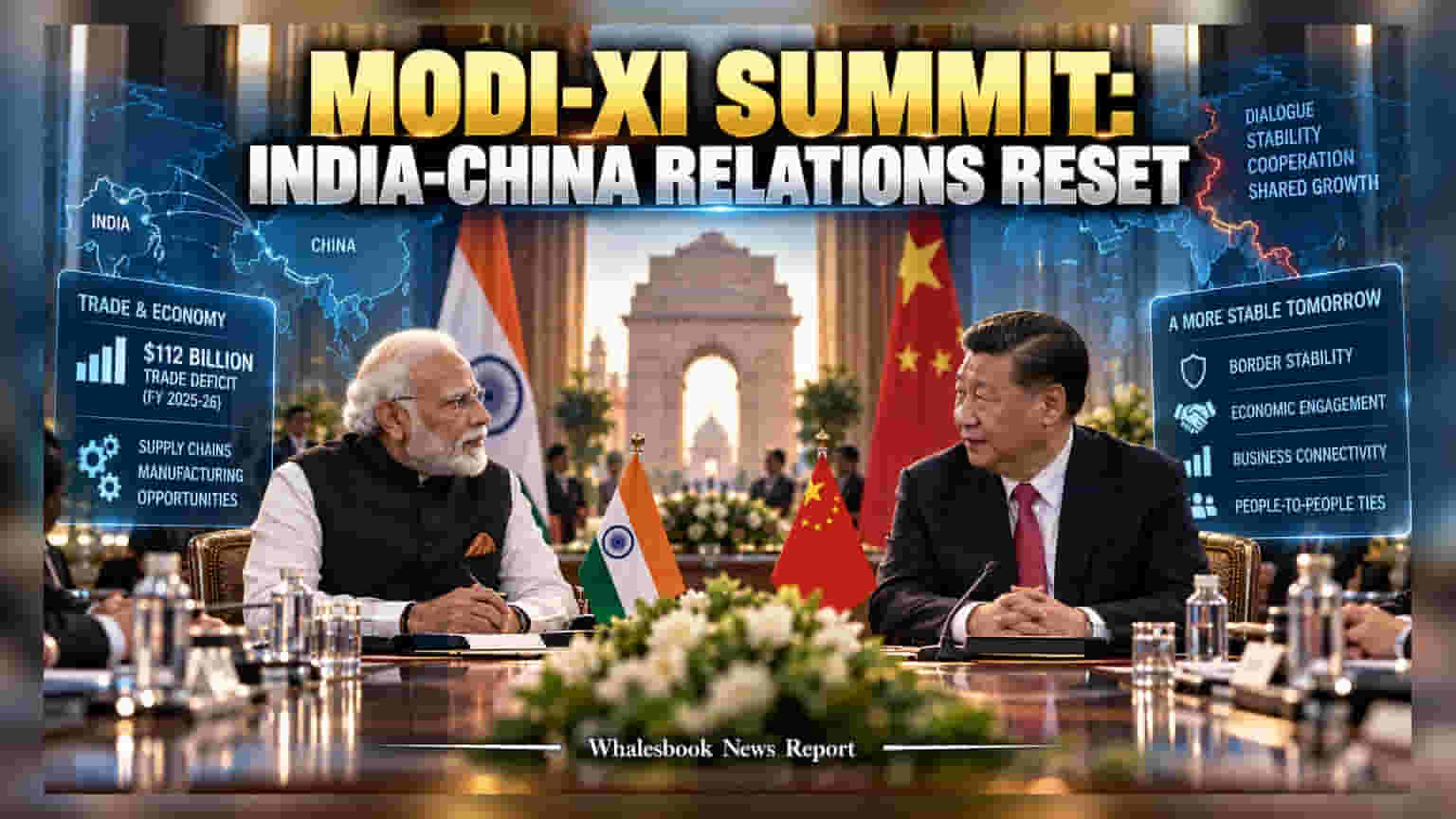
Prime Minister Narendra Modi and President Xi Jinping are holding bilateral talks in New Delhi during the 18th BRICS Summit, focusing on border stability and trade. The meeting addresses the $112 billion trade deficit and ongoing supply chain dependencies. Investors will track if this diplomatic thaw leads to policy changes for critical sectors like electronics and machinery.
Prime Minister Narendra Modi and Chinese President Xi Jinping are holding high-level bilateral talks in New Delhi on the sidelines of the 18th BRICS Summit. This meeting is notable as it marks President Xi’s first visit to India in seven years, following years of cooling relations due to the military standoff at the Line of Actual Control. The discussions are centered on finding a path to stability along the border and addressing the complex economic relationship between the two nations.
From an economic standpoint, the meeting addresses a critical challenge for Indian businesses: the large trade imbalance. India recorded a $112 billion trade deficit with China in the 2025-26 fiscal year. This gap is largely driven by India’s heavy reliance on Chinese imports, specifically for critical intermediate goods, electronics, and machinery components. For domestic manufacturers, this reliance often creates supply chain vulnerabilities when geopolitical tensions flare up, potentially disrupting production schedules and increasing input costs.
The talks come at a time when India is actively trying to grow its local manufacturing capacity through various production-linked incentive schemes. While the government remains cautious about Chinese investments, this summit may provide clarity on whether institutional ties will be restored to facilitate smoother business operations. The resumption of processes such as visa approvals for business personnel and potential easing of trade barriers are points of interest for companies dependent on raw materials or machinery from Chinese suppliers.
However, the path to fully normalized economic engagement remains complex. Persistent border disputes and national security concerns continue to act as a hurdle. Previous regulatory actions, such as the increased scrutiny of Chinese investments and the banning of several apps, have created a restrictive environment for capital flow. Investors should note that while this diplomatic engagement is a positive signal, any material change in policy—such as easing investment norms or addressing import dependency—will depend on tangible progress in border stability.
Moving forward, the key monitorable for market participants will be official statements regarding trade policies and sector-specific agreements. Any updates on the restoration of direct connectivity, business visa processes, or tariff structures for imported machinery could impact operational costs for manufacturing firms. Until such concrete policy shifts are announced, the business environment is expected to remain cautious, with companies likely continuing their efforts to diversify supply chains to manage long-term risks.