

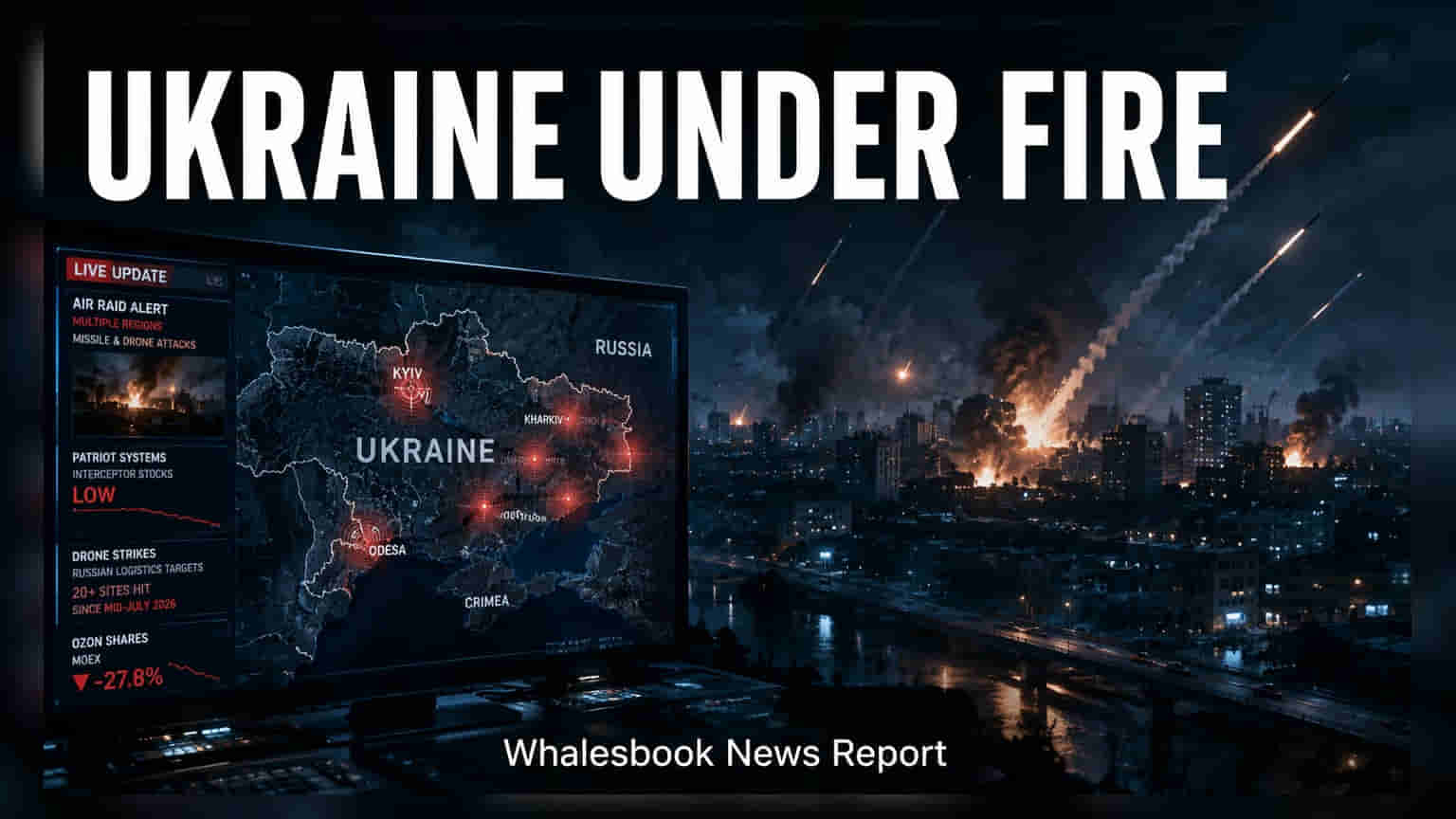
Russia launched widespread strikes across Ukraine today, leading to urgent appeals for more Patriot air defense systems. Simultaneously, Ukrainian drone attacks on Ozon’s logistics facilities caused the e-commerce giant’s shares to fall 27-30% on the Moscow Exchange. This escalation marks a shift toward targeting commercial supply chain infrastructure.
The ongoing conflict between Russia and Ukraine has escalated, resulting in a direct impact on major commercial infrastructure. On August 27, 2026, Russia launched a significant wave of missile and drone attacks across multiple Ukrainian regions, including Kyiv and Odesa. In response, President Volodymyr Zelenskyy has renewed urgent calls for additional Patriot air defense systems, noting that current interceptor stockpiles are struggling to match the high frequency of the Russian strikes.
While the military situation remains critical, the conflict is increasingly affecting the economic front. Ukrainian drone operations have shifted focus to Russian logistics and e-commerce assets, which are vital for the country's domestic supply chain. On August 27, Ukrainian drones struck Ozon logistics facilities in Ufa and Orenburg. These strikes follow a series of similar actions that have impacted over 20 sites belonging to major retailers, including Ozon and Wildberries, since mid-July 2026.
The market reaction to these developments has been sharp, particularly for Ozon, Russia's second-largest e-commerce retailer. Investors have responded to the physical damage and the heightened operational risks by selling shares, leading to a decline of approximately 27-30% on the Moscow Exchange. This volatility highlights growing concerns about the long-term sustainability of logistics operations in regions vulnerable to long-range drone strikes.
For investors, the situation introduces new risks regarding asset safety, business continuity, and potential state intervention. As logistics hubs become primary targets in this tit-for-tat campaign, companies with significant exposure to these areas may face increased costs and operational hurdles. The Russian government has hinted at the possibility of state intervention to protect or restore critical infrastructure, which adds a layer of regulatory and political uncertainty to the sector.
The key monitorable for market participants will be the stability of logistics networks and whether further strikes lead to broader economic disruptions. Investors will also track how the conflict's intensity impacts the profit margins and operational capacity of major Russian e-commerce players in the coming months.