

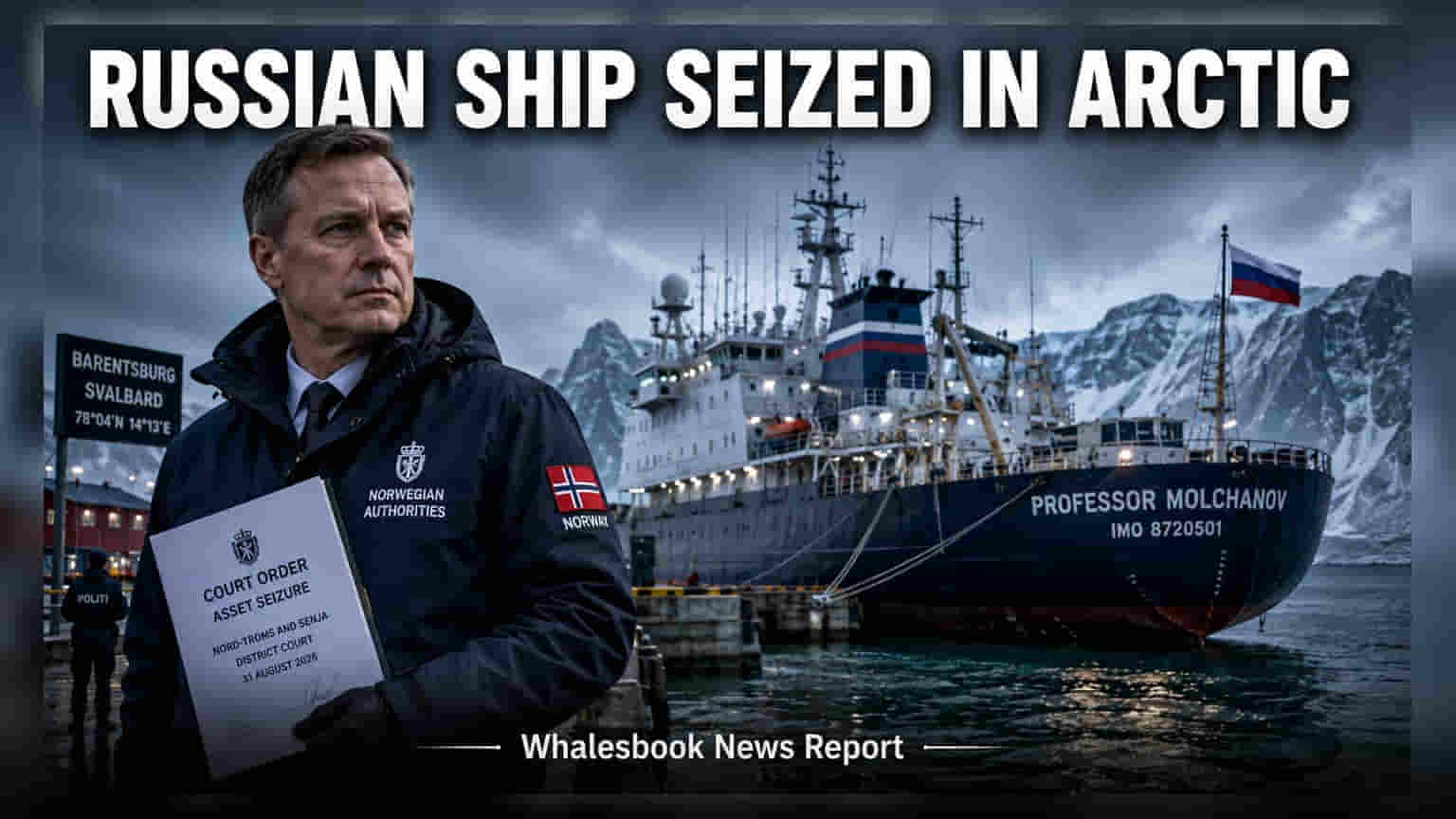
Norwegian authorities have impounded the Russian research vessel Professor Molchanov in Svalbard to enforce a $4.22 billion arbitration award won by Ukraine’s Naftogaz. This action marks a tactical shift in the global legal effort to recover assets linked to the 2014 annexation of Crimea. The move has sparked diplomatic tension, with Russia vowing to challenge the legal basis of the seizure.
Norwegian authorities seized the Russian-owned research and expedition vessel Professor Molchanov in the port of Barentsburg, Svalbard, on September 2, 2026. The action followed a mandate issued by the Nord-Troms and Senja District Court on August 31, 2026. This seizure is a direct effort by Ukraine’s state-owned energy company, Naftogaz, to enforce a $4.22 billion arbitration award granted by a tribunal in The Hague in 2023.
The arbitration award stems from the unlawful appropriation of Naftogaz infrastructure, including gas fields and pipeline networks, in the Crimean peninsula following the 2014 annexation. With Moscow refusing to pay the penalties stipulated by the international tribunal, Naftogaz has transitioned from legal proceedings to a strategy of actively identifying and seizing Russian state-owned commercial assets in foreign jurisdictions.
Enforcement of $4.2 Billion Arbitration
The move against the Professor Molchanov highlights the growing complexity of enforcing international legal judgments against sovereign entities. While winning an arbitration award is a significant legal milestone, the practical recovery of funds often depends on finding accessible assets. By targeting a commercial vessel operating in Norwegian waters, Naftogaz is attempting to translate a paper judgment into real-world financial recovery.
For investors and global observers, this incident underscores the escalating legal risks associated with assets in conflict zones. The case demonstrates that international arbitration awards, while authoritative, face immense hurdles when enforcement requires the seizure of property that may be protected by doctrines of sovereign immunity. Naftogaz’s strategy of hunting for state-linked assets worldwide indicates that legal pressure on Russian interests is likely to continue in various international courts.
Legal Risks and Diplomatic Fallout
The seizure has caused immediate diplomatic friction. Russian authorities have strongly condemned the action, with officials characterizing the court order as an act of piracy and a violation of international law. The Kremlin has indicated that it will formally challenge the seizure in Norwegian courts, potentially leading to a prolonged legal battle over the vessel’s status.
A central risk in this situation is the legal uncertainty regarding the distinction between commercial assets and those shielded by sovereign immunity. While Naftogaz seeks to treat the vessel as a commercial asset of the Russian state, Moscow is likely to argue for the protection of its property rights. The outcome of the upcoming appeals will be a significant test for how Norwegian courts interpret enforcement of international arbitration in the context of ongoing geopolitical conflicts.
Investors monitoring this situation should track the outcome of the legal challenge in Norway. The resolution will likely set a precedent for future efforts by Ukrainian state entities to seize assets abroad. Additionally, the vessel remains under strict surveillance in Barentsburg, and any decision to release or auction the ship will serve as an indicator of how far international jurisdictions are willing to go in enforcing these multi-billion dollar claims.