

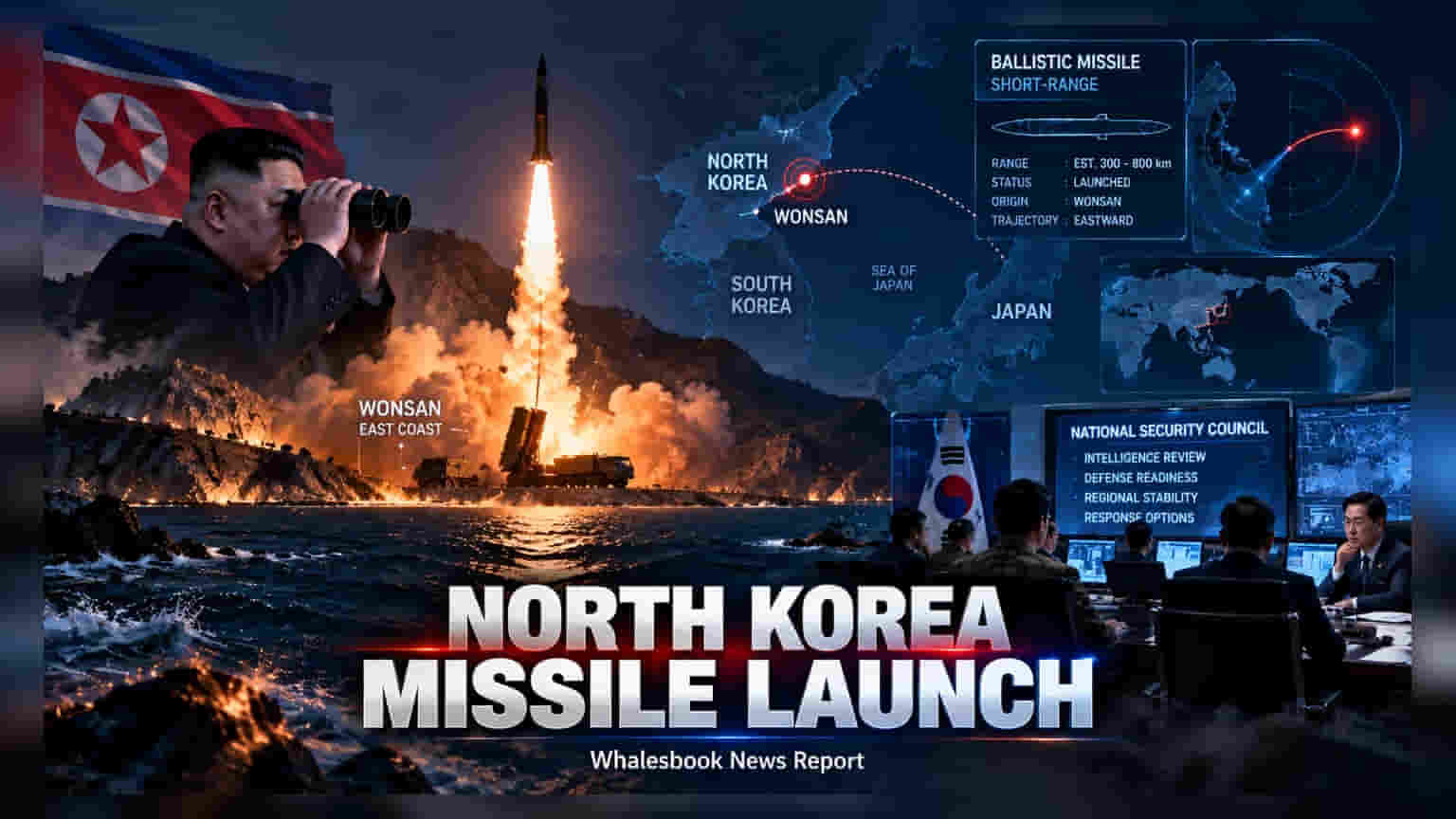
North Korea launched a short-range ballistic missile from its eastern coast, prompting an emergency security meeting in South Korea. This renewed military activity creates uncertainty in the region, which typically leads investors to monitor safe-haven assets and potential risks to global supply chains in East Asia.
North Korea conducted a short-range ballistic missile launch from its eastern coastal region of Wonsan on Sunday. In response to the provocation, South Korea immediately convened its National Security Council to assess the security breach and calibrate potential defense measures. While specific flight data remains under evaluation by intelligence units, the launch confirms a return to active military posturing by Pyongyang.
Regional Security and Market Impact
The launch follows a period of delicate maneuvering regarding US-South Korea military exercises. Despite the recent decision to reduce the scale of the annual Ulchi Freedom Shield drills, North Korean officials have continued to criticize these exercises as inherently hostile. For investors, geopolitical tensions on the Korean Peninsula often trigger a period of caution. Historically, such events can lead to increased volatility in Asian equity markets, particularly given the region's critical role in the global semiconductor and technology supply chain.
Investors typically watch for shifts in currency markets, as increased tension can lead to fluctuations in the South Korean Won against major currencies. Additionally, periods of heightened geopolitical risk often see capital flow into safe-haven assets like gold or government bonds, while defense-related stocks may see varied sentiment based on regional security spending expectations. Because South Korea is home to major global technology and manufacturing companies, any escalation that threatens regional stability is closely monitored by international market participants for potential disruptions to logistics or manufacturing operations.
Moving forward, the primary monitorable for the market is whether this test is an isolated incident or part of a broader cycle of escalation. Investors will likely look for further statements from the US and South Korean governments regarding potential defensive adjustments or diplomatic responses. Any sustained increase in military testing could keep regional market sentiment fragile in the coming weeks.