

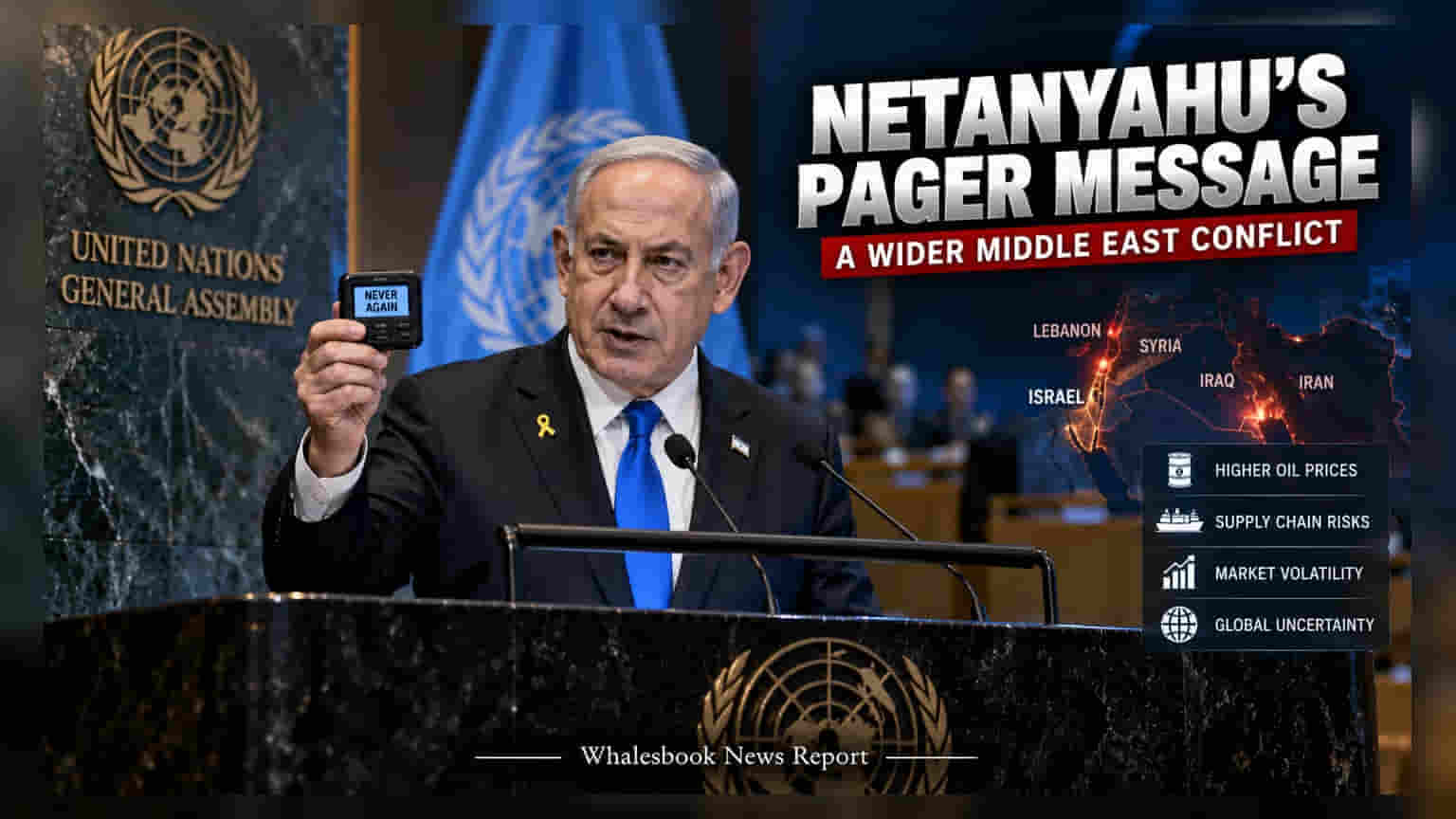
Israeli PM Benjamin Netanyahu's UN General Assembly address, featuring a symbolic pager prop, underscores a deepening seven-front conflict. For Indian investors, the rising tensions in the Middle East increase uncertainty regarding crude oil prices, shipping costs, and global market sentiment.
Israeli Prime Minister Benjamin Netanyahu’s address to the United Nations General Assembly, where he used a pager as a symbolic prop to reference the recent conflict with Hezbollah, has highlighted the deepening security crisis in the Middle East. For global markets and Indian investors, this public display of defiance underscores a widening multi-front conflict that extends beyond Israel’s borders to include various groups aligned with Iran.
The strategic significance of this development for Indian markets lies primarily in the potential for geopolitical instability to impact global energy supply chains. As a net importer of crude oil, India remains sensitive to any escalation in the Middle East that could threaten critical shipping routes or trigger a spike in global energy prices. Increased tensions in this region historically translate into volatility for global commodity markets, which often influences the operating environment for Indian oil marketing companies and related sectors.
While the direct impact of the conflict on domestic Indian businesses remains indirect, market observers track such geopolitical events through the lens of macro-economic stability. A sustained rise in global crude oil prices can exert pressure on India's import bill, potentially affecting the trade balance and the value of the Indian Rupee. Investors typically monitor these developments to gauge the potential impact on domestic inflation, fiscal discipline, and the cost of capital.
Sectors that are historically sensitive to these geopolitical shifts include energy, aviation, and logistics. Shipping lanes in the region are crucial for global trade, and any disruption or heightened risk profile can increase freight costs, impacting import-dependent industries. Meanwhile, the defense sector may experience shifts in global sentiment as nations recalibrate their security strategies in response to emerging asymmetric warfare threats, such as the communications-related incidents discussed in the address.
The situation, which Netanyahu described as a seven-front confrontation, implies that regional volatility may persist. Investors generally monitor updates regarding oil price movements, potential changes in trade routes, and any broader diplomatic interventions that could dampen or escalate regional tensions. The long-term impact on global equity markets will depend on whether the conflict remains contained or whether it triggers a broader disruption in the energy-rich region.