

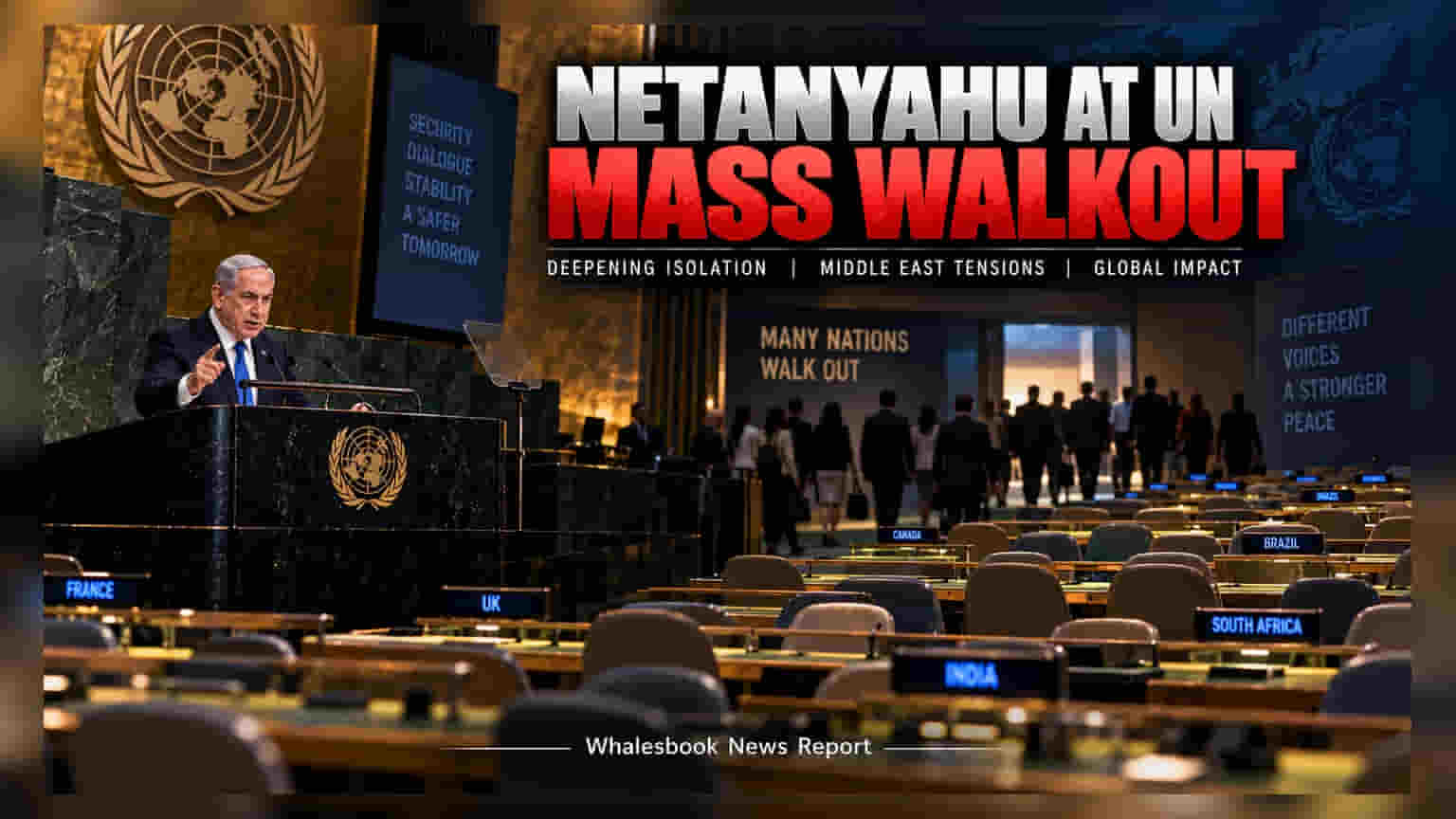
Israeli PM Benjamin Netanyahu defended his military stance at the UN General Assembly, fueling concerns about continued Middle East instability. For Indian investors, the main focus is the resulting volatility in crude oil prices, which can influence domestic inflation and the margins of energy-intensive sectors like aviation and oil marketing companies.
Israeli Prime Minister Benjamin Netanyahu delivered a defiant address at the United Nations General Assembly on September 24, 2026, marking a significant moment in current geopolitical relations. During his speech, he rejected allegations regarding the military campaign in Gaza and maintained a hardline stance on regional security, specifically regarding the conflict with Iran and Hezbollah. The event saw a notable walkout by several international delegates, reflecting the deepening diplomatic isolation surrounding the current military operations.
Impact on Energy and Markets
For Indian stock market investors, the ongoing geopolitical friction in the Middle East is a critical monitorable. The region is a primary source of global energy supplies, and any escalation or perceived lack of de-escalation often leads to volatility in global crude oil prices. As India remains a net importer of crude oil, sustained instability can put pressure on the country's import bill and potentially influence inflation trends.
Market participants often track Brent crude benchmarks as an indicator of how global uncertainty might affect domestic manufacturing and transport costs. If oil prices remain elevated due to regional tensions, sectors such as aviation, paints, and logistics, which rely heavily on fuel, may face margin pressure. Conversely, public sector oil marketing companies and upstream energy producers often see their valuations fluctuate based on how the government manages fuel pricing and windfall taxes in response to international price movements.
Logistics and Trade Sensitivity
Beyond energy prices, investors are also tracking the impact of Middle East tensions on maritime logistics. The Red Sea and the Suez Canal are essential transit points for Indian trade with Europe and parts of the Middle East. Increased regional insecurity—often referenced alongside the ongoing military operations—can lead to higher insurance premiums for shipping lines and longer transit times. This affects sectors with high export-import exposure, particularly textiles, pharmaceuticals, and agriculture, as companies may have to account for higher freight costs.
What Investors Should Monitor
While the geopolitical situation is complex, Indian investors typically focus on a few key indicators to assess the economic impact. These include the movement of global crude oil benchmarks, the volatility index (VIX), and the stability of the Indian Rupee against the US Dollar, as a weaker currency can exacerbate the cost of oil imports. Additionally, investors may look for updates on any diplomatic shifts or regional de-escalation efforts, as these are often the triggers for a stabilization in market sentiment. The focus remains on how these external pressures reflect in the earnings and operational costs of Indian listed entities in the coming quarters.