

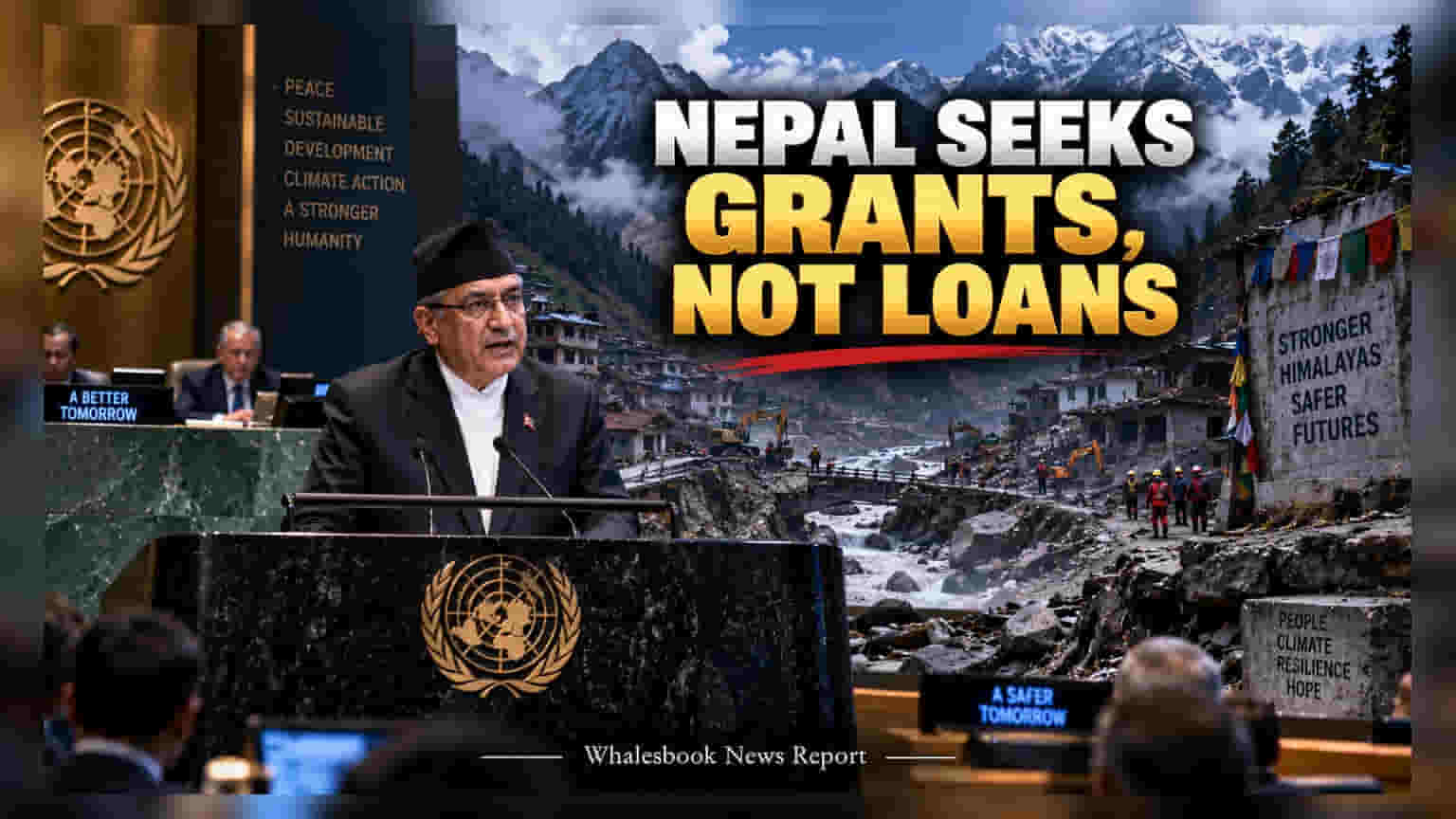
Nepal has appealed for international grant-based funding after a catastrophic glacial flood caused damage estimated at 10% of its GDP and over 1,450 deaths. The government is rejecting additional high-interest debt for reconstruction. The crisis has also highlighted the urgent need for a shared Himalayan climate monitoring framework involving Nepal, India, and China.
Nepal is urging the international community to provide grant-based financial support rather than loans to manage the massive destruction caused by a recent glacial disaster. The event, which occurred near the border with China in late August, has significantly impacted the country's economy, with total recovery costs estimated at 10% of its gross domestic product. This fiscal burden is a major concern for the government, which maintains that taking on high-interest debt is unsustainable for a nation already struggling with the aftermath of a climate-induced tragedy.
At the United Nations General Assembly, the government stated that the current model of emergency financing needs a shift. The disaster has destroyed critical infrastructure, including roads, schools, and homes, forcing the nation to prioritize basic survival and reconstruction over long-term economic growth. While the World Bank has authorized $170 million in emergency financing to support these efforts, the government is pushing for grants to avoid further weakening the country’s balance sheet.
The scale of the destruction has also brought the issue of regional cooperation to the forefront. There is an active proposal for a shared Himalayan framework between Nepal, India, and China to manage climate risks. This plan focuses on creating a centralized system for satellite monitoring of glacial lakes and standardizing early-warning protocols. For the region, this cross-border data sharing is being viewed as a vital step to prevent future loss of life and protect vulnerable infrastructure in the Himalayas.
The humanitarian situation remains dire, with search operations ongoing and over 6,000 individuals still reported missing. As authorities continue to assess the damage, the focus remains on securing non-debt-based aid to prevent a deeper economic crisis. Investors and regional observers will continue to track how these financial aid discussions progress and whether the proposed collaborative monitoring framework between neighboring countries gains traction. The outcome of these discussions could influence how similar climate-linked economic risks are managed across the Himalayan corridor.