

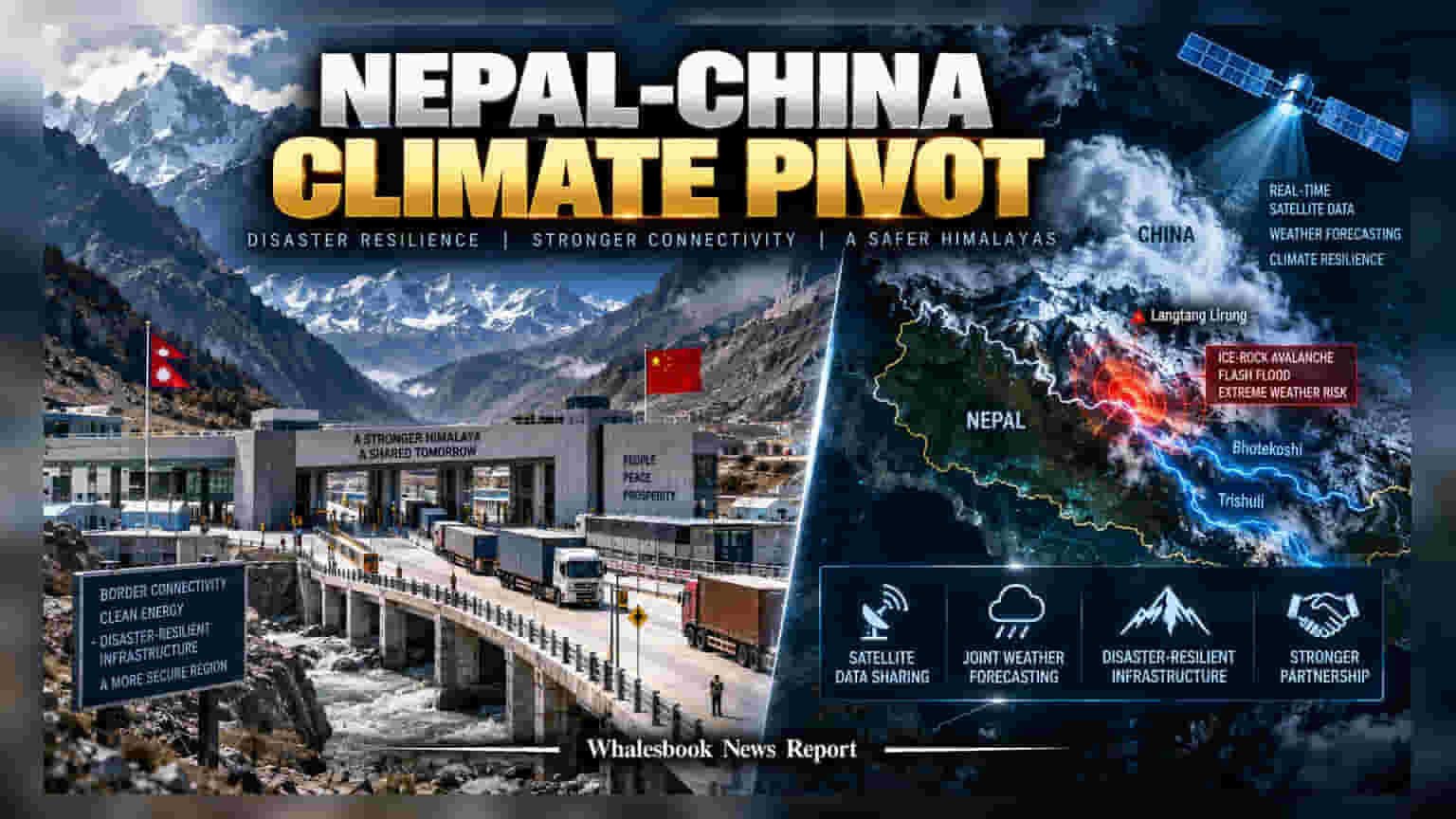
Following the August 26 Himalayan avalanche that caused over $4 billion in damages, Nepal is seeking a climate-resilient infrastructure partnership with China. The move highlights rising financial risks for Himalayan hydropower and transport projects, as Kathmandu demands climate compensation from major global economies.
Nepal is actively working to redefine its infrastructure and economic relationship with China following the catastrophic ice-rock avalanche and flash flood on August 26, 2026. The disaster, which originated on the Langtang Lirung glacier and swept through the Bhotekoshi-Trishuli river systems, resulted in over 1,300 confirmed deaths and left more than 5,000 individuals missing. The economic impact is estimated between $4 billion and $7 billion, dealing a major blow to the country's critical infrastructure, including roads, bridges, and numerous hydropower projects.
Foreign Minister Shisir Khanal has called for an expanded strategic partnership with Beijing, pivoting from traditional border management to a framework centered on climate security. Nepal is advocating for real-time satellite data sharing, joint weather forecasting, and the construction of infrastructure engineered to survive extreme environmental stress. This request for 'thick connectivity' with China includes plans for a year-round Himalayan port, though the design and financial requirements for such projects are now being re-evaluated in light of the severe environmental risks faced by the region.
Fiscal Pressure and Infrastructure Risk
The scale of the destruction has created immediate and long-term fiscal pressure on the Nepalese economy. With the cost of reconstruction far exceeding domestic funding capabilities, the government has launched a diplomatic campaign to demand climate compensation from major global emitters, including China, the United States, and India. Kathmandu has formally approached the United Nations' Fund for Responding to Loss and Damage, framing these requests as a necessary financial liability rather than traditional foreign aid.
For investors and companies involved in the Himalayan region, this event serves as a sharp reminder of the operational risks associated with high-altitude infrastructure. The recurring threat of glacial lake outburst floods and secondary landslides means that projects previously deemed viable may now face higher costs, longer construction timelines, and increased insurance premiums. The shift toward demanding climate compensation also suggests that Nepal may struggle to fund large-scale projects without international financial support, which could impact the pace of future infrastructure development.
Monitoring the Strategic Pivot
While Nepal maintains its 'middle path' foreign policy, the urgency of its climate demands reflects a growing need for stability. The government's push for disaster-resilient infrastructure is set to become the primary focus of its upcoming bilateral discussions with Beijing. Investors and market observers should monitor whether these climate-resilient standards become a mandatory requirement for future construction projects, as this would fundamentally alter the cost structure for energy and connectivity ventures in the trans-Himalayan belt. The next major update will be the response from the UN's Loss and Damage Fund and the subsequent negotiations regarding joint disaster-warning systems with neighboring nations.