

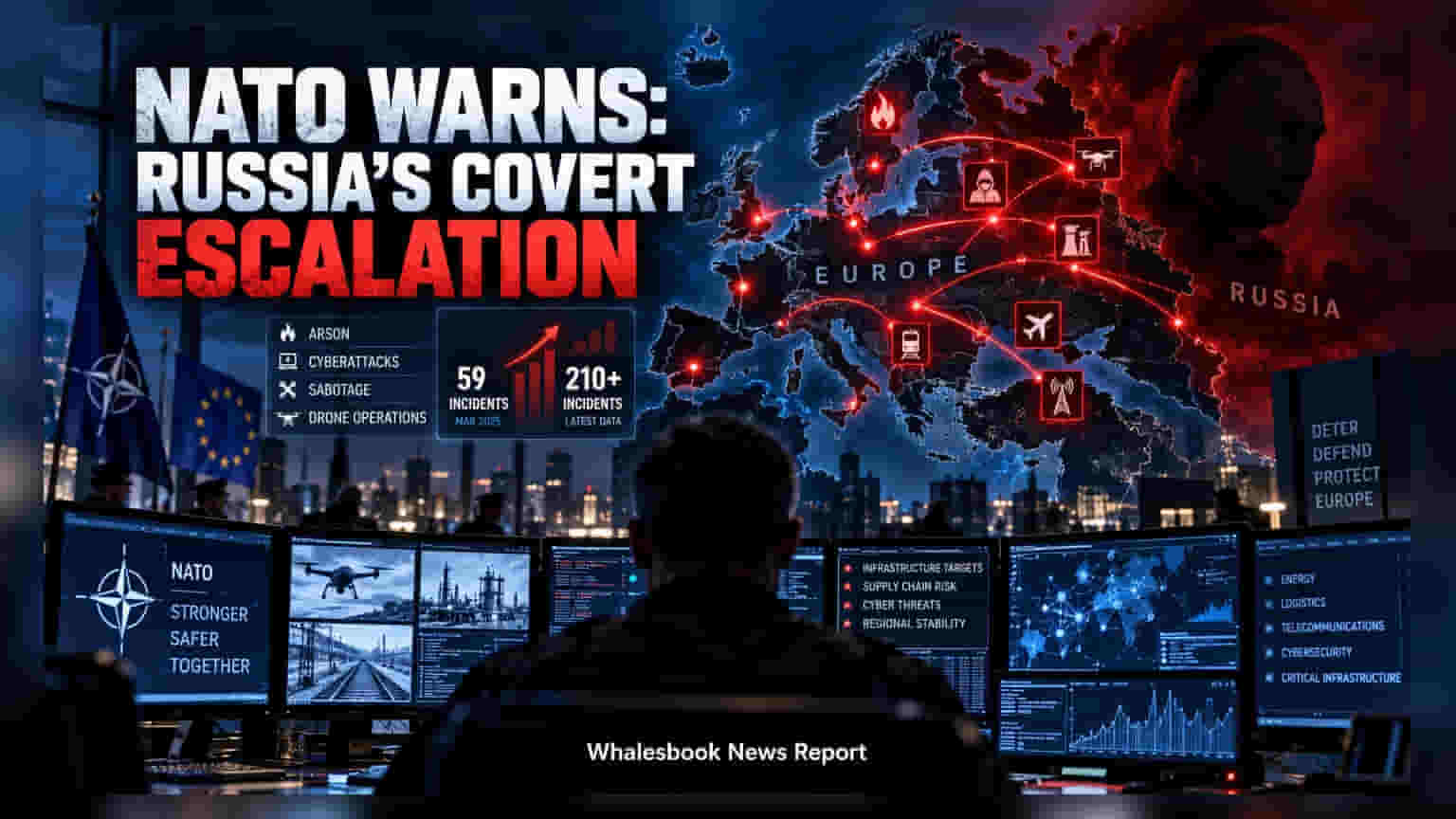
NATO officials have reported a record surge in covert Russian operations, with 210 sabotage and cyber incidents recorded in Europe. This escalating tension poses new risks to global supply chains, critical infrastructure, and energy logistics, prompting companies to increase their focus on security and resilience.
NATO commanders have issued a warning regarding a sharp increase in covert operations linked to Russia across Europe. According to recent intelligence assessments, hostile incidents including arson, cyberattacks, and sabotage efforts have risen to over 210 recorded cases, a significant increase from the 59 incidents reported in March 2025. This uptick in non-conventional warfare, involving plots near infrastructure such as drone factories and airports, highlights a shift in how geopolitical tensions are affecting the stability of the European continent.
For investors and global markets, these developments introduce layers of uncertainty regarding critical infrastructure and operational security. Companies with significant assets in Europe are increasingly prioritizing the protection of their supply chains and digital networks against sabotage and cyber warfare. As European nations look to strengthen their defenses, the business environment for firms operating in logistics, energy transport, and telecommunications is shifting toward higher security and compliance requirements. This trend often forces corporations to increase their capital allocation toward cybersecurity and physical asset protection, which can impact operating margins.
From a market perspective, the rise in non-conventional threats is fueling demand for specialized security services. As organizations grapple with potential disruptions to logistics and data integrity, the cybersecurity sector and firms providing physical security solutions may see sustained interest. This environment creates a challenging outlook for industries heavily reliant on seamless trans-European supply chains, where any incident can lead to sudden, localized, or regional trade disruptions.
While military analysts currently suggest that Moscow lacks the capacity or desire for a full-scale, conventional conflict with the NATO alliance, the ongoing 'gray zone' tactics create a persistent, unpredictable risk. Investors often monitor these geopolitical developments for their indirect impact on global energy prices and the cost of insurance for critical transport routes. For now, the key monitorable for market participants remains the resilience of infrastructure and the potential for these covert actions to trigger broader economic repercussions, such as increased logistical costs or supply chain delays in sensitive trade corridors.